



Sustainabloom Introduces Sustainability Template for Wholesale Florists
 March 6, 2026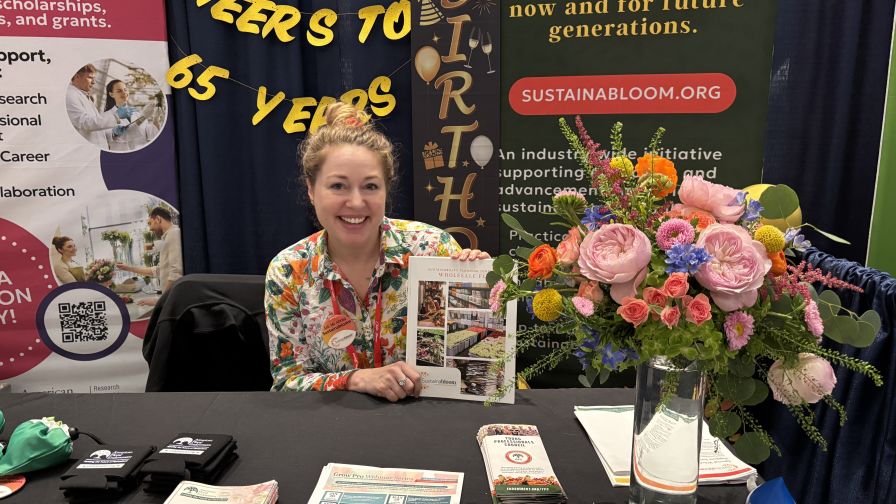
Sustainabloom Senior Manager Amanda Solliday showcasing the template at the WFFSA Floral Distribution Conference trade show.
American Floral Endowment (AFE)’s Sustainabloom program has introduced a new sustainability planning template to support wholesale florists in assessing their operations, identifying opportunities for improvement, and implementing a clear framework for measurable progress toward their sustainability goals.
The template was released at the 2026 Wholesale Florist and Florist Supplier Association (WFFSA) Floral Distribution Conference in Miami, FL, a premiere floral industry show for wholesale floral suppliers. AFE and Sustainabloom were recognized as the official Sustainability Sponsor for the event.
Developed with input from industry partners and the results of an industry-wide survey, the Sustainability Planning Template for Wholesale Florists provides a straightforward, clear, and flexible framework that meets wholesalers wherever they are in their sustainability journey. The free downloadable template provides actionable steps for those in all stages of meeting sustainability goals, from those in the early stages to businesses that are interested in building on current initiatives.
Amanda Solliday, Senior Program Manager for Sustainabloom, says rather than developing a one-size-fits-all solution, the templates empower industry members to choose the actions that make the most sense for their size, structure, and stage of sustainability efforts.
“These tools not only provide guidance, but help floral wholesale businesses take action and make it easier to communicate their efforts,” she notes.
The planning tool walks wholesalers through a structured self-assessment in key operations areas, including packaging, flower care and post-harvest management, certifications, sourcing, transportation, energy and water use, and employee, customer, and community communication. A “stoplight system,” using red, yellow, and green, helps wholesalers evaluate their current practices and prioritize one to three focus areas to move forward with their sustainability efforts.
The guide suggests that businesses begin with a leadership review of sustainability goals, followed by discussions with their teams to develop metrics and steps forward. The template also encourages businesses to develop a sustainability commitment statement and to be transparent with customers and partners about their ongoing efforts.
Information and research throughout the guide help businesses identify the proven benefits of a more sustainable practice, including cost savings, reduced spoilage, improved energy performance, stronger supplier relationships and increased customer trust. The template also supports businesses in navigating rising costs and supply chain disruptions.
Kari Stringfellow, Executive Vice President of WFFSA, says the partnership reflects a shared commitment to equipping wholesalers with meaningful, practical support.
“Sustainability continues to be an important focus for our members, and having a clear, adaptable framework like this makes the work feel achievable,” she says. ‘We’re proud to collaborate with Sustainabloom to help wholesalers turn intention into action and continue moving our industry forward.”
Sustainabloom was created by the American Floral Endowment to help members of the floral industry grow responsibly through accessible, research-backed tools and education. The new Sustainability Template for Wholesale Florists builds on that mission by providing a practical roadmap wholesalers can rely on to track progress and set goals.
The template is the second resource of its kind developed by Sustainabloom. The program released a Sustainability Planning Template for Retail Florists late in 2025.
Subscribe to eNewsletter
