


Simplifying Irrigation Control at McCorkle Nurseries
 May 19, 2026
 For more than 80 years, McCorkle Nurseries has grown its business in Dearing, GA. Ranked No. 58 on Greenhouse Grower’s 2026 Top 100 Growers list, the full-service grower produces more than 6 million plants annually across its 1,182-acre operation. But as the nursery expanded, its irrigation control systems became increasingly complex.
To simplify irrigation control across that footprint, McCorkle adopted the Nelson Twig® wireless irrigation system, which uses a master controller (Twig-MC), field components, and a 900 MHz radio signal to cycle solenoid-operated irrigation valves on and off.
McCorkle Nurseries’ General Manager, Blaze Podgorski, says the system has helped the company bring more simplicity and flexibility to irrigation management across the operation.
The Need to Streamline
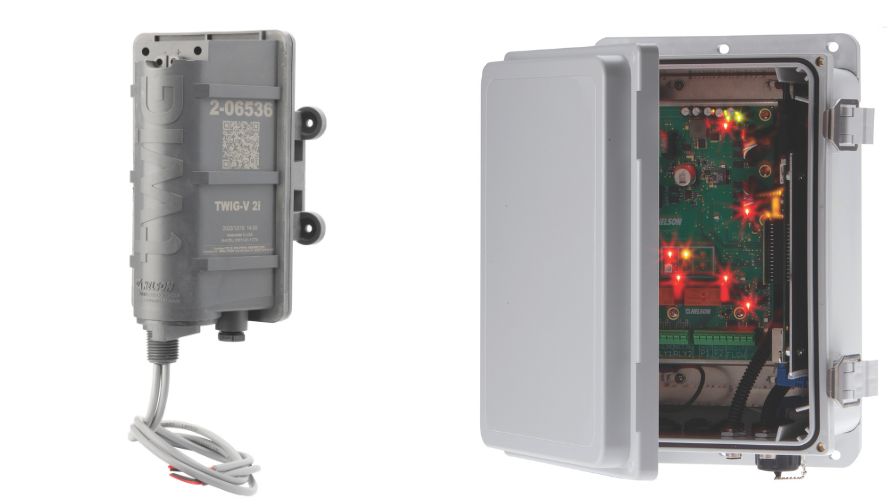
At McCorkle Nurseries, the Nelson Twig system has made it easier to upgrade older irrigation infrastructure without adding more buried wire. | Tim Hall, Nelson Irrigation Co.
Over time, irrigation systems can become increasingly complex, especially after years of adding new pipe runs, valves, and wiring during multiple rounds of expansion. That was the case at McCorkle Nurseries, where decades of growth made it more difficult to tie older infrastructure into a modern control system.
“In a lot of old established nurseries, and McCorkle is definitely one of them, the irrigation is kind of like wiring in an old house, where you can see the history of modern-day wiring from knob-and-tube up into what you have now,” Podgorski says. “Irrigation systems aren’t any different.”
Simplifying that complexity was a major motivator when McCorkle began looking into Nelson’s Twig system. The goal was to make maintenance and day-to-day operations easier, reduce frustration, and bring the irrigation system in line with the company’s broader strategy of reducing complexity.
“It was the idea that if we could get away from all the wires, it would be so much easier,” he says. “People forget where stuff is buried. Where’s that shut-off valve? Where’s the wire? It’s just eliminating that part of it. What I like about this, though, is I can just bypass all the old kinds of clocks. Put this thing on a valve and unhook the old part. You have now upgraded, it’s easy, I like that. It’s really a big benefit.”
Simplifying Irrigation Maintenance
Irrigation maintenance can quickly eat up time and labor. Pipes and valves are one challenge, but the control side of the system can be even more frustrating. Burying wires, digging them up, laying new ones, and tracing shorts all add time and expense.
“Getting rid of wires is wonderful because with the old systems, they’ve got miles of wire and you’re trying to find a short anywhere,” Podgorski says. “This eliminates that problem.”
Wiring becomes especially problematic in gravel areas.
“With piping, you can just dig it up, install a coupler, and you’re back in business,” he says. “With wire, it’s not that easy. The issue could be anywhere from the valve to the clock. You don’t want to dig up half your nursery tracing wires and spend a lot of money on a wire tracer.”
The maintenance team is also using the system to work more efficiently.
“They’re really starting to use it,” Podgorski says. “Our people can stand anywhere, without being near that pad, pull up their phone, and turn it on and off.”
Lightning Strikes
“If you’re in an area prone to lightning strikes, getting rid of wire is a huge deal,” says Podgroski. “At the last place I worked, we switched to a two-wire system to make it easier and expand, and they still had problems with decoders burning up from lightning.”
Even with grounding rods, Podgorski says lightning strikes can travel through the metal in the wires of traditional control systems.
“With this system, the controller is inside a building,” he says. “I don’t have an actual clock sitting out on a pole somewhere that can get zapped by lightning, which is a problem we have with older parts of our system. This eliminates that problem because there’s no way for that electricity surge to get back and zap your main controller and shut off your irrigation.”
Easily Scalable
With the old systems, expansion means running more wires beneath the fabric and gravel and trying not to drive over them, Podgorski explains. Whether the setup used multi-strand or two-wire control, there were still wires in the ground. He says the Twig system has made expansion much simpler.
“Expandability is really the big thing,” Podgorski says. “If you want more zones, just add more valves and put more receivers out there. Log into your system, update the new zones, and you’re in business. It’s the flexibility and opportunity to expand without having to do a whole lot of anything else.”
Each new irrigation zone gets a Twig receiver and, if needed, a compatible valve, which the controller recognizes as another addressable zone in the program. A single Twig master controller can manage multiple devices.

Improved Quality of Life
Any new technology or system upgrade should make sense not only financially, but operationally as well. At McCorkle, Podgorski says the irrigation upgrades have made day-to-day work less stressful and more efficient.
“The fact that you can monitor it from your mobile phone is great. You can remotely turn zones on or off. You can do whatever you want with it.”
Podgorski says the app allows users to see in real time whether the system is running, whether zones are active, and when the next scheduled event would occur. Authorized users can also turn zones on or off from their phones or let the program run according to schedule. Adding a new user is straightforward as well.
“What’s nice is there’s a control panel in the office, and to add an authorized user, they just sit in front of the control panel, bring up the app on their phone, and log in,” he says. “It syncs, and they’re good to go.”
Remote monitoring and control have also reduced extra night and weekend trips to the nursery for frost protection, offering a noticeable improvement in quality of life.
“In one of the older parts of the farm, we needed to have somebody come in here at 4:00 in the morning and turn the water on for frost protection,” he says. “Now, you can have your cell phone alarm go off, sit up in bed, turn the water on, and go back to sleep. You’re able to see that it turned on, so you don’t have to drive down to the nursery.”
Podgorski says McCorkle has had few issues adapting to the new system.
“When you get down to it, it’s kind of like anything else,” he says. “The biggest questions were little things like whether it works on Android or iPhone, but that was about the hardest part of it.”
Subscribe to eNewsletter