


Wannabe Shrubs: Perennials that Mimic Their Woody Counterparts
 August 12, 2026
 People too often draw a distinct line between woody and herbaceous plants, one I’m not sure needs to exist. Some taxa are described as semi-woody, while others ordinarily produce woody growth but function like perennials in colder climates because they die back in winter. Some shrubs that don’t succumb to winter dieback are still cut to the ground each spring to tame their size, with Sambucus nigra (common elder) cultivars coming to mind as an archetypal example.
View all
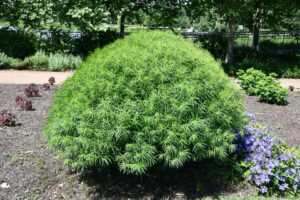
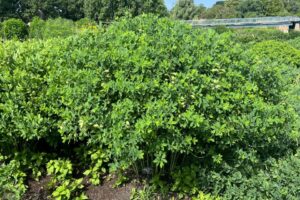
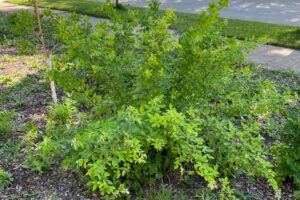
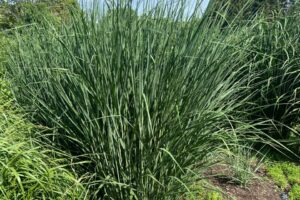
During a recent meeting, a local grower who only sells trees asked me why I enjoy working with “weeds” — his amusingly dismissive, blanket term for perennials. This inspired me to write about the perennials that best mimic woody shrubs to blur the line between them, at least in the context of size and garden design.
To begin, I’ll admit there are two shrub traits perennials have no hope of replicating during winter: evergreen foliage, like that of junipers, and interesting stems and bark, like those of Cornus sericea ‘Cardinal’ and Betula nigra ‘Little King’ Fox Valley, respectively. These provide far more winter interest than the shriveled brown stems typical of perennials, although some perennials buck this trend. For example, the persistent silvery calyces of Pycnanthemum tenuifolium (narrowleaf mountain mint) hold appeal in winter. During the growing season, though, the line between shrubs and perennials can be more easily blurred.
What exactly does a perennial need to do to function like a shrub during the growing season? First and foremost, it should grow vigorously and do so early in the season. Leafing out from woody stems already several feet above ground gives shrubs a head start, and not all perennials can swiftly close the resulting gap. A perennial that reaches the size of a shrub — we’ll set the minimum at 4 feet tall — in late summer, only to go dormant a few months later, would simulate a shrub for only around a quarter of the year.
If dense enough, perennials can also replace shrubs as hedges or screens that divide areas or provide privacy. Depending on the situation, the fact that perennials can only do this for part of the year can be seen as a benefit or a drawback.
If privacy is needed only when enjoying the outdoors during summer, perennials could be preferable. During winter, snow can be piled on these perennial hedges — along a driveway, for example — without ruining their performance the following summer. If privacy is desired year-round, though, no perennial can rival the performance of evergreens like Thuja ‘Junior Giant’.
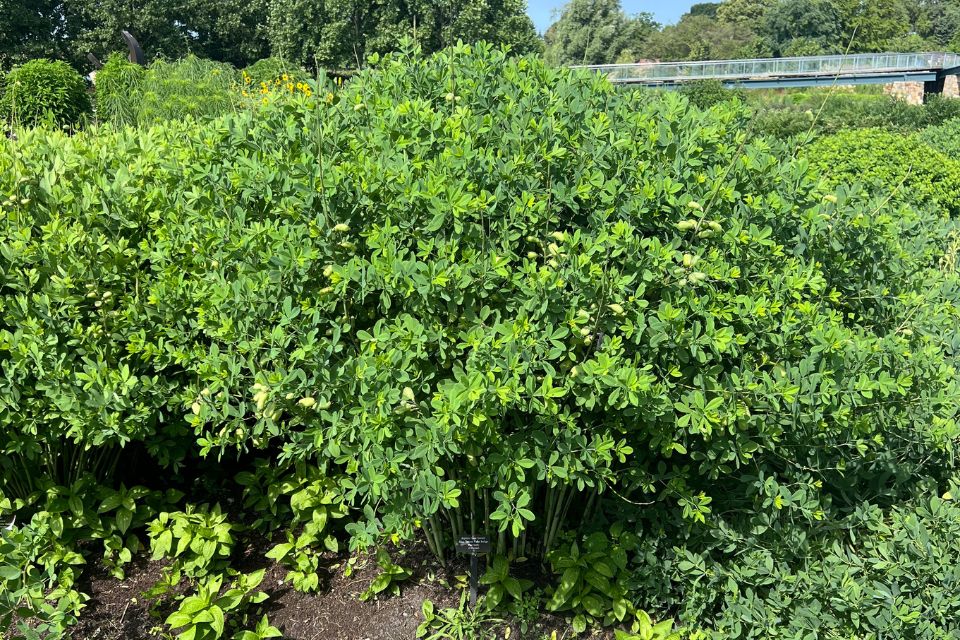
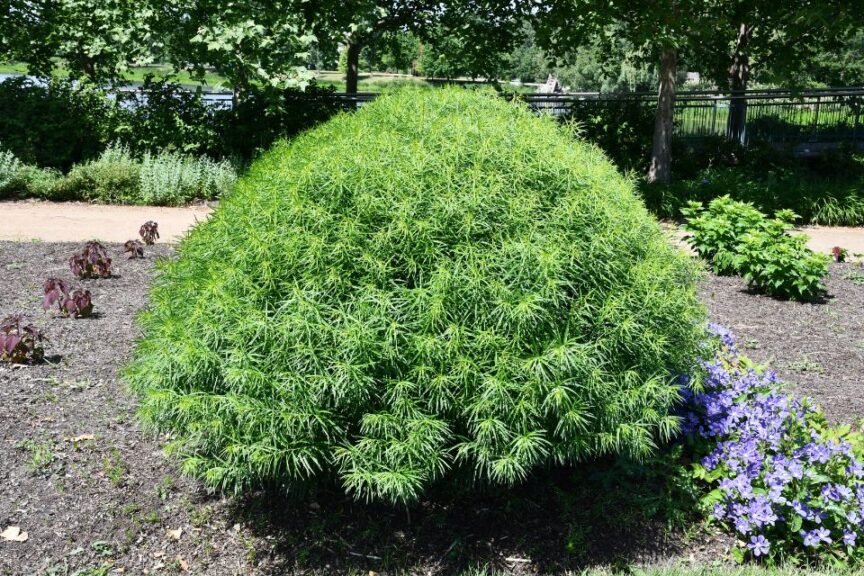
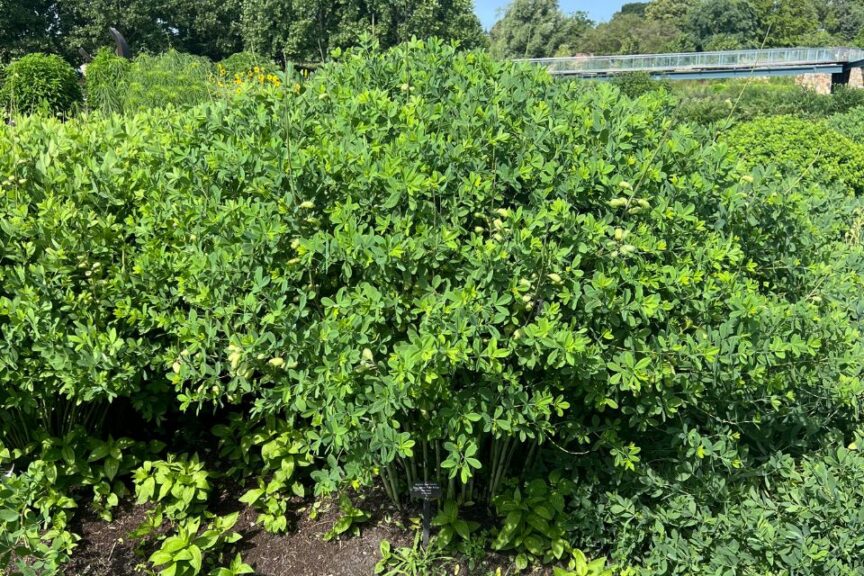
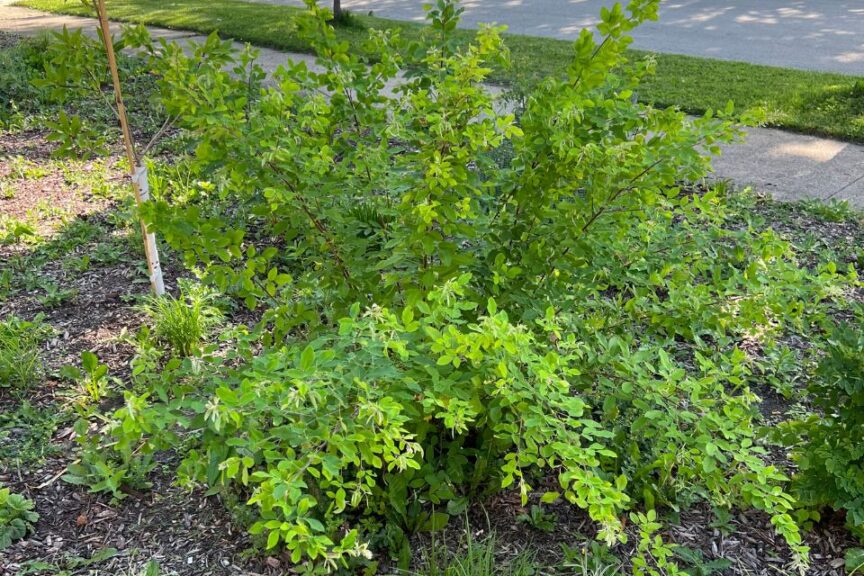
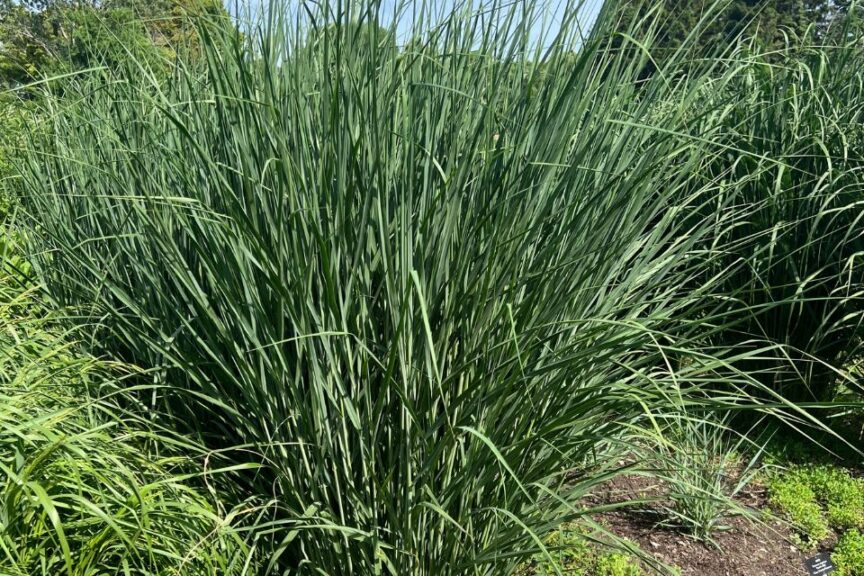
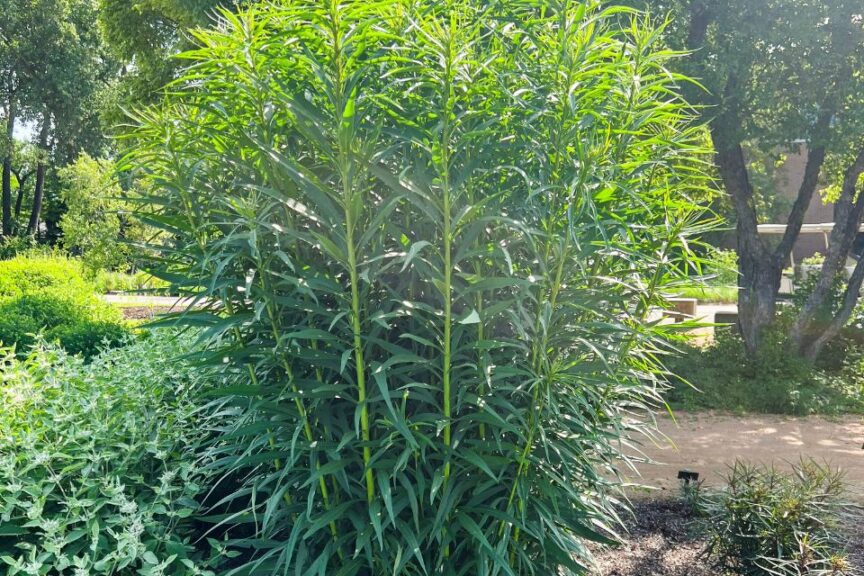
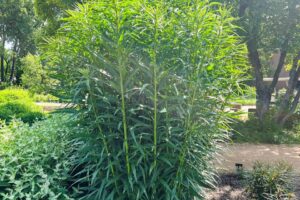
The cultivars described throughout this article are candidates to replace shrubs in certain situations. The pictures were taken on July 1, illustrating that these perennials have put on significant growth by the beginning of summer, regardless of whether they bloomed in spring or will do so later in summer or fall.
Subscribe to eNewsletter