




Plants to Carry the Garden Through Summer
 July 23, 2025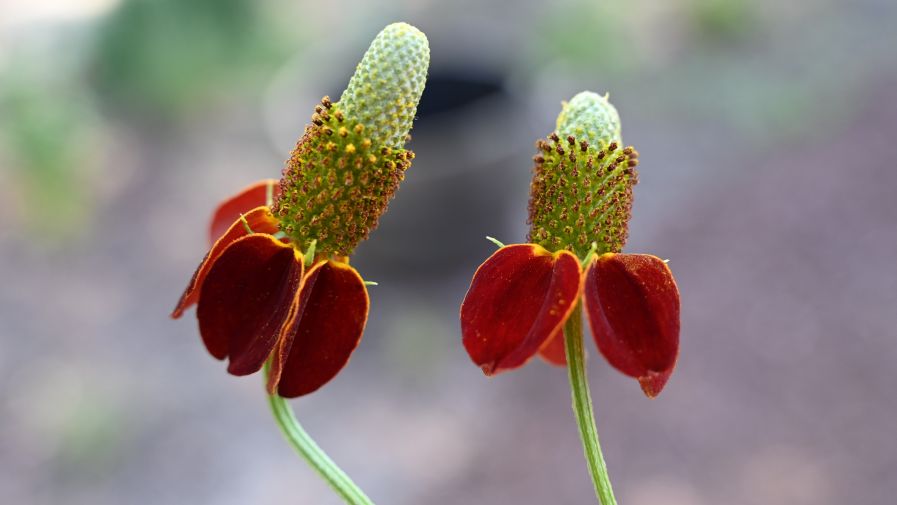
Ratibida; Photo: Justin Lombardoni
Many common garden plants fall into one of two categories: those that bloom immediately after bulbs in spring, and those that bloom in fall, often until a frost. This may be in part because breeders like to develop cultivars that can be marketed as extending a garden’s season of interest.
Nurseries capitalize on spring bloomers by offering the greatest selection of plants shortly after the dormant winter season, when people are most eager to get outside. During the summer, plants may be growing, regardless of whether they’ve already bloomed or not, but they contribute to a lack of color variation while foliage dominates. Bridging the gap between spring and fall bloomers involves seeking plants that peak during the dog days of summer, when heat is ever present and rain may or not be plentiful.
Natives, whether a straight species or a cultivar of one, can form the backbone of a summer garden by blooming when other plants are in vegetative cruise control. While variegated leaves or those of bright yellow or deep purple can help break up an amorphous green garden, flowers feed pollinators and keep people interested. From a nursery’s perspective, summer bloomers should be easier to sell since they are in flower after the spring season and before fall bloomers have arrived at garden centers. A handful of cultivars meeting the “summer performer” profile are already popular. Think Agastache ‘Blue Fortune’ and Phlox paniculata ‘Jeana’. Many others, though, remain underutilized, especially when it comes to filling roles beyond that of the typical 3-to-4-foot perennial.
Gardening in July and August is usually focused on maintenance, primarily weeding and watering, but gardeners may want to deadhead some summer bloomers since many are prone to prolific reseeding. Without deadheading, volunteer seedlings may be problematic in subsequent years, unless these volunteers are desired for a more natural appearance. Nurseries should be transparent about the reseeding nature of their offerings when applicable to build trust with their customers. This transparency should be tactful, though, as many gardeners may equate something that reseeds (or spreads vegetatively) with being invasive or weedy, even if this isn’t the case. Furthermore, nurseries can combat the stigma of reseeding to promote sales of plants that would otherwise seem scary by pointing out that deadheading requires little (but consistent) effort and that there is often a period of weeks between flowering and seed maturity/dispersal when this can be done. Regardless of whether native or exotic, we can agree that all plants that reseed when undesired are annoying.
Below is a list of species and cultivars that peak in July to August, with some pushing their flowers into September as well. These are less common, as most have a similar or more popular alternative, and are native to North America unless otherwise noted.
Asclepias incarnata (swamp milkweed) and A. verticillata (whorled milkweed)
These two milkweed species are less common in the trade relative to A. tuberosa (butterfly weed) but are both native to most of the U.S. and provide the same benefits to monarch butterflies. Like other milkweeds, they will reseed significantly under favorable conditions, though less than A. syriaca (common milkweed) in my experience.
Clethra alnifolia ‘Hummingbird’
Native to mesic areas in states along the East Coast, summersweet has erect racemes of fragrant white flowers that are followed by persistent seedpods. Rather than reseeding, this shrub tends to sucker and spread vegetatively. ‘Hummingbird’ is a more compact cultivar suitable for smaller gardens.
Deschampsia cespitosa ‘Goldtau’
Tufted hairgrass is a cool-season grass native to many northern and western states. Wispy panicles are especially beautiful when backlit by the rising or setting sun. This is furthered by the cultivar ‘Goldtau’ which has golden yellow flowers. Reseeding is possible but not a consistent issue.
Eragrostis spectabilis
Purple love grass is a warm-season grass native to the eastern two-thirds of the U.S. Its wispy panicles are darker and smaller than those of Deschampsia. Once again, reseeding is possible but not a a common problem.
Filipendula rubra
Native to the Northeast and Midwest, this species is rightfully known as queen-of-the-prairie due to its great height and prominent clusters of bright pink flowers. It spreads vegetatively to form large stands, but reseeding is not typically an issue due to self-incompatibility. This, combined with habitat loss due to humans, has led to the species being endangered in parts of its native range.
Hydrangea hydrangeoides ‘Moonlight’
Japanese hydrangea is native to Korea and Japan but does not reseed or pose any issues like an invasive. Unlike shrubby hydrangeas, this is a vine that uses aerial rootlets to climb. It has large, white lace cap clusters, and ‘Moonlight’ has the added benefit of leaves with a silver-blue tinge.
Liatris microcephala
Though native to the southern Appalachian Mountains, small-headed blazing star can grow well beyond its native range. Much different from the commonly cultivated L. spicata (dense blazing star), this species has a more delicate, refined presence due to its shorter height, narrower leaves, and smaller flower heads. We have not observed reseeding in the Chicagoland area, but this is outside of its native range.
Monarda fistulosa
Unlike the previous entry, wild bergamot is native to nearly all contiguous 48 states. It supports a wide array of pollinators and tolerates drought better than other Monarda species. It can spread both vegetatively and by seed and should therefore be monitored and cut back as needed.
Persicaria amplexicaulis ‘Golden Arrow’
This species is native to the Himalayas but does not commonly seed around and is not considered invasive. Vegetative spreading forms wide stands, but this is often desirable and not aggressive. Red flowers are borne on erect spikes, and the stem-clasping foliage of the species is especially attractive on ‘Golden Arrow’ due to its gold color.
Ratibida columnifera ‘Red Midget’
Like Monarda fistulosa, prairie coneflower is native to nearly all contiguous 48 states. Flower heads are like those of Echinacea if they were stretched vertically, with an ascending column of disc florets surrounded by reflexed petals on ray florets. The petals of ‘Red Midget’ have more red than yellow relative to the species. Plants may reseed but are not typically aggressive.
Silene regia
Royal catchfly is native to xeric regions of the Midwest and Southeast. Thin stems give rise to large red flowers adored by hummingbirds. Due to habitat loss and dichogamy that diminishes self-pollination, this species does not self-seed much and is threatened in much of its native range.
Vernonia fasciculata
Native to mesic areas of the Great Plains and Midwest, smooth ironweed’s purple flower heads are alluring to pollinators, especially butterflies. This species blooms a bit earlier than other ironweeds, which don’t typically begin until September. Many ironweed species hybridize with each other and can therefore seed around if left alone.
Subscribe to eNewsletter