


What to Consider Before Changing Your Growing Media
 November 17, 2026
A growing media change may be elective or forced. Growers may want to improve performance, reduce shrink, or lower costs, while supply issues and customer demands can also prompt a switch. Before making a change, identify the problem you want to solve.
“If you were to call me with questions, I would turn the script around and try to figure out what your pain points are today,” says Matt Garrett, Global Products Manager at Profile Products. “What do you want to improve? What’s not working, or what could be better? Are you looking for higher yields, healthier plants, or trying to reduce shrink? Whenever you’re making a change, it should be to solve a problem or to improve performance.”
Look Beyond the Price Tag
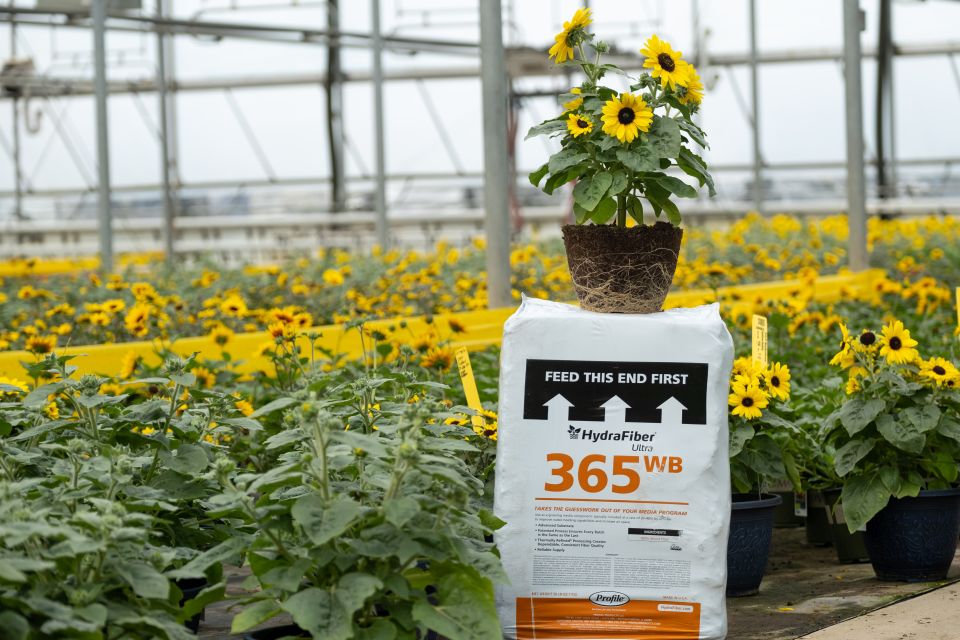
When growing in wood fiber, check moisture through the root zone; the surface alone may not show whether the mix is drying out. | Profile Products
Compare the full cost of a mix, not just its price per load. A higher-priced option may reduce labor, watering, or fertilizer costs. Garrett recommends calculating costs per plant and tracking current spending on water, labor, handling, fertilizer, and other inputs. That baseline can help growers see how a media change might affect costs elsewhere in production. Supply shifts and freight costs may push more growers to consider regional raw materials, says Harrison Meekins, Grower Specialist at Sun Gro Horticulture. Weather can disrupt peat harvests, and tariffs may affect the availability of peat and coir.
Perlite and wood fiber can vary among suppliers, says Jack Bobo, Ph.D., R&D Grower Advisor at Berger. Those differences can change how growers manage a crop and what it costs to produce. A mix that performs consistently from batch to batch and season to season makes results easier to predict.
Trial Before You Switch
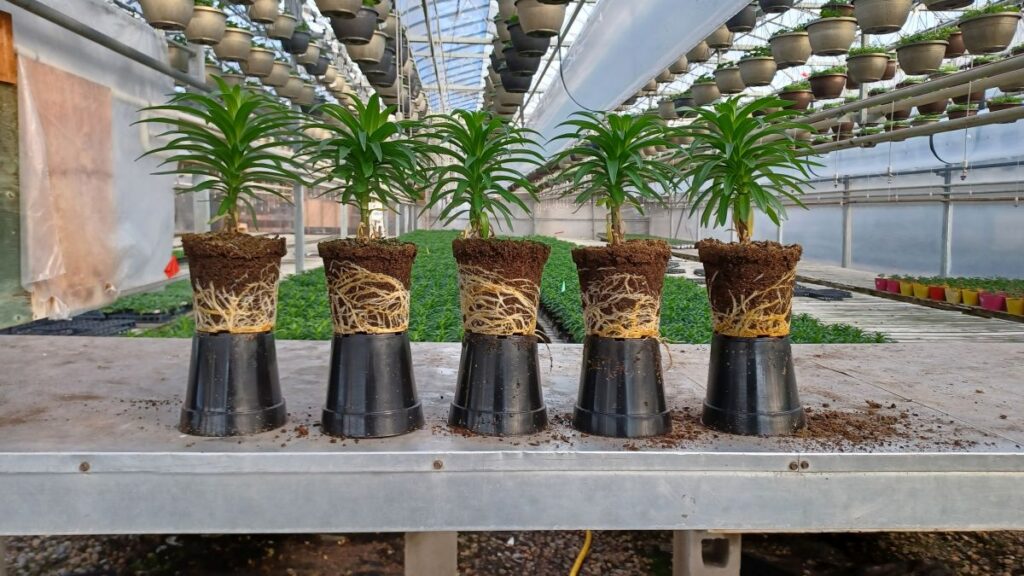
When evaluating a new growing medium, compare root development as well as top growth. Inspecting the full root zone can reveal differences a surface check misses. | Sun Gro Horticulture
A trial can help growers understand how a new mix performs before they switch across the operation. Garrett says a trial is especially useful when the change is substantial, such as moving from peat toward engineered wood fiber. A direct supplier substitution may not require the same level of testing if the material is otherwise familiar.
Trials can be small if they are well controlled. Bobo says a 50-plant trial can provide useful results when growers use the same variety and keep plants in the same greenhouse area under the same conditions. He also cautions against using old media: wetting agents may degrade over time, especially in material left outdoors. Request a fresh sample or add a new wetting agent before testing.
Comparisons can be harder when two mixes have very different physical properties, particularly drainage. In those cases, growers may need to adjust cultivation practices as well as evaluate the media.
Plan for Production Changes
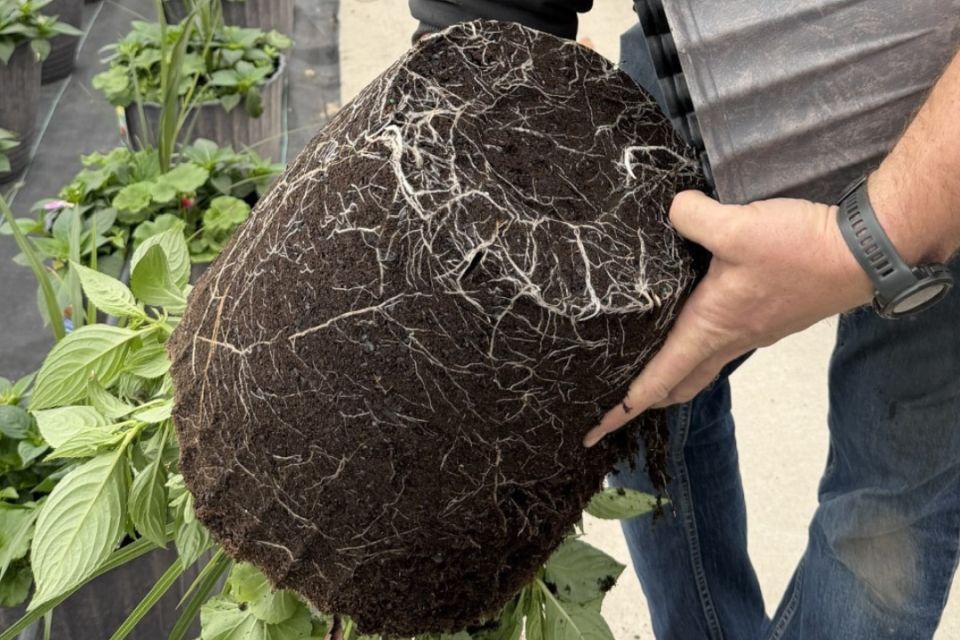
When testing a new mix, inspect the full root zone; surface color alone may not show how moisture is distributed through the pot. | Sun Gro Horticulture
Irrigation is often the biggest adjustment. Garrett says growers should also monitor nitrogen and pH, and gather data as they compare the new mix with their current one.
Wood fiber may call for more frequent watering to keep the profile moist. Bobo recommends checking the whole root zone rather than judging moisture by the surface or relying only on how a pot feels. He says wood fiber mixes can be less hydrophobic after drying and may support increased root development.
As the percentage of wood fiber increases, nitrogen may also need attention. Berger’s in-house recommendation is to increase nitrogen by 25 to 50 ppm when wood fiber makes up more than 30% of the mix. Bobo says microbes in the carbon-based material can hold onto nitrogen.
Growers mixing their own media may also need to adjust lime rates when adding wood fiber, Meekins says, because it is closer to neutral pH than some other components.
Coir grade can affect soluble salts and EC. Meekins says unwashed coir can have higher levels of potassium and sodium, while washed coir has been rinsed to remove some salts. Buffered or treated coir has undergone an additional process to displace sodium and potassium from exchange sites. The right grade depends on the crop and production system.
“At the end of the day, if you don’t have a quality sellable plant, you have nothing,” says Garrett. “The first thing to think about is how does whatever you’re considering switching to vary from what you’re using now in terms of performance?”
Subscribe to eNewsletter