



Executive Perspective: Why Automation Investment and Adoption Requires a Deliberate Approach
 September 10, 2026
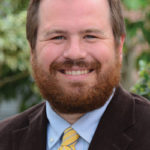
Kris Nightengale of TTA-ISO. | TTA-ISO
Visiting a greenhouse equipment company’s trade show booth can inspire awe. The latest and greatest machines are lined up performing myriad tasks with little to no human involvement. The potential is obvious. So is the price tag.
And that’s exactly the mindset that Kris Nightengale relishes the opportunity to dispel. The president of TTA-ISO-Americas comes from a family farming background but has two decades of experience in specialty agriculture and smart machines. He sees the potential of these machines to help greenhouse growers build a more profitable future, and he shared that perspective with us during a visit at Cultivate’26.
Greenhouse Grower (GG): How do you think 2026 has been for the greenhouse growing industry?
Kris Nightengale (KN): Last year, there was probably more activity to start the year. Growers were jumping into new projects. This year has been a bit more reserved, probably due to weather conditions and uncertainty about how the finances would work out. Now, we are more than halfway through the year. Machines need to land here by the end of this year to have an impact on next season. Of course, we now deal with the realities that the factory is busy, lead times are longer than anybody wants to hear, and growers have to make quick decisions. This has been a very busy show for people making a lot of decisions. So, this has been an outstanding show for us in that sense — well beyond anything we have ever had in the past for the ornamentals. But, at the same time, most growers are running behind the ball rather than in front of it. I think that is the weakness of our industry in North America — it seems that we run behind the ball too often when it comes to operational decisions.
GG: So does a good show for TTA indicate that a lot of growers had a good Spring?
KN: No, I think it indicates that growers have been sitting on their hands too long, and now they have to come to a conclusion and do something different. The reality is, when you have risk in the market, you have to control all the items that make that risk greater. Greater risk means a greater price point or cost point. For instance, say there is a pullback in the market in the next two years. If your costs are under control, that is going to hurt less.
I think now growers are taking action on the cost side of their business that hasn’t been paid attention to. Frankly, growers have gained good benefit by putting that dollar into marketing because they can gain more value or get a different product plan with more income basis or profitability. However, those dollars have been going to marketing, not to operations, for too long. Now, those dollars offer diminishing returns in marketing because the investment has been made. Growers aren’t getting as much response to their marketing investment, so they are looking to shore up areas they may have neglected.
Honestly, I haven’t talked to many growers about this season at this year’s show. They are here to talk about what needs to be done right now regardless of this season.
GG: What is the automation segment of the market going to look like in five years?
KN: I think we are continuing to move down the path where the machines make more decisions and the requirement for maintenance and technical staff continues to decrease. And, to be honest, the dependency on highly specialized operators will be lower than it needed to be even a year or two ago.
The machines are getting smarter. Nothing gets cheaper. These are iPhones. I haven’t met the guy who paid less for his iPhone today than he did in 2008. Even though everybody expects the price of technology to come down, the reality is that what we demand of technology causes the price to go up. And R&D in this kind of equipment is also going up for us. We spend more every year to build bigger and better equipment, and that money gives us incremental but critical improvements in reliability and precision compared to a decade ago. The reality is that our investment delivers essential refinements again and again rather than just massive leaps.
At the same time, we observe mass consolidation in this industry. Where we had 200 growing customers in the past, we have 140 today. We need to expand the base of our customers, so we need to show customers the value when they invest, or we need to change the business model for how equipment is acquired. In that case, the equipment in the growers’ facilities would be our equipment that they are accessing through flexible operating expense models, effectively renting from us all year long.
These up-and-down years challenge a business like ours. We address an operating expense problem, but everybody decides whether they buy us or not based on capital expenses. We are not CapEx; we are OpEx. The grower already has the money budgeted. We just have to help them see the value in spending it on steel and electricity instead of sweat and physical work.
GG: How big does a grower’s business need to get before investing in your equipment makes sense for them?
KN: There are two layers to that question. The growers who do invest are typically the largest 150 growers. That is a pretty small list, right? And there will likely be fewer of those growers in a couple of years with more consolidation. The growers who should invest, I think, are probably the largest 300 to 350 growers. If we change the business model, then the group we can truly address is the largest 500 to 600.
GG: So, it sounds like you’re dealing with challenges of a mature industry.
KN: Well, the industry is mature, and it is immature at the same time. It is mature in its size and growth. It is mature in its opinion of itself. It is mature in how it addresses the end-market. However, it is also immature in processes, financial approaches, cost performance, and leveraging money, which is true throughout much of American family ag businesses.
The reality is that this is a complex business. And these growers are wading through pretty murky water in terms of operational clarity, growth, and future opportunities. When you are wading through murky water, having a massive labor force is great because it means you don’t have to have a precise plan. You can take a couple hundred laborers and ask them to do something tomorrow that you didn’t plan to do. But if I have processes and I am going to do things with machines, now I have to have a plan, and my plan has to be pretty accurate every day for the factory to run efficiently.
You can see where the problem is for this industry. The immaturity in planning drives the immaturity in investment, but it is a very mature market in terms of what they are trying to accomplish. It is all the processes to get us there that have different levels of maturity.
GG: Given all of that, if you could give growers any one piece of advice for 2027, what would you tell them?
KN: I would say wherever hands are touching something the most, those are the things you really have to dial down. Because where the most hands are required in short periods of time, those are the tasks that are the hardest to manage, which means they are also the most expensive in your business, and they carry the most hidden cost.
My dad always said in business there are two types of checks that get written. The checks you write intentionally and the ones that you don’t even know you are writing but that get cashed every day. The ones that you don’t know you are writing are the ones that you actually don’t understand because they come from operational inefficiency. They live in the shadows, and businesses fail in the shadows.
I think everywhere that you have clarity, everywhere that you have a plan and you consistently execute on that plan, that is where you are likely achieving the best cost control. Cost control is a key to maximizing your profit margins and having a predictable future in this business.
Labor costs are probably around 44% of cost basis for growers this year. We help them address that 44%, but too many growers are spending time on items representing 3% to 6% of their costs. Why?
GG: When you think about the growers who use equipment most effectively, what differentiates them from the growers who don’t take advantage of these tools?
KN: You know, I think about that often. The difference lies in understanding that not just anyone belongs operating a piece of machinery. People who operate machinery should be one of two things: they should be experts at that machinery, or they should be experts at the process that the machinery is executing. If your equipment is run by an employee who fits one of those two categories, your machine is going to operate at a much higher level of efficiency.
For an owner or an operator to reach the same conclusion, it means you better understand the equipment to begin with. Too many growers have invested the time to be experts in how their relationship works with retailers, or logistics, or their packaging, but many have forgotten about the ops side. Like I said at the beginning — I understand why this happens. They focus on where they find benefits or on the items they enjoy. But if you are truly going to control your costs and fix the operating side of your business, you better become an expert in your operations. The people who built this industry were all operators first. They were all farmers first. They were experts at execution first. Today it seems everybody has become a marketer. But if you really want the business to maximize results, you have got to become the expert at the operation.
GG: What percentage of the industry is truly automated?
KN: Well, if there are roughly 18,000 growing operations and about 150 of them buy our stuff, there’s your answer.
GG: Sure, but the 150 growers buying your equipment are on an extreme end of the automation spectrum. Growers can automate without investing in the latest, greatest, largest equipment, right?
KN: Sure, there are a lot of levels of automation, and I am not saying that the growers buying from us have automated everything they can. But those growers have generally addressed the big opportunities, and they have to keep addressing them.
If you look at the most highly automated operations, most of that automation began 20 to 30 years ago. Obsolescence gaps are a natural part of technology and equipment. They may be functioning, but there is a massive gap between the level at which they are functioning and the level at which they can function. And the reality is that there is not always an economic reason that investing makes sense at peak level. There has to be a cost-benefit analysis.
Ultimately, growing plants is manufacturing but with more variables. For many of these growers, the business is about farming, and it can be easy in farming to accept the idea that you have to live with all of the variables. The minute you say, “I don’t have to accept any of these variables,” you are looking at your business like a factory; you are taking hold of the business, and you are cost/cash focused. In that reality is where you look to optimize your functions A to Z and select the best returns first. That is when we start having regular conversations with growers and lay out their best options.

Executive Perspectives is an editorial series in which Greenhouse Grower visits with leaders from across the industry to learn the challenges they see facing growers from their respective part of the business and their recommendations to help growers succeed. This interview has been edited for style, length, and clarity.
Bob West is the Chief Content Officer at Meister Media Worldwide, the publisher of Greenhouse Grower. He can be reached at 440-602-9129 or [email protected].
Subscribe to eNewsletter