




Automation That Solves the Real Bottlenecks
 July 28, 2026
 Greenhouse automation might invoke visions of humanoid robots, machine vision, and whirring electronics, but that does not match reality for most growers. In practice, automation is less about science fiction and more about reducing friction. It can help move plants more efficiently, reduce repetitive labor, improve consistency, and give employees time back for higher-value work. We asked several suppliers which types of automation are gaining traction, how growers of different sizes can scale automation effectively, and what they should consider when evaluating return on investment.
Where Automation Is Gaining Ground
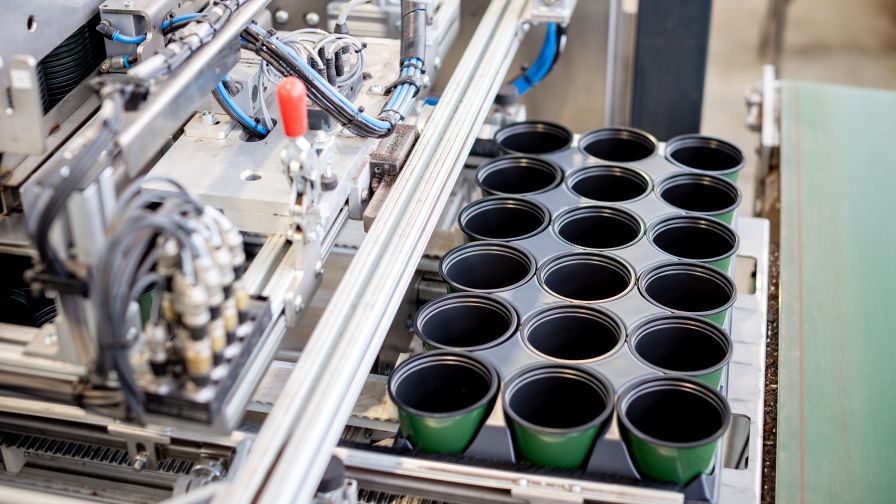
Automated pot placement can help reduce labor bottlenecks by moving pots into trays and onto the planting line. | BOLD Robotics, Jeremy James Photography
For many growers, the automation conversation starts with the tasks that use the most labor or slow production.
For TTA-ISO, that first conversation often starts with transplanting.
“If they already own a transplanter, then the next thing is a cutting sticking machine,” says Kris Nightengale, President at TTA-ISO. “It’s something that takes a lot of labor. Growers who are investing in transplanters get a return very, very quickly.”
After transplanting and sticking, Nightengale says many growers are looking at plant grading. Vision systems that grade and sort plants, while removing low-quality plugs, have become more popular over the last four to five years.
Bill VandenOever, founder and Director of Engineering and Sales at BOLD Robotics, says his company is seeing strong interest in machines that place pots into trays.
“A lot of growers do this manually, taking the pots, putting them in the trays, and placing them on the planting line,” VandenOever says. “It is often the bottleneck that takes a lot of people to do it.”
The appeal, he says, is not only labor savings.
“I think one of the reasons it’s popular is that these machines take up a really small footprint,” he says. “Space is at a premium.”
Product movement is also becoming a bigger part of the automation conversation. Jacob Carson, Director of Strategy and Business Development at AdeptAg, says more growers are exploring advanced conveyor systems, automated guided vehicles, moving table systems, or combinations of technologies.
“With proper design, a facility can see increased profitability by saving labor associated with transport, increasing quality by limiting plant touches, and reducing the toll that carrying heavy loads can have on employees,” Carson says.
For Carson, the labor question is also a workforce sustainability question.
“You walk into some of these facilities where workers are carrying their weight in plants, and you wonder how sustainable that can be,” he says.
Start Small, Then Scale
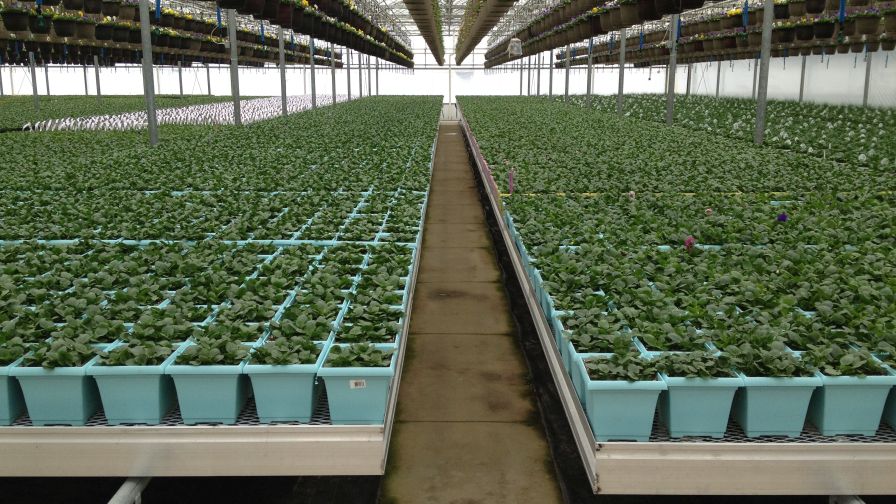
Moving-table systems can help growers move crops through the greenhouse more efficiently while reducing plant handling and physical strain on employees. | AdeptAg
Upfront investment costs can be prohibitive for smaller operations considering automation solutions. But finding the right labor, at a cost they can afford, can also be a challenge. Automating just a few problem areas can help with both issues.
“Many growing operations struggle with labor, and this problem is more pronounced for smaller businesses in smaller communities,” says Tami Van Gaal, Director of Sales at Griffin Greenhouse Supplies. “Think about the activities that require the most time, cause the most headaches, or create the most interruption to your workflow.”
Used or refurbished equipment can help smaller growers access automation at a lower price point. Nightengale says larger growers are often updating equipment, creating opportunities for smaller operations to buy pre-owned machines that have been inspected, refurbished, and backed by a supplier.
“For small growers who don’t have the capital expenditure budget, pre-owned equipment can make a lot of sense,” Nightengale says.
Instead of automating an entire line, growers can target one or two areas where labor use is high, or backups are frequent. A semi-automatic pot labeler, case labeler, pot filler, or seeder may not transform the entire operation, but it can remove repetitive tasks and reduce touches.
VandenOever says growers should think about what they want the future state of their line to look like, then work toward it in phases.
“I was visiting a customer last week, and they weren’t sure what their bottlenecks were,” he says. “Growers don’t always know, so we walk through and ask a list of discovery questions to make sure we can hit all the points.”
Standalone equipment can also become part of a larger automation plan later.
“Smaller growers can reap tremendous benefits from standalone machines such as pot fillers or seeders,” Carson says. “These machines can then be integrated into more complex lines as the facility expands or looks to improve uniformity.”
Mariana Haven, Marketing Communications Manager at Griffin Greenhouse Supplies, says simple machines can still make a meaningful difference.
“Nearly every grower fills containers with a growing mix,” Haven says. “Adding a pot filler to your operation saves labor, results in more even pot fill at the right density and leads to a more uniform crop that is easier to water.”
Growers can also consider bale fluffers or shavers to feed mixers or pot fillers and improve potting efficiency.
What ROI Calculations Miss
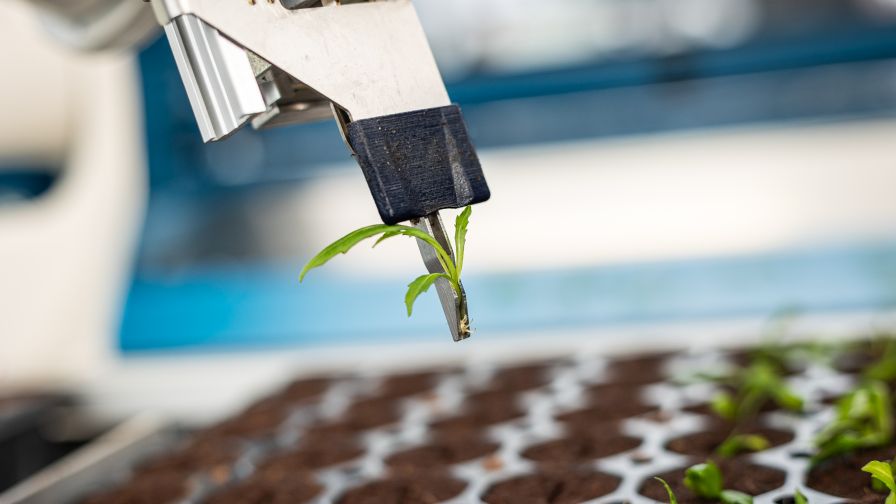
Automation can help reduce repetitive propagation tasks, including cutting sticking, while improving consistency and freeing employees for other work. | TTA-ISO
Return on investment (ROI) is often one of the first concerns growers raise when considering automation. Nightengale says the market has been more volatile in recent years, making North American growers more conservative about capital investments.
“For any kind of automation equipment, you’re always looking at returns that typically exceed two years,” he says. “And if you make a better investment, one that’s truly going to make your company more money, you’re typically looking at a four- to six-year ROI.”
Because of that uncertainty, many growers focus on projects with returns under three years. But Nightengale says the way growers calculate ROI often leaves out important costs.
“The big complication we see is how growers calculate ROI, because it’s more than just the time a worker is spending on the job,” he says.
Carson says growers should also consider the physical and operational toll of certain jobs.
“One of the things I ask growers is, what are the tasks they hate the most?” Carson says. “Often these are manual jobs that include heavy lifting, lots of sweat, and perhaps a couple of injuries.”
Those tasks may not always show up clearly in an ROI spreadsheet, but they can affect morale, consistency, safety, and profitability.
“They’re just hard to measure unless you’re tracking frustration at the water cooler,” Carson says.
Nightengale says automation can also help growers lock in costs over the life of the machine. He gives the example of a machine with a 10-year ROI, which many U.S. growers would reject as too long. But over that same period, labor costs may rise substantially.
“If I were a labor contractor and walked in tomorrow morning and offered a deal to lock your labor cost at today’s rate for the next 10 years, people wouldn’t let me say another word before they’d sign the contract,” Nightengale says. “Purchasing automation locks your labor cost on those functions for the longevity of the machinery.”
The Hidden Costs in ROI Math
When evaluating automation, suppliers say growers should look beyond the hours spent on a single task. Consider:
- Supervision needed for additional workers
- Support facilities for larger crews
- Transportation or housing tied to seasonal labor
- Repetitive tasks that slow production
- Heavy lifting or jobs that increase injury risk
- Work employees avoid or perform inconsistently
- Long-term labor cost increases
Automation may be penciled out differently when those hidden costs are included.
Automate the Friction, Not the Flash
Automation should be applied with discipline. Suppliers agree growers should avoid buying equipment simply because it is new, impressive, or simply available.
The stronger approach is to start with a hard look at bottlenecks, repetitive tasks, high-labor areas, and jobs that create safety concerns. From there, growers can determine which automation investments fit their operation, workflow, crop mix, and long-term growth plan.
Automation can be as simple as a bale shaver or as complex as a mixed-cutting planter. The right choice depends on where the operation is losing time, consistency, or labor efficiency.
The goal is not to automate for the sake of automation. The goal is to make the greenhouse easier to run, easier to scale, and easier for people to work in.
Subscribe to eNewsletter
