



How to Better Watch Out for Whiteflies
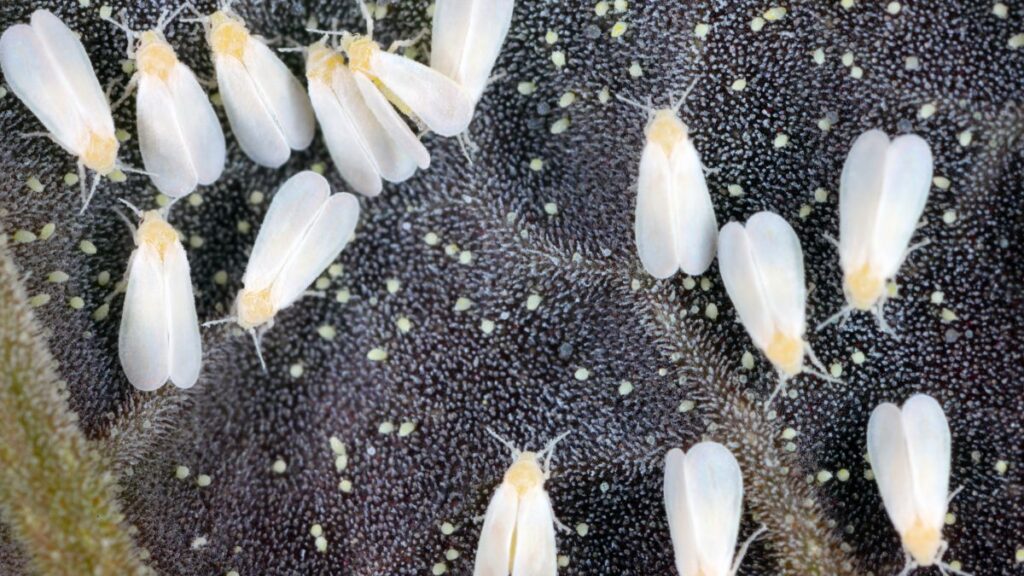
Greenhouse whiteflies. | Adobe Stock
Shelter-seeking bugs (specifically whiteflies) are now likely finding refuge in greenhouses when their homes in neighboring fields are tilled up after harvest. However, identifying the pest is only the first step. Ball Seed’s Technical Services team has provided a list of tips to begin with the biological and chemical control of whiteflies.
Whitefly Exclusion and Preventative Management and Strategies
Early identification, exclusion, and preventative management are the keys to preventing whitefly population explosions. Keep in mind that some of the solutions listed below may not be the best option for certain operations or stages in crop production. Additionally, while it may seem like a lot of effort to implement some exclusion and biological control strategies mentioned here, Ball Seed encourages growers to integrate these into their integrated pest management (IPM) programs in future years if whiteflies routinely become a problem, year after year.
Unrooted Cuttings and Liner Dips
Cutting and young plant suppliers do their utmost to ensure you receive pest-free material. However, hard-to-spot whitefly eggs and nymphs can slip through their detection “nets” and enter greenhouses this way. Treatment of incoming URCs or young plants via a dip can help catch these hitchhikers early and prevent subsequent outbreaks. Biopesticides containing Beauveria bassiana, mineral oils, and insecticidal soaps are all effective options in this process, but be aware that state and local restrictions on how they can be used may exist. Growers should check with their state’s department of agriculture for any potential restrictions and additional guidelines on how to implement this process in their operation before moving forward.
Biological Controls
When deployed preventatively, parasitic wasps like Encarsia and Eretmocerous are powerful tools to keep whiteflies in check. Used in tandem with other biologicals like Ambylseius swirskii mites, other predatory insects, and biopesticides or “soft chemistries,” growers can implement a holistic strategy to keep whitefly populations at an almost undetectable level.
Chemical Controls
If bio-IPM is not feasible, or early attempts at this approach don’t work as effectively as hoped, growers should be ready to pivot to traditional chemical controls. However, for growers choosing a path of traditional chemical insecticides to manage whiteflies, it should be known that their usefulness wanes significantly if not used early, before the pest has the chance to build its numbers.

For additional information on the thorough management of whiteflies, including Technical Services Specialist Nick Flax‘s three key ideas to commit to for a successful program, read the full Technical Services blog on the Ball Seed website.
Subscribe to eNewsletter