


How to Prepare Perennials for Winter Success
 October 15, 2026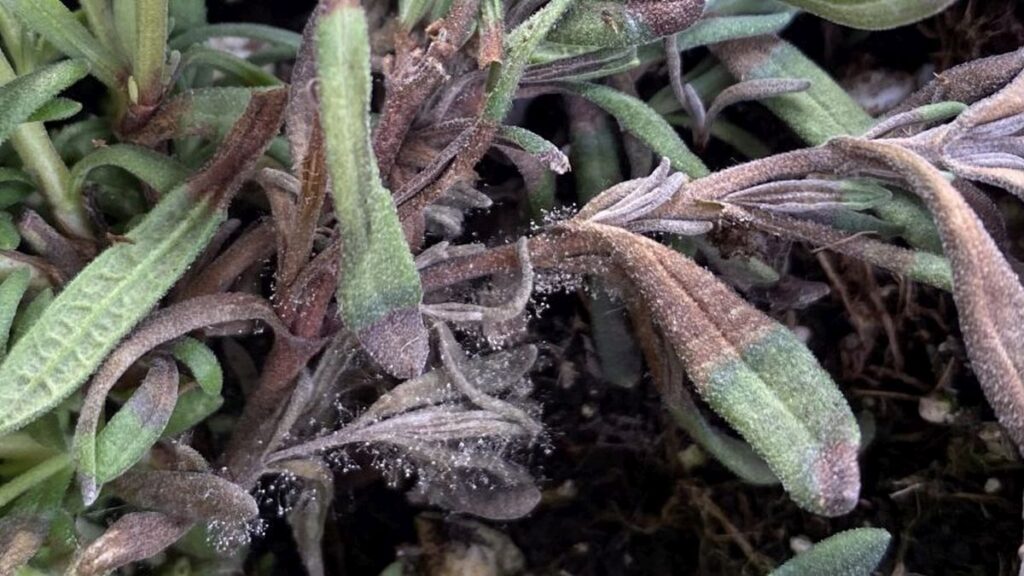
Botrytis on Rosemary during early winter. | Nancy Rechcigl, Syngenta
Successful perennial production depends on preparing plants for the challenges of overwintering long before new growth resumes in the spring. Fall is an important time to scout plants carefully for lingering insect or disease issues and address them accordingly. These problems can affect plant survival and, if left unchecked, reappear in the spring.
The foundation for successful overwintering is a strong, healthy root system. Plants should be well-established before temperatures become too cold. Inspect roots regularly for signs of disease, as soilborne pathogens present in the fall can increase the chance of winter mortality. Common culprits include Pythium spp., Phytophthora spp., Fusarium spp., and Rhizoctonia spp.
Apply a drench within seven to 14 days of cutting back perennials and before the root zone freezes. A combination of materials such as Subdue Maxx® fungicide and Mural® fungicide can help protect roots and lower stems during this critical period.
Leaf spots and powdery mildew are among the most common diseases affecting a wide range of perennials. Certain diseases, such as Botrytis, thrive in cool growing environments with shady, crowded conditions and poor air circulation. Along with regular scouting, a preventive disease management program is one of the best ways to keep plants clean before they go dormant.
Moisture management also plays a critical role in successful overwintering because it directly affects cold hardiness and plant survival. Keeping the root zone too wet increases the risk of disease. Drought conditions should also be avoided, as plants grown under excessively dry conditions don’t produce or store enough carbohydrates in their root systems, leaving them more vulnerable to cold damage. Damaged roots also create ideal entry points for pathogens.
Fall insect scouting should include examining the undersides of leaves and protected areas of the canopy, such as lower stems and crowns. Thrips and two-spotted spider mites (TSSMs) are of primary concern. Thrips can overwinter as pupae in the planting media, while TSSMs enter an overwintering state known as diapause and turn orange-to-red in color. Diapausing mites lay eggs that are more resilient and able to withstand cold temperatures. Applications of insecticides and miticides can help reduce thrip and TSSM populations before they overwinter with plants. Lastly, one of the most important fall practices is sanitation. Remove dead leaves, spent flowers, and other crop debris, including weeds that can serve as reservoirs for pests and pathogens. This helps reduce inoculum levels in the spring.
The most successful perennial pest management programs don’t begin when the first pest appears in the spring: they begin months earlier. For perennials, good overwintering practices are an investment in next year’s crop, helping improve winter survival and setting the stage for stronger growth when plants emerge in the spring.
Explore more disease management resources from Syngenta at GreenCastOnline.com/Solutions.
Subscribe to eNewsletter