



Beyond Red: What’s Next for Poinsettias
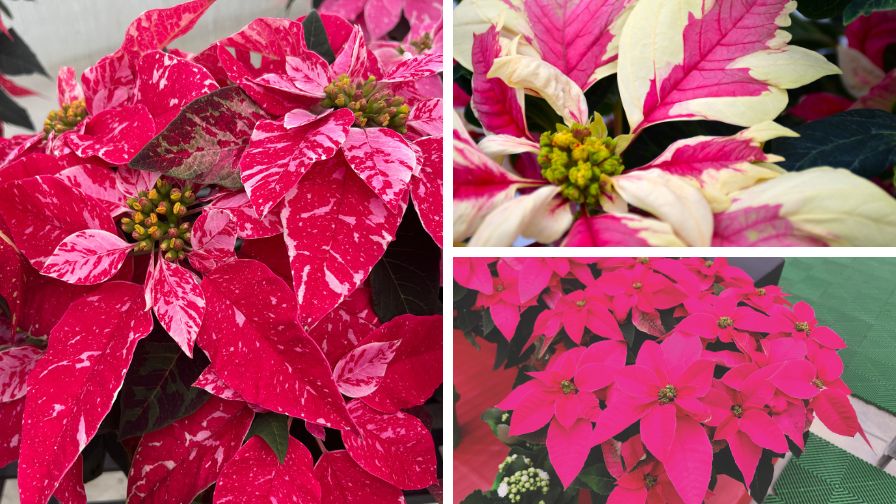
(Clockwise from left) Poinsettia Superba poker, ‘Papagena’ offers a palette of creamy white and blush pink bracts, and Princettia Queen Rose Punch. | Mitchell’s Nursery, Plantpeddler, and Suntory Flowers
For decades, poinsettias have defined the holiday season, with traditional red varieties anchoring greenhouse production and retail displays each winter. Red remains the backbone of the category, but growers and breeders agree that the future of poinsettias depends less on reinvention and more on refinement. Changes in consumer behavior, production realities, and retail timing are reshaping how poinsettias are bred, grown, and sold.
Across the supply chain, expectations for poinsettias have expanded. Today’s varieties are expected to perform earlier, hold their appearance longer, and offer greater visual diversity, all without compromising reliability. That evolution is showing up in genetics designed for earlier decorating, improved durability, and color palettes that extend well beyond.
“Red isn’t going anywhere,” says James Doukas, Territory Manager for Selecta One North America. “But it’s no longer the only story. Growers want varieties that give them flexibility, and retailers want products that connect with customers who are decorating differently than they did 10 or 15 years ago.”
Earlier Decorating, Longer Windows
One of the most significant changes affecting poinsettia production is timing. Consumers are decorating earlier, and poinsettias are increasingly expected to look good weeks before Christmas rather than only in the final days leading up to it.



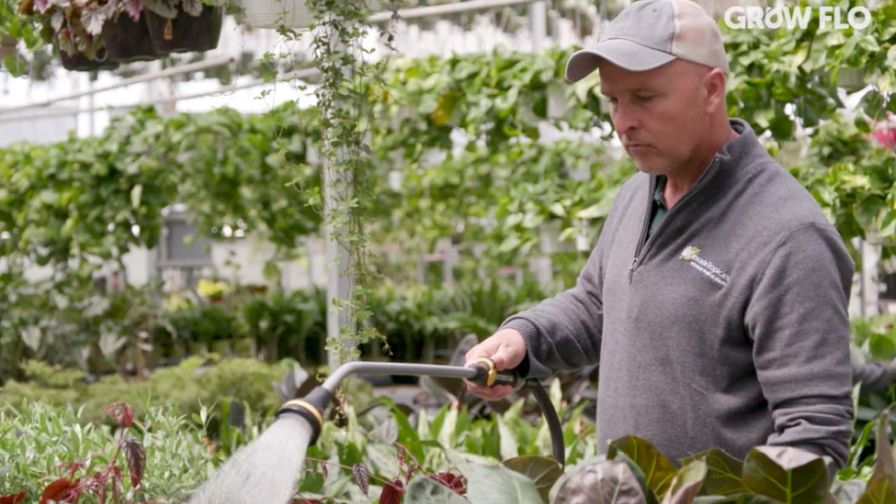
That shift is especially visible at retail. Growers report customers shopping earlier in the season, often before Thanksgiving, and expecting poinsettias to maintain quality through the holidays and beyond. “Customers are absolutely purchasing earlier,” says Judy Mitchell, Owner and CEO of Mitchell’s Nursery. “Some churches put poinsettias in the first week of Advent, which is four weeks before Christmas.
Others want them delivered just before Christmas and keep them through Epiphany. Either way, the varieties have to hold.”
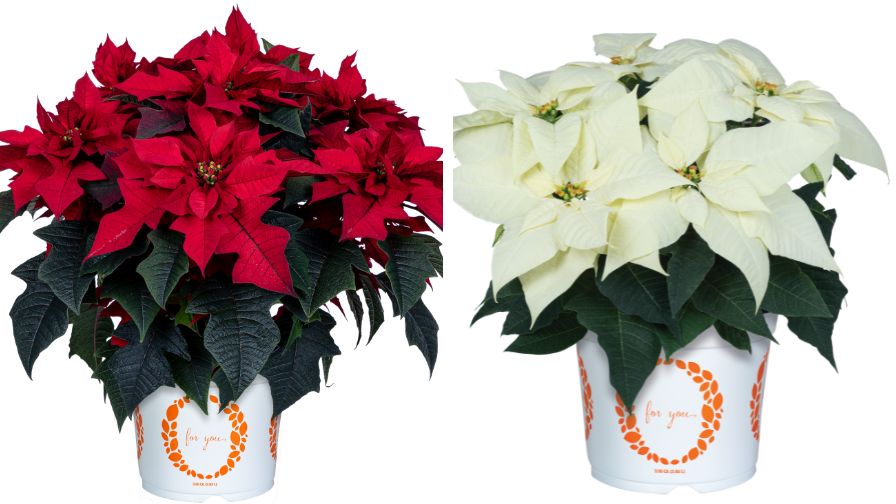
Poinsettia Red Ribbons (L) and Moni White (R). | Dümmen Orange
Breeding programs have responded by emphasizing genetics with stronger cyathia retention, improved bract durability, and better postharvest performance. According to QiuXia Chen, Trial Manager at Dümmen Orange, early color development paired with long-term finish quality has become a key selection target, particularly in varieties such as Red Ribbons and Moni White, which have shown reliable timing and bract quality across multiple environments.
“We are selecting for varieties that color up reliably but also maintain structure and bract integrity over a longer window,” Chen says. “That combination supports earlier retail placement and longer consumer enjoyment.”
Suntory Flowers is seeing similar pressure from growers seeking poinsettias that align with earlier retail programs, particularly in compact formats like the Princettia series, which includes varieties such as Princettia Pure White and Princettia Queen Rose Punch.
“We’re seeing poinsettias used more like houseplants or decorative accents rather than last-minute holiday items,” says Delilah Onofrey, Marketing Director at Suntory Flowers. “That puts more emphasis on longevity and how plants fit into the home over time.”
Selecta One has seen growers prioritize genetics that tolerate handling, transportation, and variable in-store conditions.
“Retail environments aren’t greenhouses,” Doukas says. “Varieties have to tolerate stress and still look good. That’s a big part of what growers are asking for — a longer sales window with low shrinkage in the greenhouse.”
Moving Beyond Solid Red
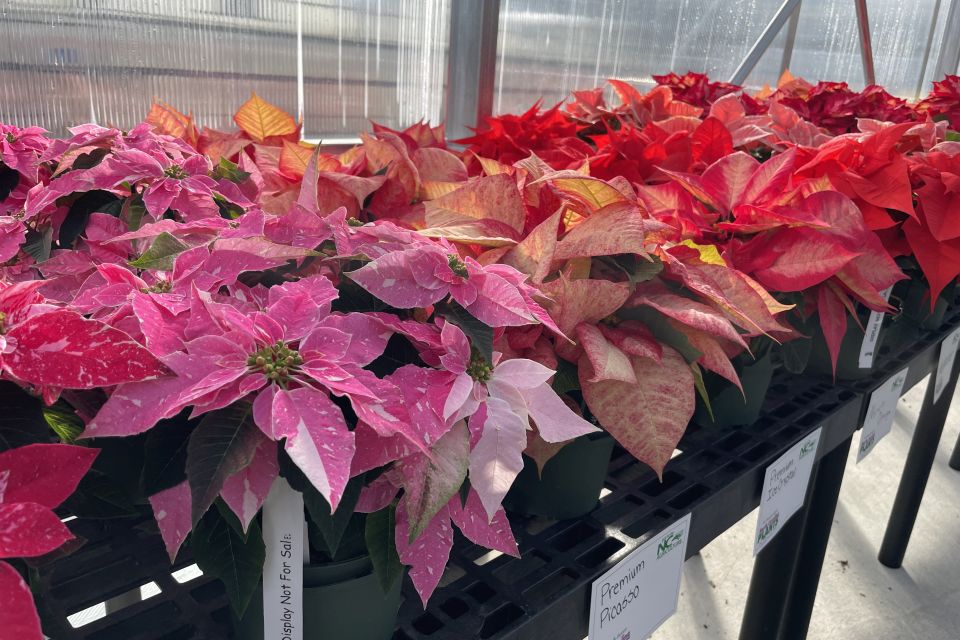
Princettia Sparkling Rouge. | Mitchell’s Nursery
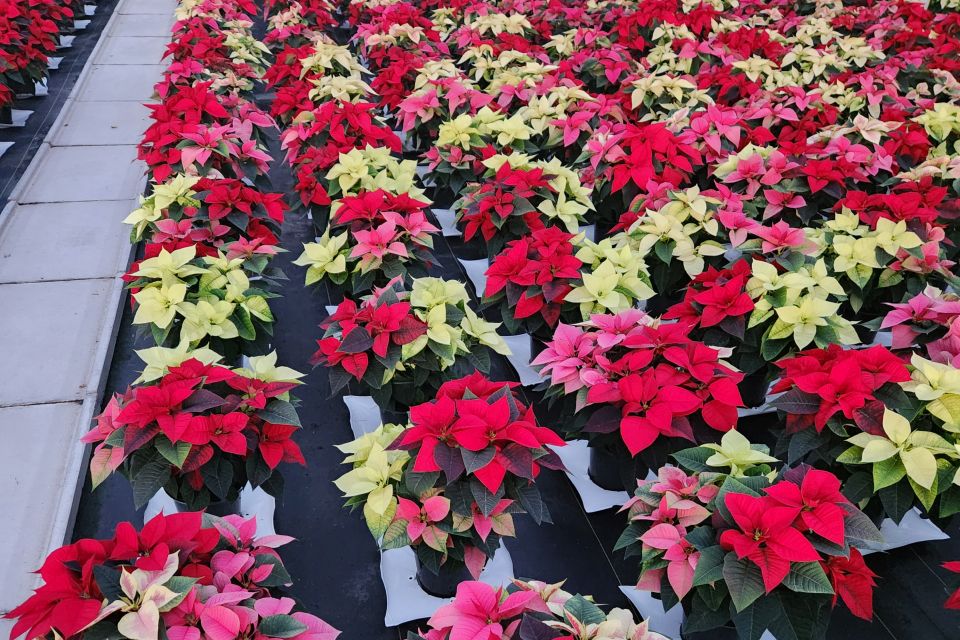
While red remains the volume driver, novelty and nontraditional colors continue to gain ground in poinsettia programs. Growers report consistent interest in pinks, creams, marbled bracts, and brighter novelty shades, particularly when those varieties deliver the same durability expected from traditional reds.
“We’re seeing more customers looking for novelty and less red,” Mitchell says. “The Princettia types with vibrant colors have been especially popular, and people want the best selection early.”
At Mitchell’s, varieties such as Princettia Sparkling Rouge and Rosé have performed well in early-season sales, offering color differentiation while maintaining structure and shelf life.
That trend aligns closely with Suntory’s experience. Princettia varieties, with their compact habits and saturated colors, are increasingly positioned as decorative plants rather than strictly seasonal items.
“There’s strong interest in colors that feel lighter and more contemporary,” Onofrey says. “Pinks and whites fit into more home décor styles, and they appeal to customers who may not want a traditional red poinsettia.”
That demand has pushed breeders to apply the same performance standards to novelty colors as they do to classic reds. According to Chen, visual appeal alone is no longer enough.
“Color alone isn’t enough,” she says. “If a variety doesn’t finish uniformly, hold at retail, or perform well in production, it won’t move forward, no matter how unique the color is.”
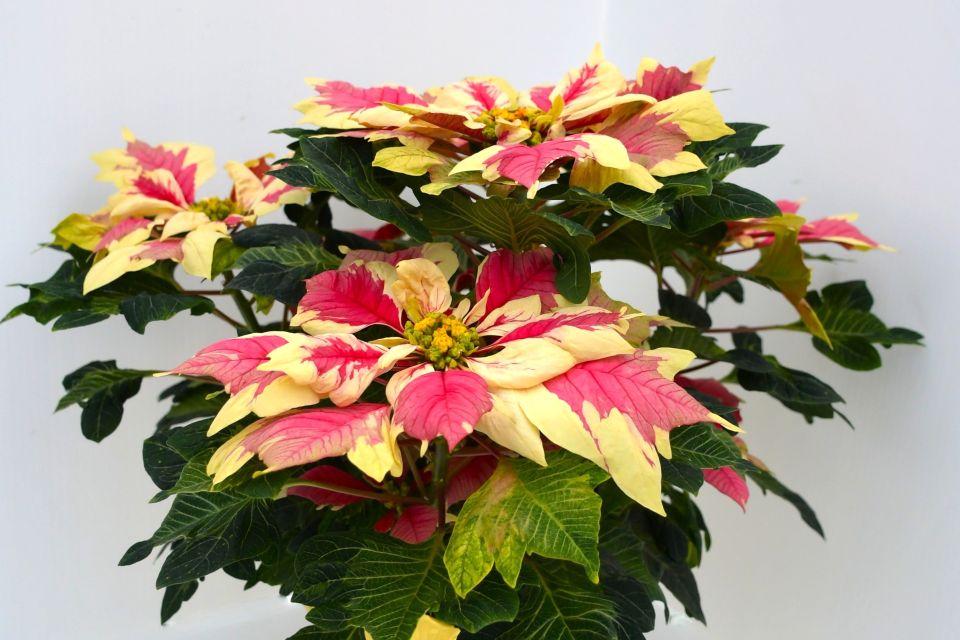
‘Papagena’ offers a palette of creamy white and blush pink bracts. | Plantpeddler
At Plantpeddler, that balance is evaluated directly through annual variety trials. During its 2025 Poinsettia Variety Day, performance data reinforced the importance of consistency across seasons, not just visual impact in a single year. Novelty varieties such as Papagena and TriColor Globe continue to draw interest, but only when backed by predictable growth and timing.
“Growers want novelty, but they also want reliability,” says Mike Gooder, President and CEO of Plantpeddler. “When we look at top-performing varieties year after year, the ones that rise to the top are those that combine color, habit, and predictable growth.”
Production Challenges Drive Genetic Priorities
Despite advances in breeding, poinsettias remain one of the most complex crops growers manage. Long production cycles, sensitivity to growth regulators, and vulnerability to pests and disease make variety selection especially critical.
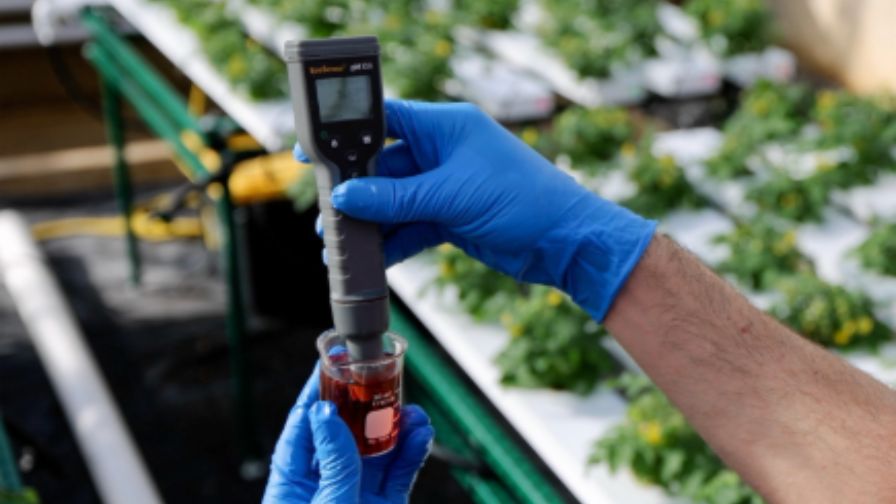
“Poinsettias are our most challenging crop,” Mitchell says. “Different varieties require different PGR strategies. Some need more control; others need a boost. And because they’re in the greenhouse for so long, plants are exposed to more insect and disease pressure.”
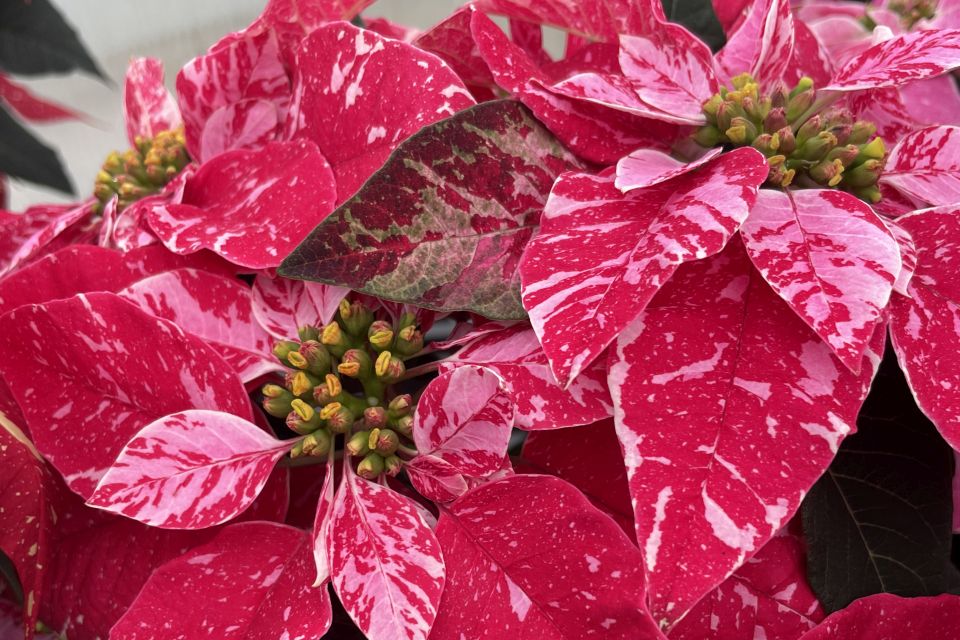
Poinsettia Superba poker. | Mitchell’s Nursery
Those realities shape breeder priorities as much as consumer trends. According to Chen, trial evaluations place heavy emphasis on uniformity, manageable vigor, and predictable responses to cultural inputs.
“We’re looking closely at how varieties respond to regulators, spacing, and fertility,” she says. “If something is too variable, it creates risk for growers.”
Plantpeddler echoes that focus, noting that varieties performing well in trials must also translate to large-scale production. “A variety can look great in a small trial, but if it doesn’t scale, it’s not viable,” says Gooder. “Our growers need genetics that behave consistently across thousands of units.”
Suntory also emphasizes ease of production, particularly as labor remains tight. “Compact habits and predictable growth help reduce inputs and management time,” says Onofrey. “That’s increasingly important for growers balancing multiple crops and limited labor.”
Retail Expectations Shape Variety Selection
Retail partners continue to influence poinsettia programs, particularly around timing, presentation, and shelf life. Growers supplying mass-market and independent channels alike report increased pressure to deliver product that performs with minimal intervention at the store level.
That expectation reinforces the push for varieties with stronger retail resilience. Selecta One has also seen demand for varieties that tolerate earlier shipping without compromising appearance, including red varieties such as Christmas Royale, a new staple for early programs. “The newer varieties have a longer shelf-life,” Doukas says. “They’re more forgiving if they go out with early color, and that gives growers confidence to ship when retailers want product on the floor.”
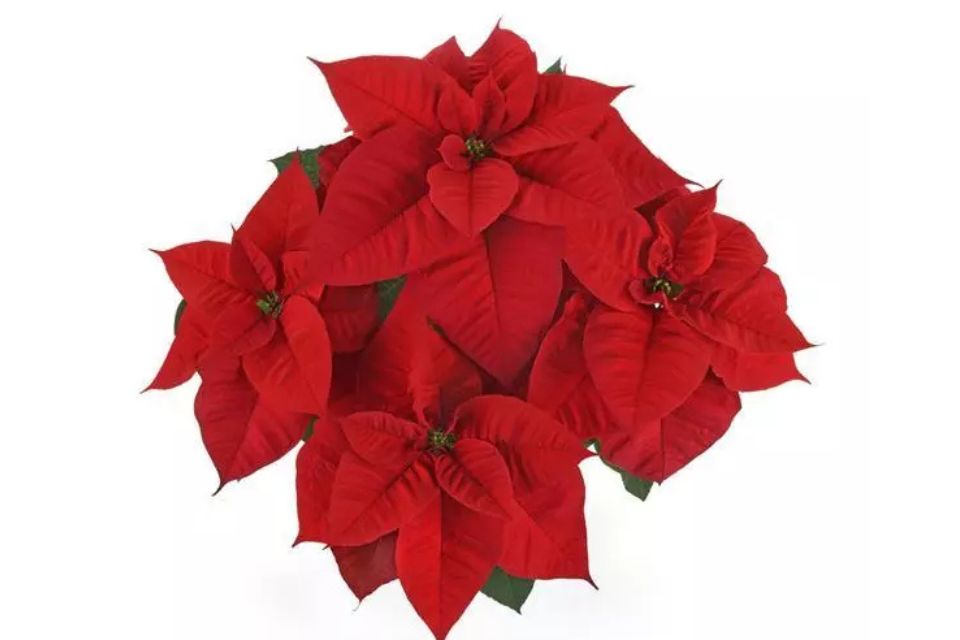
Poinsettia Christmas Royale. | Selecta One North America
Onofrey notes that poinsettias are increasingly displayed alongside houseplants and seasonal décor rather than isolated holiday benches.
“That context changes expectations,” says Onofrey. “Plants need to look good under indoor lighting and variable care, not just in ideal conditions.”
For growers like Mitchell’s Nursery, that durability directly affects customer satisfaction and repeat business.
“People expect poinsettias to last,” Mitchell says. “If they buy early, they want them to look good through Christmas and beyond. The newer genetics help us meet that expectation.”
Trial Data Guides the Future
Across breeding and production, trials remain central to poinsettia decision-making. Whether conducted internally, through grower-hosted events, or as part of breeder evaluation programs, trial data helps refine variety choices year after year.
At Dümmen Orange, Chen emphasizes the importance of evaluating varieties over multiple seasons.
“One season doesn’t tell the full story,” she says. “We need to see how varieties perform across environments, production systems, and years.”
Poinsettia TriColor Globe. | Plantpeddler
Plantpeddler’s multi-year Top 10 rankings reflect that same philosophy. Varieties that perform consistently over time earn long-term confidence from growers.
“That consistency is what allows growers to plan,” the company notes. “It reduces risk and supports more strategic programs.”
Refinement, Not Reinvention
As the poinsettia category looks ahead, breeders and growers agree progress will come through steady improvement rather than dramatic change. The goal is not to replace red poinsettias, but to expand the category’s flexibility and relevance.
For Mitchell, that evolution is already visible.
“The varieties we grow now are better than what we had even ten years ago,” she says. “They hold better, look better longer, and give customers more options.”
Breeders see that progress as ongoing. According to Chen, the focus remains on supporting growers first.
“If growers succeed, the category succeeds,” she says.
After decades in production, poinsettias remain a defining seasonal crop. Their future depends on genetics that respect tradition while adapting to how people shop, decorate, and celebrate today.
As Doukas puts it, “It’s still poinsettias. We’re just making them better.”
Subscribe to eNewsletter