



How Top 100 Growers Are Planning for 2025 Field Trials
 May 28, 2025
 If California Spring Trials is the place to see new varieties in ideal conditions, then field trials are where you separate the good from the great. These trials give not just the growers who host them, but other growers as well as consumers, the chance to see how plants perform under often unpredictable conditions.
Mast Young Plants
As part of its mission to help customers succeed with their plants, Mast Young Plants’ 2024 trials featured “you asked, we listened” plants per pot and slow-release fertilizer trials, addressing frequently asked questions from customers. These trials will continue in 2025.
“We often hear that our plants look great because we must constantly feed them, and that keeping up with that level of fertilization just isn’t realistic for home gardeners,” says Brian Weesies, General Manager of Mast Young Plants in Michigan. “So, we set up a side-by-side comparison using our regular feed, no feed at all, and a slow-release feed. We included a variety of plants to demonstrate that some can still perform well with no feed, while others may need a bit more feed. The goal was to show that with the right plant choices and a little planning, home gardeners can grow just as beautiful plants as we do in our display garden.”
The 2025 garden is expanding upon this trial by adding additional variables.

This year Mast Young Plants will be expanding the slow-release fertilizer trials it started last year. | Tsakani Studios
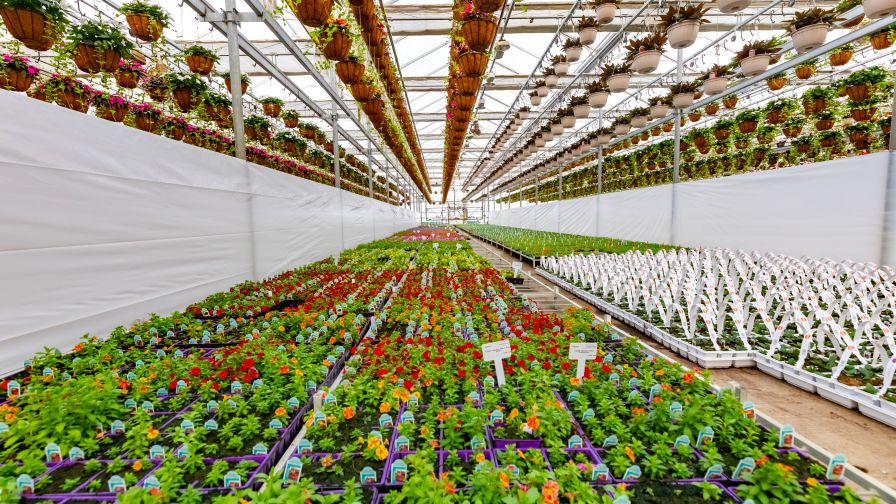




“We are expanding the slow-release fertilizer options and will provide clearly marked feed brands and rates, making it easier for visitors to try this themselves,” Weesies says.
The Mast team also frequently fields questions from their retail customers about ways they can extend the time between waterings for situations like summer travel, cottages, and cemetery urns.
“Our 2025 garden will include a trial featuring different genetics grown with and without soil moisture retention products to compare plant size and vigor,” Weesies says.
Mast also hosted a first-time event in 2024 specifically for home gardeners, partnering with a handful of local retail garden centers who, in turn, invited their customers.
“The event ended up exceeding our expectations,” says Weesies. “We learned that if our industry wants to grow, we need to connect directly with home gardeners to get them excited, show them what’s possible, and give them tools to succeed. Visitors were engaged, asked great questions, and walked away with ideas they could apply at home. It also gave us the perfect opportunity to talk about practical solutions like installing drip irrigation systems in containers, which is something that can make a big difference with relatively little effort or cost.”
On a broader scale, Weesies says plant trials like those at Mast Young Plants give customers the chance to see plants in real conditions, compare true color differences between varieties, and experience things that simply don’t come through in a print catalog.
“One of the key benefits of our trials is the insight they provide into regional performance. Plants can behave very differently depending on the climate, so it’s important for other growers to understand how varieties perform in their own geographical area,” says Weesies. “By trialing in Grand Rapids, MI, we offer valuable data for growers across the Upper Midwest. That’s a significant market, and it’s critical to understand how genetics respond to local environments. For example, one breeder told us our location is one of the best in the country for detecting mildew in crops like dahlias and calibrachoa. They’ve tested new breeding lines in other parts of the country without issue, only to see significant mildew when those same varieties are grown in our trial garden. That kind of feedback is essential for developing stronger, more resilient plants.”
Smith Gardens
Denise Mullins, Director of Product Innovation at Smith Gardens in Washington, says the Smith Gardens trials benefit other growers and retailers by getting a chance to see how new genetics perform in the landscape for the end consumer.
“Every year we do side-by-side genus trials, in ground, so you can see the varying vigor and plant habits of each new variety both for annuals and perennials,” says Mullins.
This year’s upcoming trials are being impacted to some degree by market conditions.
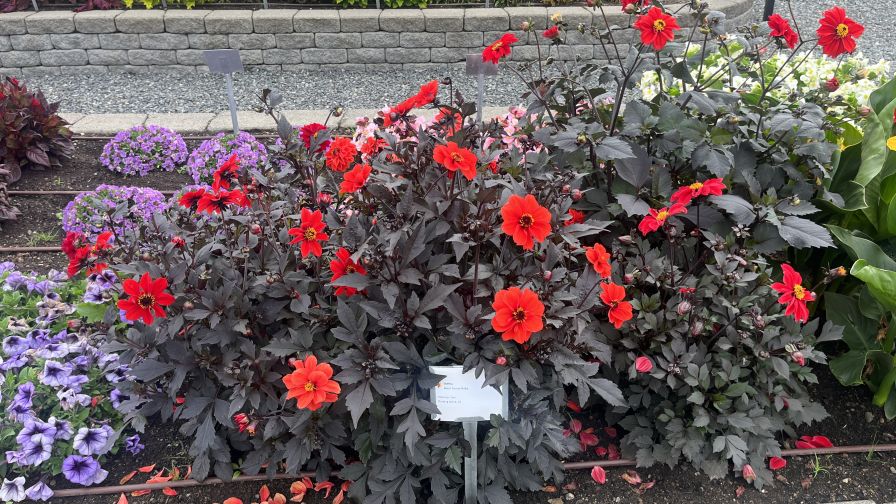
Dahlia ‘Black Forest Ruby’ from American Takii was a stand-out performer at Smith Gardens’ 2024 trials. | Smith Gardens
“We usually always have a decent percentage of the new genetics in our trial garden; however, it seems as though breeders are cutting back this year and choosing not to showcase as much,” Mullins says. “Last year was our 10-year anniversary and we had veggie displays and cut flower gardens; however, things have been dialed back for 2025 given the new financial climate.”
One more lesson Mullin shares: “I need to have backup plans when trying to do a veggie grow-out that includes taste testing at our event. None of the veggies timed out to eat!”
The Southern Garden Tour
The Southern Garden Tour is back this June, inviting members of the horticulture industry to explore top trial gardens across three Southern states. Hosted by Young’s Plant Farm, the University of Georgia Trial Gardens, and Metrolina Greenhouses, the tour is a showcase of innovation, plant performance, and industry networking.
This year’s Southern Garden Tour takes place on Tuesday, June 3 (Young’s Plant Farm), Wednesday, June 4 (University of Georgia), and Thursday, June 5 (Metrolina) and offers an immersive look at real-world garden trials highlighting the performance of the latest plant genetics.
The newly updated SouthernGardenTour.com serves as the tour’s central hub, providing site-specific details, registration access, hotel and dining recommendations, and exclusive content. New for 2025, the website features top-performing 2024 plant varieties, photos, and curated industry trade media coverage from each location.
Additional highlights include Metrolina Greenhouses’ invitation-only consumer event for Home Garden Panel (HGP) members, where approximately 125 consumers will participate in focus groups, and 500+ consumers will explore the 3-acre trial garden and flag their favorite varieties. The annual event gathers qualitative consumer insights that are followed up with quantitative research. HGP members receive confidential consumer preference data and focus group reports, providing valuable end-user feedback on new plant genetics and product concepts.
New at Young’s Plant Farm this year, the trial garden is partnering with Food U, a program at Auburn University that provides sustainable, student-grown food for on-site consumption. In collaboration with Food U, the Young’s Plant Farm Trial Garden will feature herbs, vegetables, and edible flowering annuals throughout the trial garden, and Auburn University’s Food U Coordinator Jack Maruna will be onsite to answer questions. Guests of the trial garden will also be able to arrange for a tour of the rooftop garden at the nearby Laurel Hotel, which provides produce for 1856 Culinary Residence, a teaching restaurant on the Auburn University campus.
Subscribe to eNewsletter