


It’s 2026 – and Natives Are Still Going Strong
 January 15, 2026
 The term “native plants” has been around for decades. In the ‘80s and ‘90s, wildflower and native plant movements popped up here and there, and The Lady Bird Johnson Wildflower Center opened in 1995. Our industry, however, essentially ignored native plants. But love always finds a way.
View all
There was no precise wedding date between native plants and our industry. Since I am fairly elderly, I suspect I was around, but I recall it was more like a quiet elopement.
Regardless, the kids ran off together more than 30 years ago. We were not sure about inviting these wild things into our homes, but a few people recognized their union, albeit slowly and even a little reluctantly. With a little time, we accepted native plants and, for at least 20 years, we have embraced them with great gusto.
Many progenies were initiated, but we weren’t sure what to call them. That changed when the term “nativar” was introduced in 2008, and the offspring were legitimized in the minds of buyers. And, oh my, how that elopement has benefitted us all.
Like all of you, I am in awe of nativars’ offspring. Here are a few I hope we see even more in 2026.

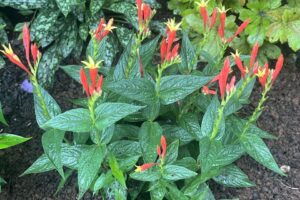
Indian pink Spigelia marilandica
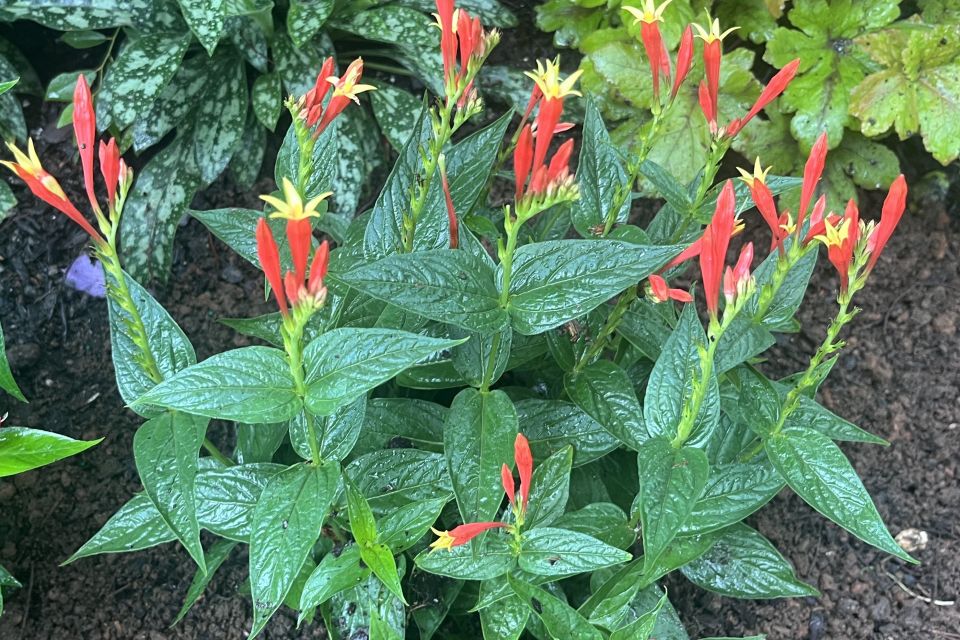
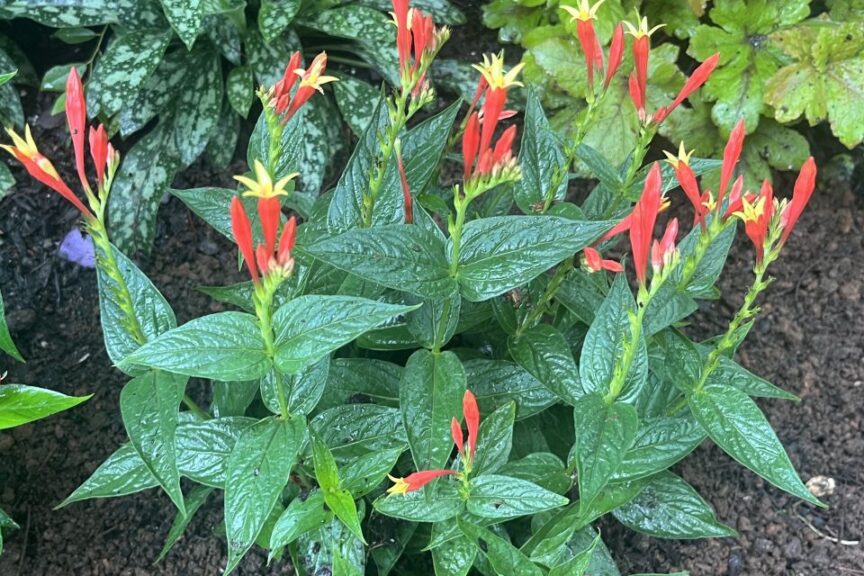
Indian pink Spigelia marilandica ‘Ragin Cajun’
If you have not discovered Indian Pinks, you are not paying attention. As propagation and growth management in the greenhouse and nursery have become better understood, the species itself and nativars like ‘Little Redhead’ and ‘Orange Slices’ allow us to share even more choices.
Bluestar Amsonia spp. and hybrids
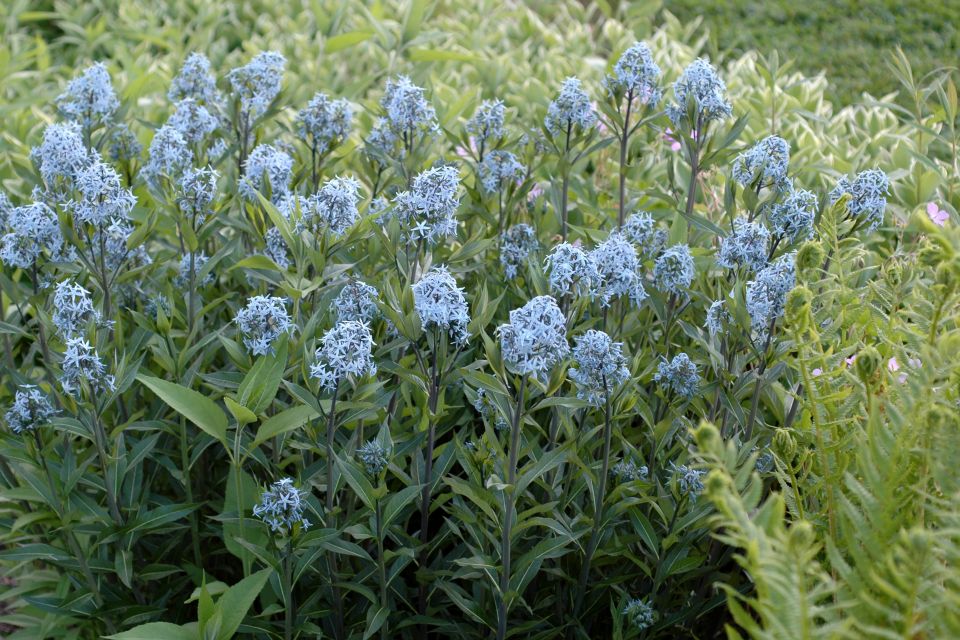
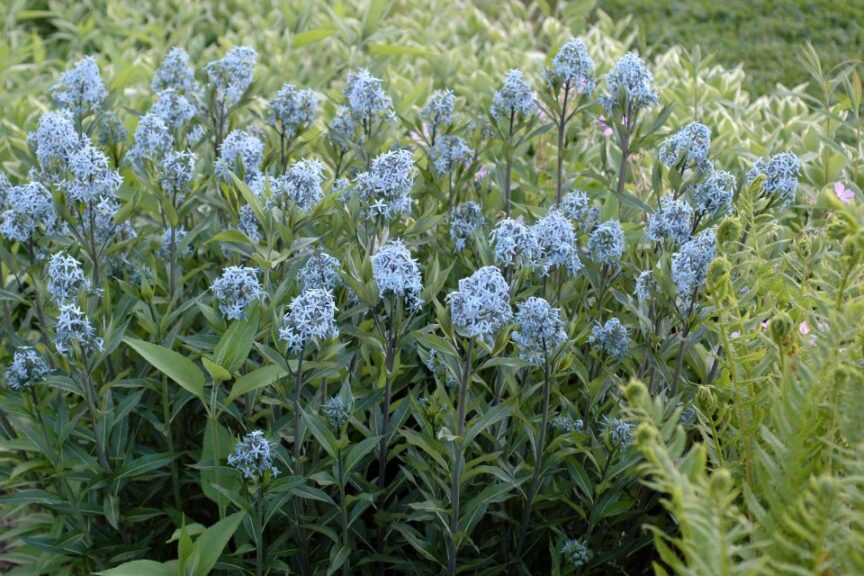
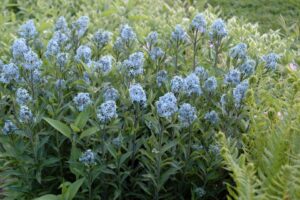
Eastern bluestar Amsonia tabernaemontana
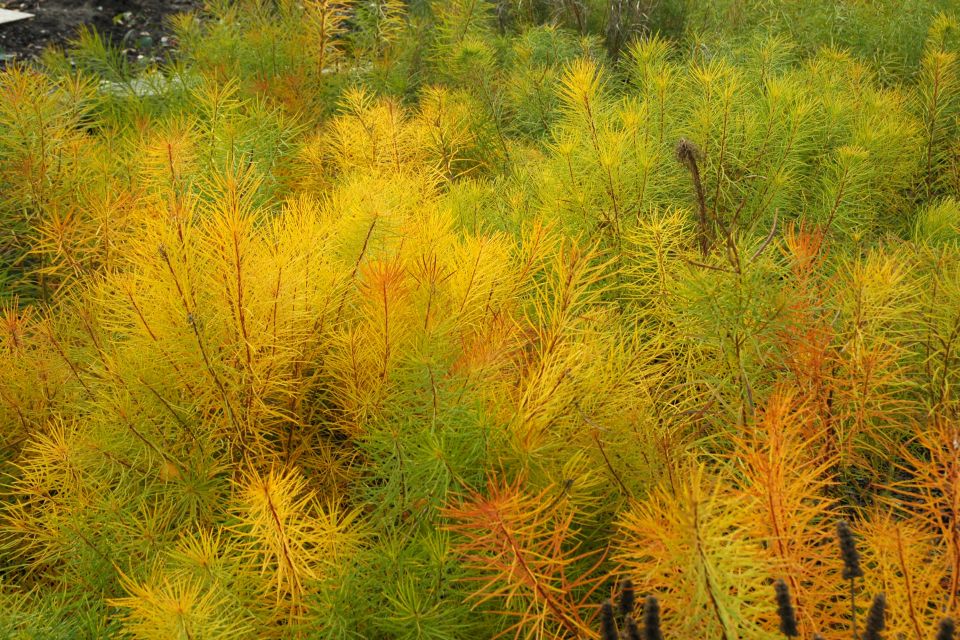
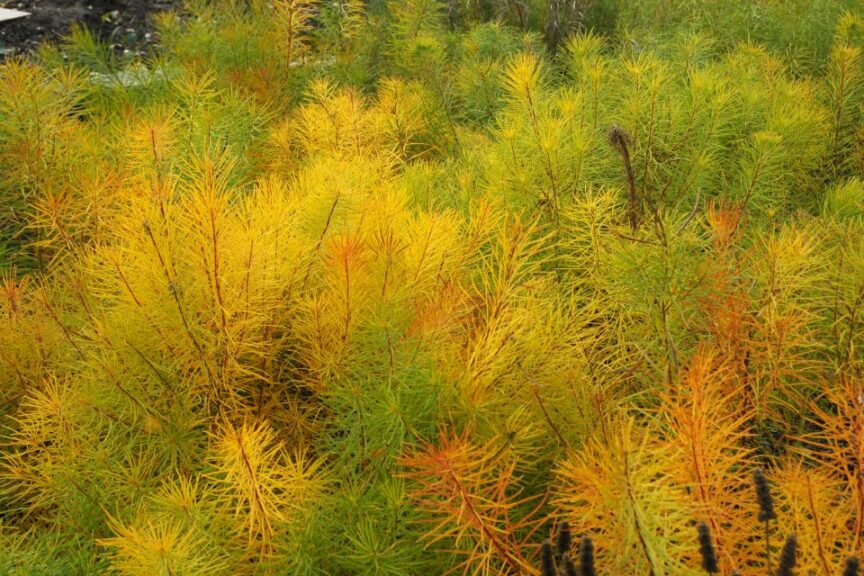
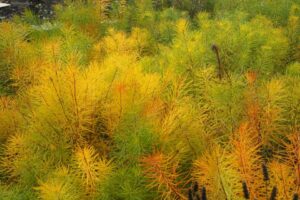
While better known than Indian pink, bluestar gives us just about everything we want in a native. Eastern bluestar (A. tabernaemontana) has handsome flowers and stems, and offspring of its own — ‘Blue Ice’ and ‘Storm Cloud’ are exceptional. The Arkansas bluestar (A. hubrictii) and its selection ‘Butterscotch’ provide extraordinary fall color as well.
False indigo Baptisia spp. and hybrids
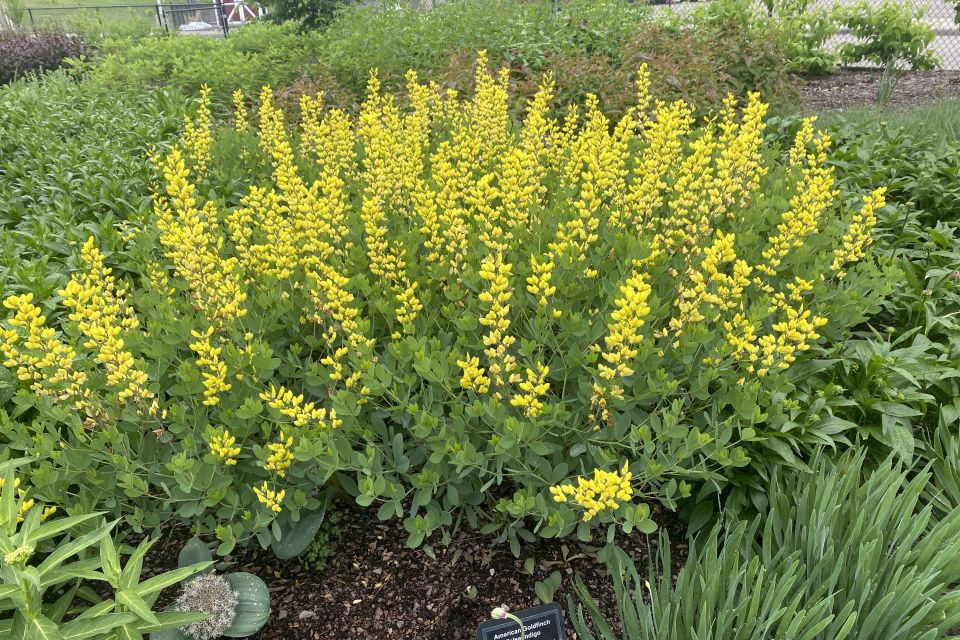
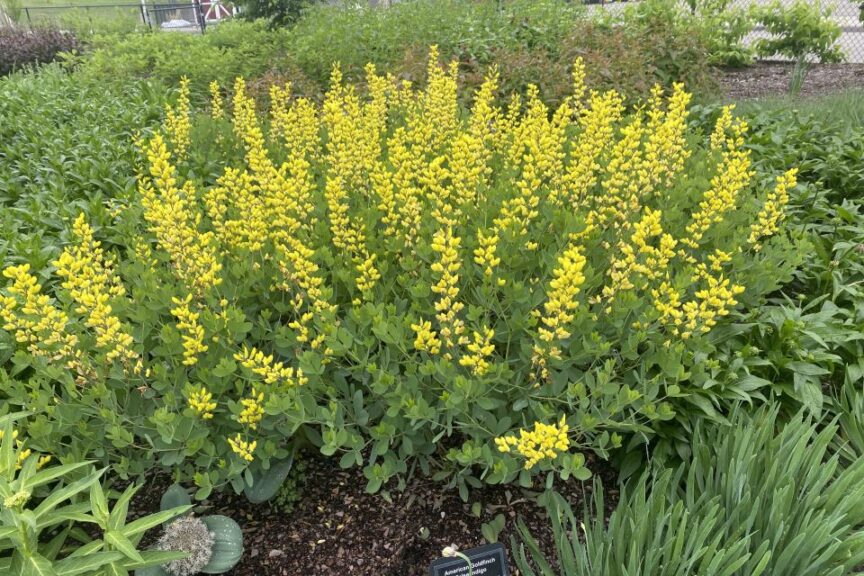
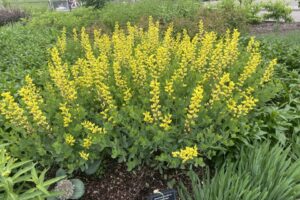
False indigo Baptisia hybrid American Goldfinch
Here is another plant that has exploded in the last 20 years. It is as native as any plant can be, and the offspring have been prolific. Not only is it abundantly cold-hardy almost everywhere, but it also provides longevity, bird habitat, and exceptional color.
The issues with mainstreaming false indigo are twofold, one of which we can improve. First, it needs genetic dwarfing to fit in better with today’s smaller gardens, and that is doable. “Dwarf” and “compact” are the mantras of the greenhouse industry. Second, false indigo emerges slowly from the container in spring. A rather barren pot, no matter how good the label, does not lead to exclamations of joy by the consumer.
Still, it is a fabulous plant for landscapers and should be a mainstream player in any native program.
Bee balm Monarda spp. and hybrids
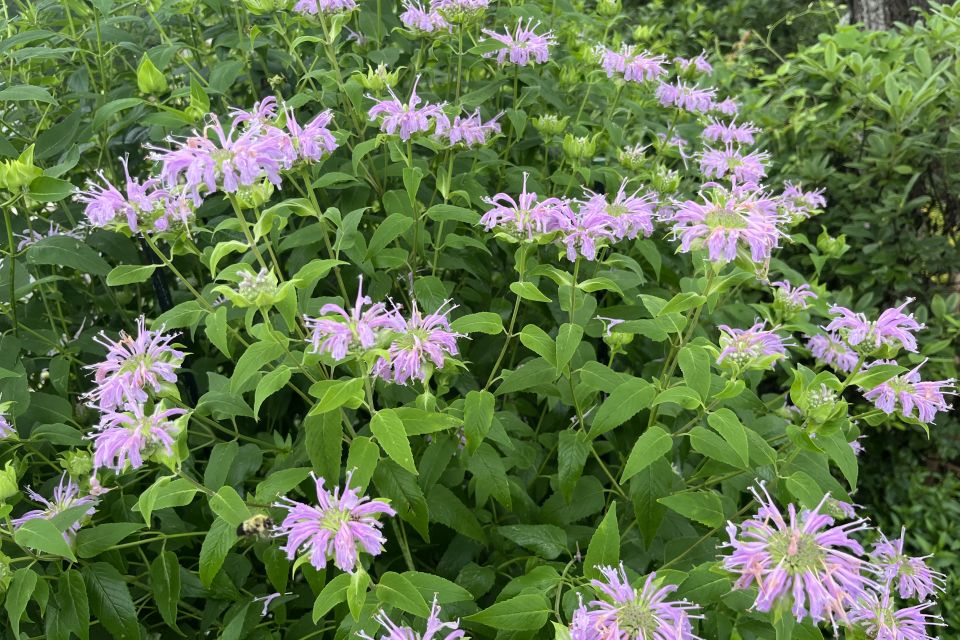
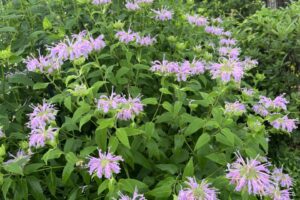
Eastern bee balm Monarda bradburiana ‘Midnight Oil’
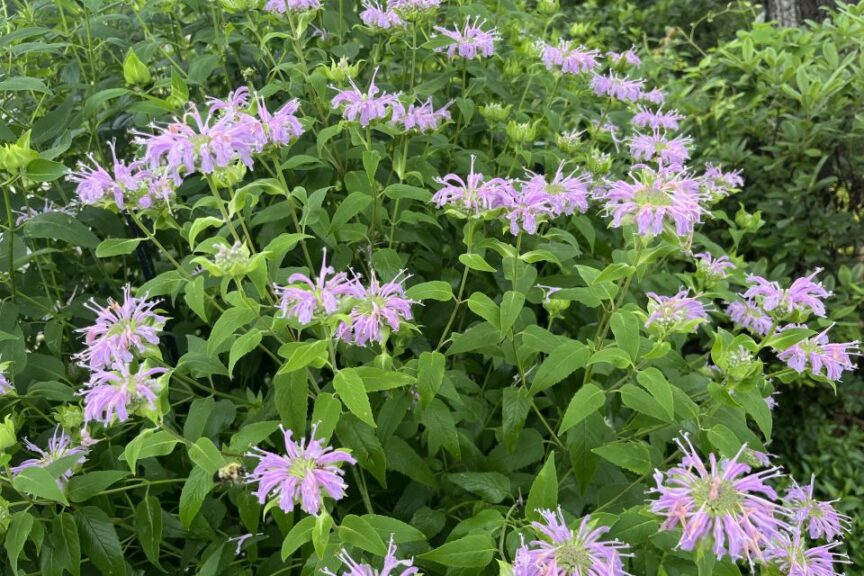
A bunch of nativars were thrust upon unsuspecting gardeners in the ‘90s; nearly all were rampant, mildew-infested weeds. That was essentially the demise of bee balm. However, things have improved with the common species M. didyma, and disease-tolerant nativars have been successful. And let us not ignore some of the other native species of bee balm that are gaining a foothold. I strongly recommend looking into Bradbury bee balm (M. bradburiana) and the particularly handsome form ’Midnight Oil’.
I fully expect some of our better breeders to hybridize and improve this genus. And then, look out!
These are just four extraordinary, money-making, earth-saving plants for the spring.
So many more, so many more.
Subscribe to eNewsletter