



Mt. Cuba Center Shares Results from Three-Year Goldenrod Trial
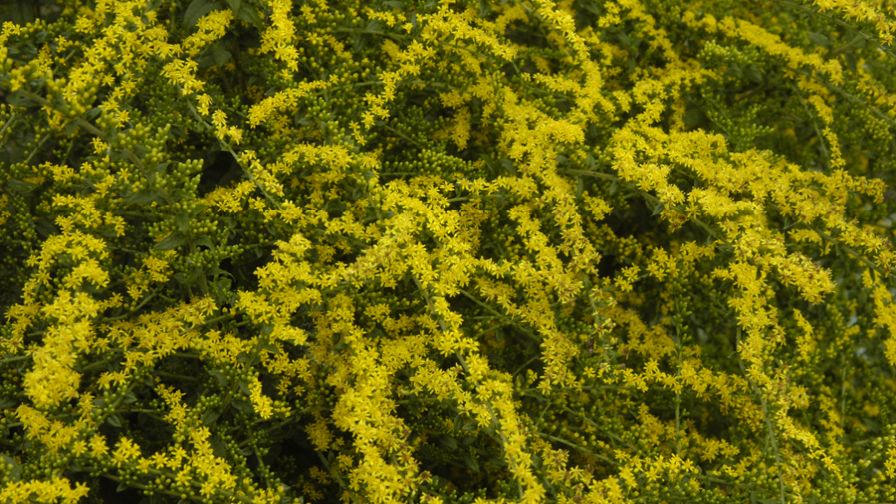
Solidago rugosa (Fireworks Wrinkle-Leaf Goldenrod). | Mt. Cuba Center
According to a three-year trial conducted by Mt. Cuba Center, Solidago, commonly known as goldenrod, are adaptable native plants that provide beauty and ecological value to almost any garden. Goldenrods native to the eastern temperate forest region of North America can be found growing in a wide range of habitats, including woodlands, rocky cliffs, bogs, and coastal sand dunes. Mt. Cuba Center’s trial evaluated 70 types of Solidago, including 50 distinct species as well as cultivars and ecotypes native to the eastern U.S. The evaluated plants included goldenrods that were commercially available, wild-origin collections of commonly available species, and additional species that are relatively obscure and rarely cultivated. “Goldenrods can be found in just about every corner and habitat of the Eastern Temperate Forest Region, and thanks to that diversity in the wild, there truly is a goldenrod for every garden and landscape,” says Sam Hoadley, Mt. Cuba’s Manager of Horticultural Research. Results are available now in the new report, “Solidago for the Mid-Atlantic Region.”
Solidago for the Mid-Atlantic Region
Goldenrods are incredibly diverse in form and habit, and many are highly ornamental with beautiful floral displays and even fall color. Most species bloom in late summer and fall with yellow composite flowerheads consisting of both ray and disc florets. As a keystone species, these plants are not only beautiful, but goldenrods are also incredibly important for supporting biodiversity. Plants in the Solidago genus are the host plants for caterpillars of more than 100 different species of butterflies and moths, and the pollen and nectar are important sources of nutrition for insects such as monarch butterflies and bumblebees late in the season. The trial highlights the incredible beauty and wildlife value of the Solidago species and cultivars that thrive in average garden conditions in the mid-Atlantic region.
The Trial Garden team ranked the goldenrod species and cultivars growing in full sun based on plant vigor, foliage, form, habit, floral display, and disease resistance to determine top performers. The cultivar, Solidago rugosa ‘Fireworks’, was the highest-scoring goldenrod in the trial, with sturdy, upright stems and a spectacular fall floral display. Additionally, some lesser-known species not previously in cultivation, such as S. fistulosa (pine barrens goldenrod), proved to be top performers, and thanks to a collaboration with Pinelands Nursery, will be available to purchase. You can find the full list of top performers, with photos and additional information about each of them, here. Mt. Cuba’s trial also took an in-depth look at pollinator activity for these ecologically important plants. Volunteers from the Pollinator Watch Team recorded 20,000 insects visiting the goldenrods over the three years of the evaluation, including bees, butterflies, wasps, moths, flies, beetles, and true bugs. A full table of pollinator visits, with a focus on bumblebee activity, can be found in the report.
Due to the inclusion of many local ecotypes and species, the Solidago report is of particular utility not only to home gardeners but also to land managers and large-scale restoration projects. Of the 12 top-performing goldenrods, 11 are straight species rather than cultivars, and thus suitable for mass plantings. Additionally, the report outlines evaluated species from both the mid-Atlantic Piedmont and coastal plain regions, which can be helpful for selecting locally-specific goldenrod species that will thrive in these distinct growing conditions. “We are excited to shine a spotlight on a group of plants that many know, but few grow in their home garden. Our three-year Solidago trial illuminates the incredible diversity of this genus and highlights their potential for use by gardeners, native plant enthusiasts, and natural lands managers in the mid-Atlantic region and beyond,” says Hoadley.



Key Trial Takeaways
- There is a wide diversity of native Solidago species and cultivars, and many are surprisingly adaptable in cultivation and can serve as both beautiful and ecologically valuable additions to just about any garden.
- Goldenrods are some of North America’s most iconic and recognizable native plants that not only make spectacular additions to home gardens but are also well-suited to support an incredible diversity of wildlife in cultivation.
- While goldenrod often has the perception of being aggressive and weedy, very few species in the trial showed these characteristics. Instead, many species make excellent garden plants.
- As a keystone species, goldenrod supports a considerable amount of wildlife, including being the host plant for the caterpillars of more than 100 different species of butterflies and moths, as well as an important source of late-season nectar.
- In addition to attracting many pollinators, various bird species, including warblers, ruby-crowned kinglets, and dark-eyed juncos, were observed hunting for insects and seeds amongst the goldenrods.
- While most goldenrods grow best in full sun, several species, including Solidago caseia (blue-stemmed goldenrod), flexicaulis (broad-leaf goldenrod), and S. patula (roundleaf goldenrod) are excellent plants for shaded sites.
For additional information, read the full report here.
Subscribe to eNewsletter