

Factors That Determine a Plant’s Presence
 September 24, 2025
 Too often, gardeners focus on just one aspect of a plant when deciding whether to purchase it. The same goes for nurserymen when deciding what to sell, especially when deciding between two similar cultivars. It’s easy to get bogged down by certain characteristics that make a plant more appealing than others, whether it’s a new flower color, a certain leaf shape, or any number of other possibilities. Modern breeding efforts churn out new cultivars that often vary from their predecessors by only one of these characteristics (and often not to a significant degree) without changing the plant’s presence.

View all
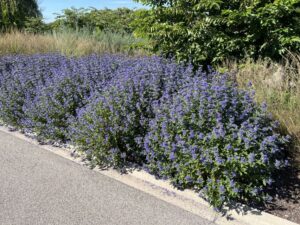
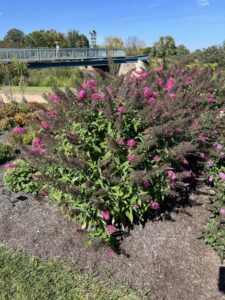
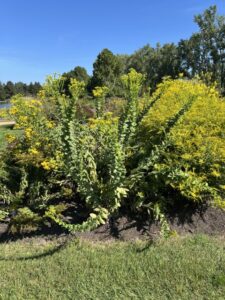
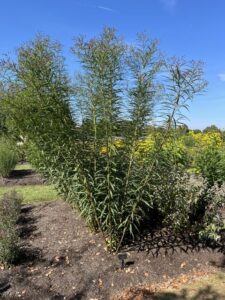
In my mind, a plant’s presence is the impression it leaves on a viewer and is determined by three factors: its size, habit, and density. For any given cultivar, these factors are rarely static; rather, they change over the course of the year and across years as a plant matures. For example, a Baptisia plant may look like scrawny asparagus spears in spring of its first year and become a vigorous mound in subsequent summers. While flower display is also significant to many people, it is usually short relative to the entire growing season and is therefore not my focus here.
Different demographics care about each factor to different degrees. For example, growers care about size due to shipping, with plants 2 feet or shorter being more economical to transport. Nurserymen may care more about density, as a denser plant will appear more substantial in a pot. This notion is even truer when several clones of the same cultivar in the same growth stage are next to each other as juveniles in nursery pots or mature plants in a garden. Garden designers have a keen eye for habit and visualize how different habits will interact in their conceived gardens.
If plants were laid out by presence at nurseries, this would achieve areas of uniformity that could guide gardeners based on the effect they’re trying to achieve with a plant. Nurseries could also mix plants of different presences to show how they would work together in a garden. Gardens typically have a diverse mix of plants except for areas planted in masses to achieve a grand effect. Either way, this would be more helpful to less educated gardeners who don’t benefit from plants being organized alphabetically.
Stepping back and seeing how the three factors combine can be difficult, so I thought it would be fun to try categorizing the different types of presence a plant could possess. This is an exercise that I am making up as I go, but the following table is my attempt to organize the different presences into categories based on specific combinations of factors. Only nine of the 27 possible combinations are included. For now, it is simply a set of adjectives one could use to communicate the overall personality of the plant, or to put it more colloquially, the plant’s “vibe”.

To use the table, first decide on where a plant lies among the three possible classes for each of the three factors, then see which square the three classes correspond to. The position of the adjective within each square matters, and the two adjectives in each square are not entirely synonymous, so consider which of the two is more fitting for the plant at hand. Again, the table only covers a third of the possible class combinations, so you’ll have to come up with your own adjectives for other combinations.
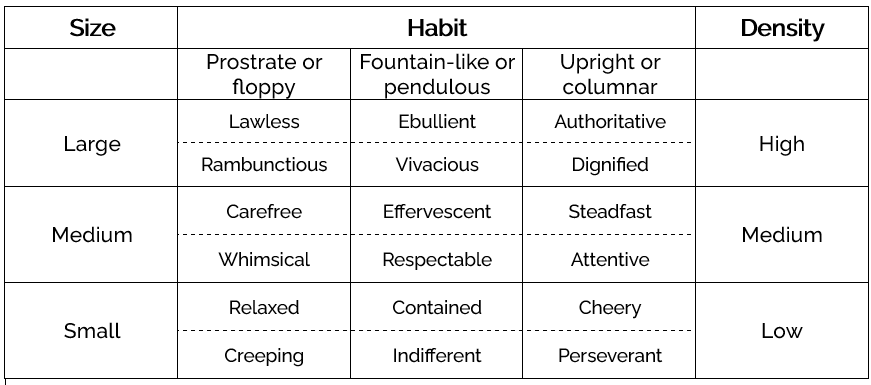
These adjectives are largely subjective, even though some categories have more personality than others. These could be worked into more objective descriptions and advertisements to describe the impression a plant elicits. Perhaps these categories and adjectives will grow more useful if they’re refined and customized by plantsmen and plantswomen to construe a plant’s presence. I am doing this with perennials in mind, but these categories can likely carry over to shrubs. Lastly, I can admit some of these adjectives are too esoteric for everyday use and may need replacements.
The following are some example cultivars and adjectives in ascending order of size. They were all photographed this September and are being studied in our plant evaluation program.
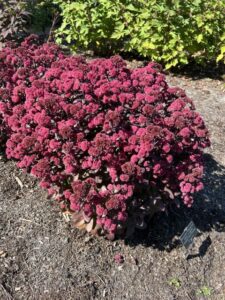
Hylotelephium ROCK N’GROW® ‘Midnight Velvet’
Current size: 24 in x 28 in
This sedum cultivar does not fall in the chart above due to its being very dense but fairly small. Perhaps I’m influenced by the common name stonecrop, but the word that comes to mind is sturdy. Between its inflorescences and foliage, absolutely nothing is visible through this cultivar. Its habit falls somewhere between upright and rounded, adding to its impression of strength.
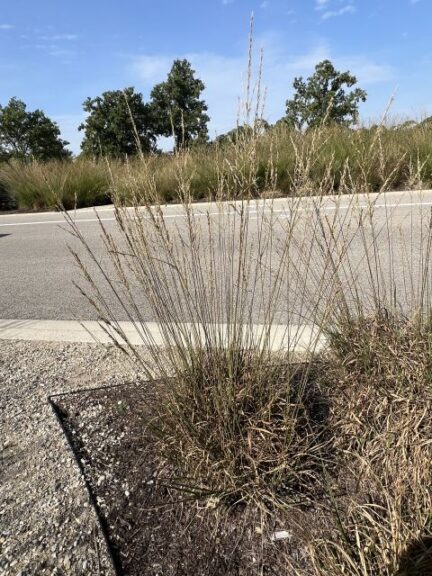
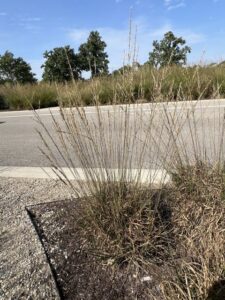
Molinia caerulea ssp. caerulea ‘Moorflamme’
Current size: 30 in x 24 in
This grass species would be aptly described as cheery. Its narrow, erect inflorescences and stems make it highly transparent and seem much smaller than it is. Despite this, its upright habit gives a happy impression as opposed to a meek one. Presence and its constitutive factors help explain the surprising difference between these first two cultivars. Even though this cultivar is slightly taller than the sedum that precedes it, it seems to be much smaller overall because of its far lower density.
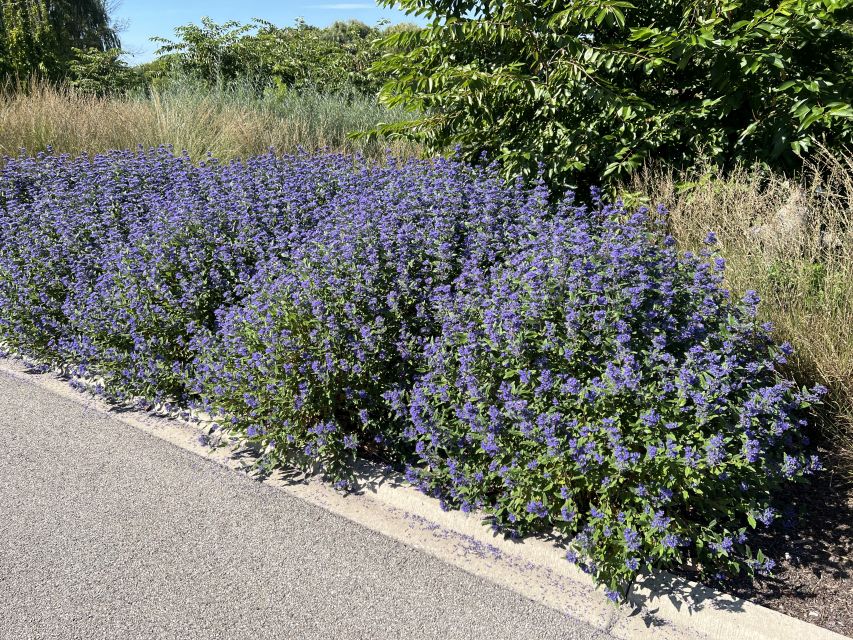
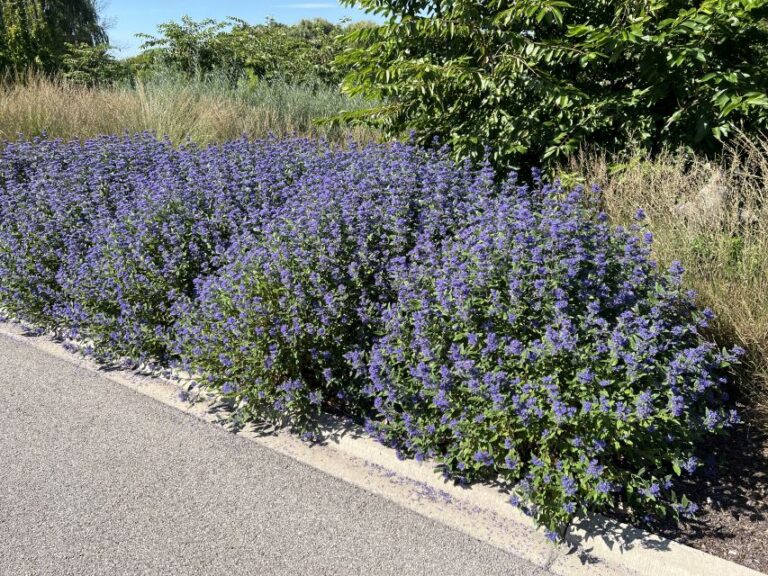
Caryopteris × clandonensis ‘Emerald Crest’
Current size: 36 in x 54 in
Respectable may not capture just how wonderful this bluebeard cultivar is, but it does capture how well-balanced it is. Its habit is a combination of all three types, with stems splaying out towards their bases and growing erect towards their tips, which creates a rounded dome. This cultivar is moderately sized and fairly dense, but not so dense that inflorescences can’t be singled out.
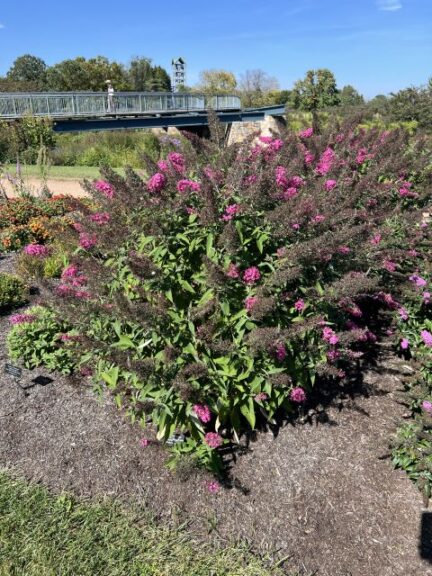
Buddleja Monarch® ‘Cherry Royale’
Current size: 48 in x 60 in
Many cultivars of butterfly bush can be described as effervescent, but it seems particularly fitting for this cultivar. Like bubbles escaping glass, its stems and inflorescences fan out of the plant in all directions. While on the larger and denser side, this cultivar feels restrained rather than dominant, which I can’t say for the following entries.
Solidago rigida
Current size: 72 in x 96 in
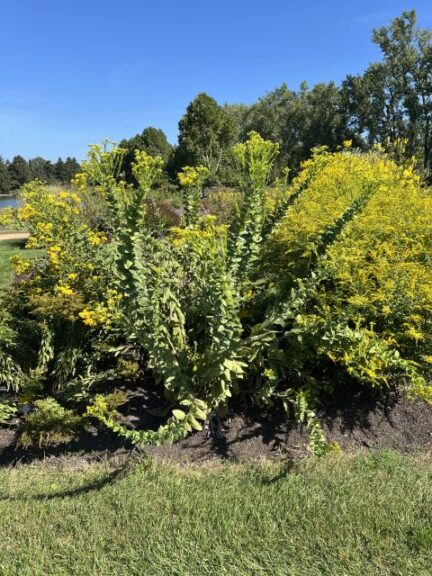
We’re entering plant presence territory best described as unwieldy, beginning with a species of goldenrod I can only refer to as lawless. While my chart dictates that this adjective is for large floppy plants that are also dense, I think it works just as well for less dense plants, especially because floppy and dense tend to have an inverse relationship. This species is quite vigorous but lacks discipline when it comes to directing its growth.
Vernonia ‘Over My Head’
Current size: 108 in x 78 in
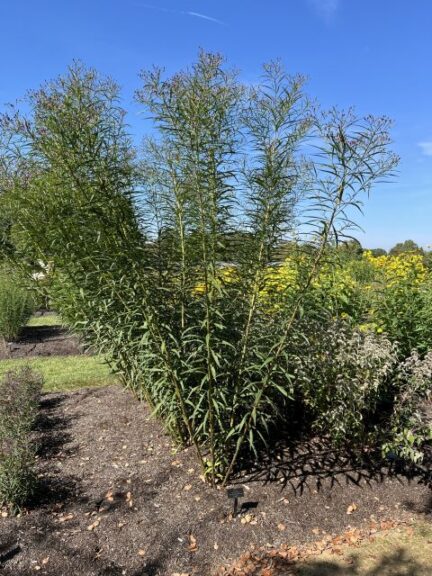
Lastly, this ironweed cultivar has a dignified disposition. Its significant width is trumped by its colossal height thanks to its largely upright, fountain-like habit. Though its stems are not particularly dense at this age, its large leaves filled the space between stems adequately. Perhaps these second-year plants will splay once they get older, but for now they are holding their heads high (pun intended).
Subscribe to eNewsletter