



Meet Brad Meyer, Our 2025 Head Grower of the Year
 October 5, 2025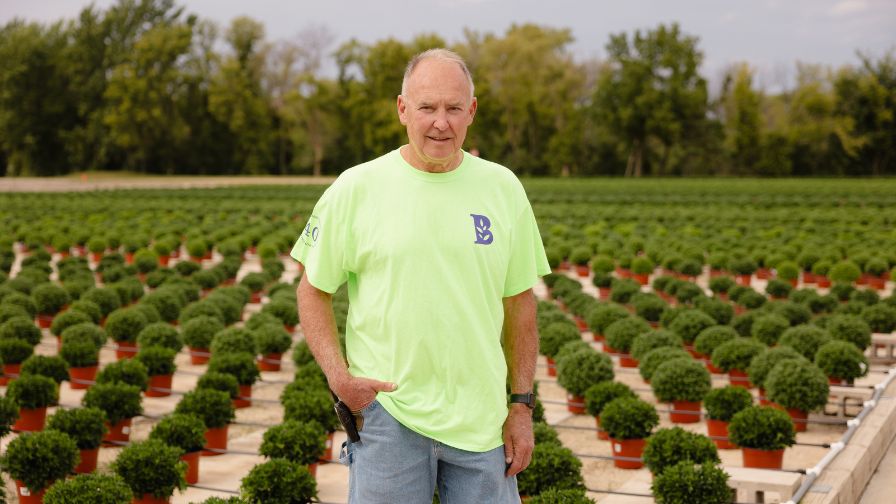
Brad Meyer, Greenhouse Grower‘s 2025 Head Grower of the Year. | All photos courtesy of Christina Knutson, Creative Manager – Marketing and Corporate Communications for Bachman’s
If there’s one word to describe Brad Meyer’s path to becoming head grower at Minnesota-based Bachman’s, it’s “unconventional.” Named Greenhouse Grower’s 2025 Head Grower of the Year, Meyer has never stopped striving to improve as a grower. By listening to technical consultants, embracing innovative plant health strategies, and adopting new products and practices from the ground up, he has advanced quickly, surpassing many peers with far longer tenures.
A Background in Drywall
To be clear, Meyer isn’t a stranger to farming. He grew up raising turkeys and hogs, and once planned on working the land with his dad. But while earning an ag business degree, he took a part-time drywall job that turned into a 30-year career. It wasn’t until the housing crash of the early 2000s that he was pushed in a new direction.
“I worked for Davey Tree for a year and a half and then saw there was an opening for an Assistant Grower at Bachman’s,” Meyer says. He started that role in 2014 at the age of 55 and eventually moved into the Head Grower position.


The result of this late entry into the world of horticulture was an immediate crash course in learning. “I worked a lot of weekends and other times when there were only a couple of us in the greenhouse,” says Meyer. “I was constantly picking the brains of the growers I worked with or those I knew from other companies and writing down everything they said.”
Today, Meyer attends industry events and webinars to keep up with the latest information, but he says the best learning still happens in the greenhouse.
“In an industry like this, I think the best way to learn is to get out there, especially when you hit the peak of the spring season,” says Meyer. “You want to be right in the middle of everything and absorb as much as you can.”
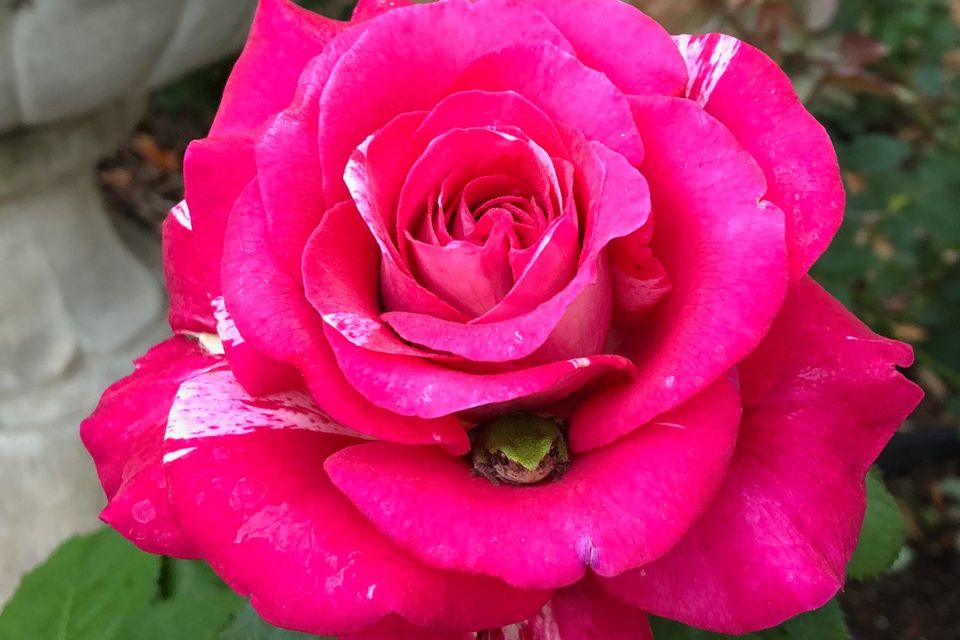
There’s one plant that Brad Meyer is particularly passionate about: roses. He’s president of the Minnesota Rose Society and is involved in several regional rose organizations. “We don’t grow a lot of them at Bachman’s, but you can often find me working with the roses in my yard,” Meyer says.
That curiosity also drives him to take on challenging production issues. “Mildew is always a concern with dahlias,” he says as an example. “I’ve tried a few new approaches that involve mixing older chemistries with newer ones, and it seems to work well. A lot of what we do is a simple matter of trial and error.”
Adapting Pest Management
This trial-and-error mindset led Meyer and the Bachman’s team to experiment with beneficial insects for pest control.
“The first year was a big struggle because we learned we had a lot of spaces in the greenhouse where bugs could hide. We knew we needed some help, so we worked with Heidi Doring at Koppert to help us come up with a control schedule that made sense,” Meyer says.
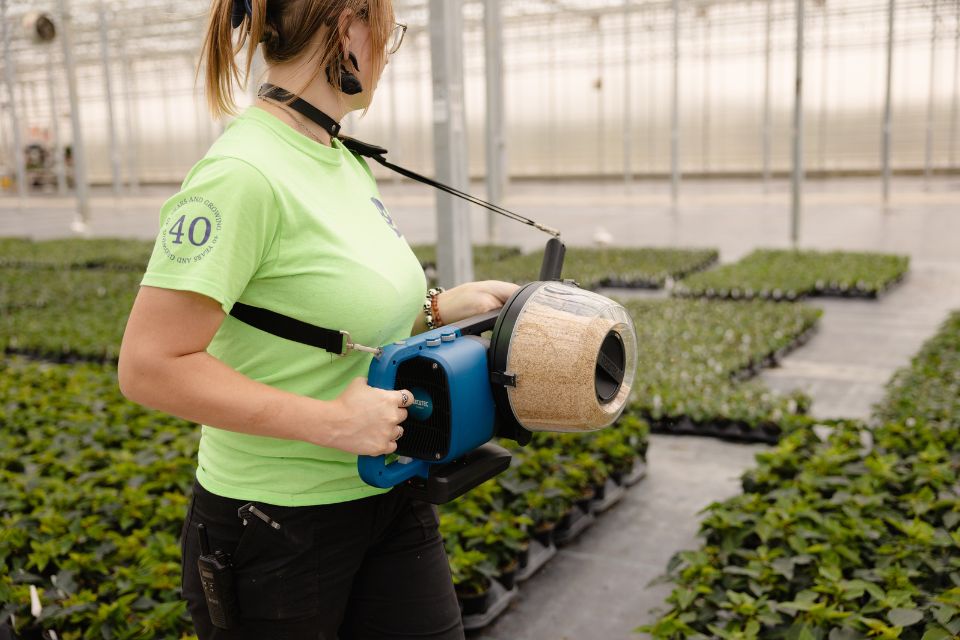
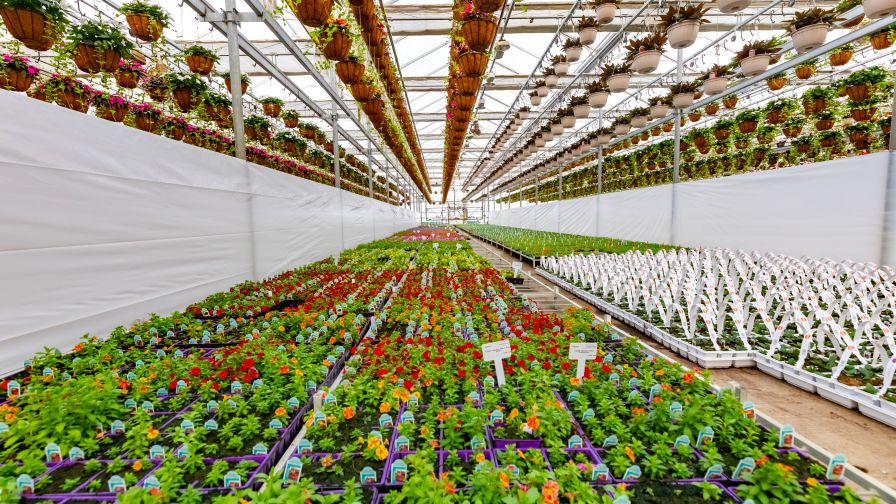
Under Brad Meyer’s leadership, the use and application of beneficial insects have become a key part of Bachman’s IPM program.
The shift was almost a complete 180 from what the Bachman’s team had been doing. Meyer and his growers tore out old wood benches and, with the help of BFG (Bachman’s main product supplier), set up a new crop protection storage room that included a mix of beneficials and conventional materials.
“I was skeptical the first year because poinsettias are a big crop for us and whiteflies are a constant challenge,” Meyer says. “But I would say that first year was one of the best years we had at managing whiteflies.”
Learning From His Peers
In addition to seeking advice from suppliers, Meyer is a sponge when it comes to listening to other, more experienced growers.
“We were approached by one of our local suppliers to do a trial of Evofactor, an adjuvant that is designed to improve fertilizer efficiency,” Meyer says. Before moving forward, he reached out to Andrew Butler, Head Grower at Green Valley Greenhouse in Minnesota (and Greenhouse Grower’s 2022 Head Grower of the Year), who had conducted a similar trial and vouched for its success.
“We were able to cut our fertilizer rates significantly, and we took that savings and used it to boost our use of other adjuvants. It’s worked out well,” he says.
Plantpeddler, located not far from Bachman’s, has also been a source of knowledge. Meyer says he often turns to their growing team for advice, which they have always been generous in sharing.
A Future-First Team Mindset
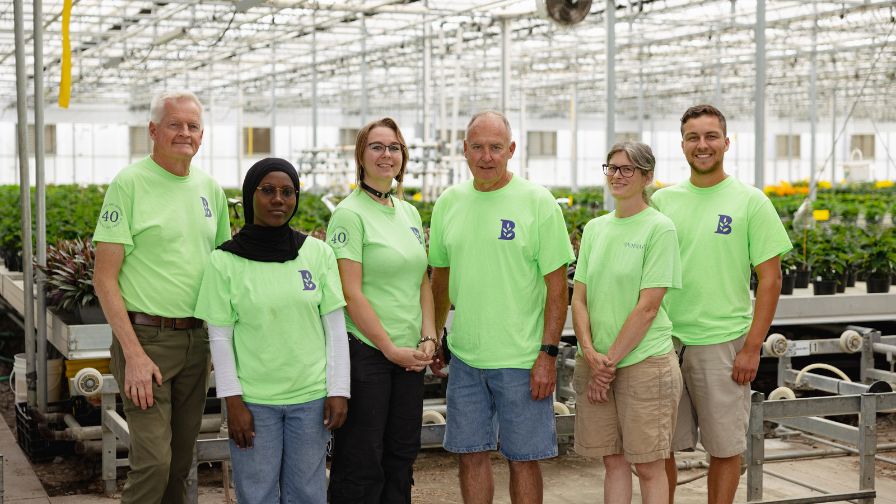
Brad Meyer is hands-on in teaching novice growers and supporting the education of the next generation of growers.
To build a strong, growing team, Meyer and Bachman’s focus on thoughtful hiring and fostering a supportive work environment.
“One key step is our summer internship program, where we bring in two students from a horticulture college program. This gives us a great opportunity to assess their fit within the team and the nursery environment,” Meyer says. “It also gives the intern an opportunity to assess their fit in the team and nursery environment.”
It’s worked well; in fact, two of Bachman’s recent hires came through this program.
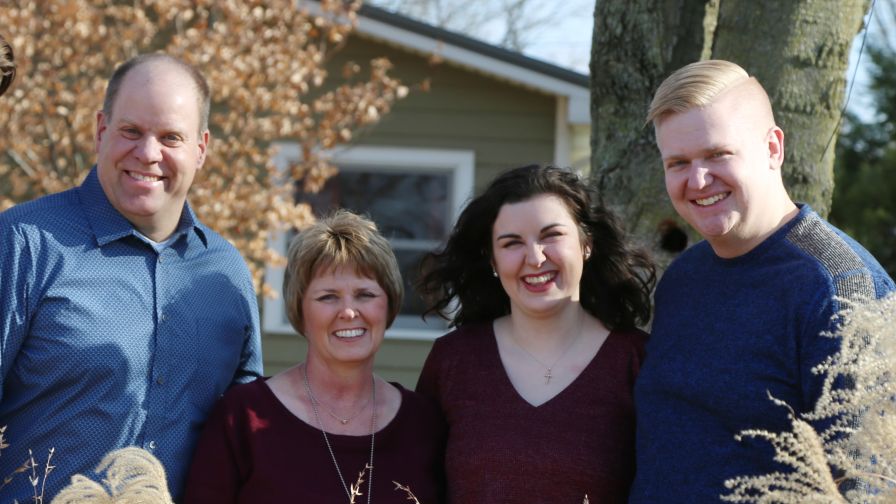
Meyer also recognizes he’s part of a long legacy of industry leadership at Bachman’s, and he works closely with the ownership team. “I’ve made suggestions to previous President and CEO Dale Bachman, and I talk regularly with current CEO Susie Bachman West, who is part of the fifth generation of family ownership,” Meyer says. “I’m thankful that the Bachman’s took a chance on me. They’ve been so supportive of me and my family.”
When it comes to leading his growing team, Meyer prefers to set the tone through action. “As a small team, we rely on each other and maintain a culture where everyone helps. This not only keeps things running smoothly but also creates a positive, team-oriented atmosphere that encourages growth and long-term commitment,” he says. “When we’re short-staffed or in a very busy window, I’ll float between greenhouses and try to help anywhere from shipping to maintenance.”
Moving in the Right Direction
When asked what excites him most about the future, Meyer reflects on how plant sales during the COVID-19 pandemic exceeded expectations — and how many of those new plant buyers are still around.
“With all the new products and varieties coming out, we’ve made things easier for homeowners,” says Meyer. “They don’t have to worry as much about disease or plant hardiness because we’ve bred plants to be more resilient. If we continue to do that, we’ll keep moving in the right direction.”
Still, Meyer believes this progress depends on constant improvement.
“My dad always told me if you’re not going to do something right, don’t do it at all. Occasionally, I’ll catch myself doing something the wrong way, and when that happens, I think back to what he said, and then I look for a better way to do it.”
Subscribe to eNewsletter
