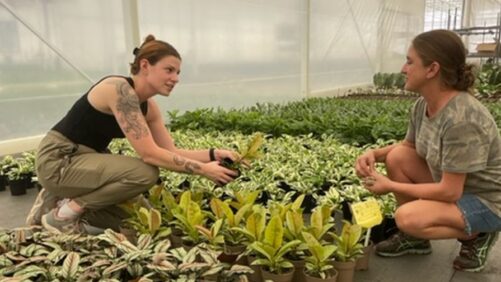
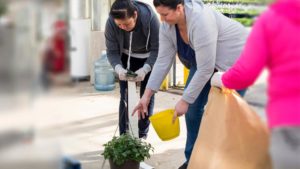
During Greenhouse Grower’s upcoming GROW Executive Summit, a panel of experts will share their best ideas and real-world strategies and solutions for talent management that you can apply to your own workforce.
Even with the challenge of weather, the number of annuals in this year’s trial expanded, which made for an impressive display of color, texture, and foliage.
In part five of a six-part conversation, Greenhouse Grower’s Industry Achievement Award winner says the key to the long-term success of the green industry is relevancy and constant promotion of the benefits plants provide.
Register today to make sure you hear one of the greenhouse industry’s leading figures highlight why supply chain, labor, and profitability will be the three pillars of your success in 2023.
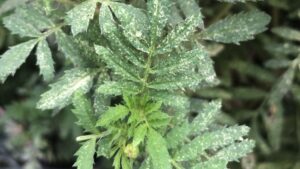
Correct identification of mite species or life stages is critical, as many biological control agents and miticides target specific species and life stages.
In the fourth of a six-part conversation, Greenhouse Grower’s Industry Achievement Award winner reflects on why education has been a critical part of his career, and how it shaped the development of the EAGL program.
For the North American market, production will remain at Vivero Internacional S.A. de C.V. Vivero’s strict protocols will continue to ensure a high-quality, reliable cutting supply.
The Water Circularity Working Group plans to identify strategies that all growers, regardless of size, can follow to reduce water waste and improve water quality.
In the third of a six-part conversation, Greenhouse Grower’s Industry Achievement Award winner highlights what he considers the greatest horticulture industry innovations over the years.
A special project led and funded by American Floral Endowment aims to discover, compile, and provide best practices for sustainability in floriculture.
Installing irrigation systems designed to efficiently apply water to the plant, evenly and specifically, can reduce labor greatly while keeping plant growth healthy and even.
Thanks to a $3.77 million USDA grant, The Ohio State University will spearhead a four-year study in collaboration with three other leading ag universities, along with technology provider Koidra.
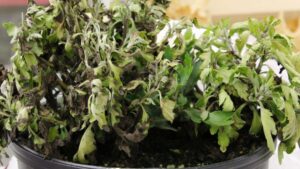
Infection from Phytophthora chrysanthemi, first discovered in Ohio, is associated with stunting, purpling, and death of foliage, on one major branch or the whole plant.