



How to Master Greenhouse Inventory Management
There are many reasons why a solid inventory management process can help businesses operate more efficiently. Business owners who have a firm grasp on accurate inventory needs will see it in their bottom line: it can save money, optimize storage space, and remain prepared for changing consumer markets. It also plays a key role in sustainability.
Managing inventory properly can minimize the amount of unused product that is destined as waste to become a contributor to global warming. Overordering and overstocking are also wasteful ways to increase carbon emissions through supply chains and storage operations. Excessive inventory also leads to inefficient uses of resources, such as energy and water, to produce and store the product.
Inventory Management from a Florist and Grower/Supplier Perspective
To support floriculture businesses in this area, Sustainabloom created two comprehensive guides — one for growers and suppliers, and another specifically for florists. Developed by researchers at North Carolina State University, these guides provide actionable strategies to streamline inventory practices while supporting sustainable operations.
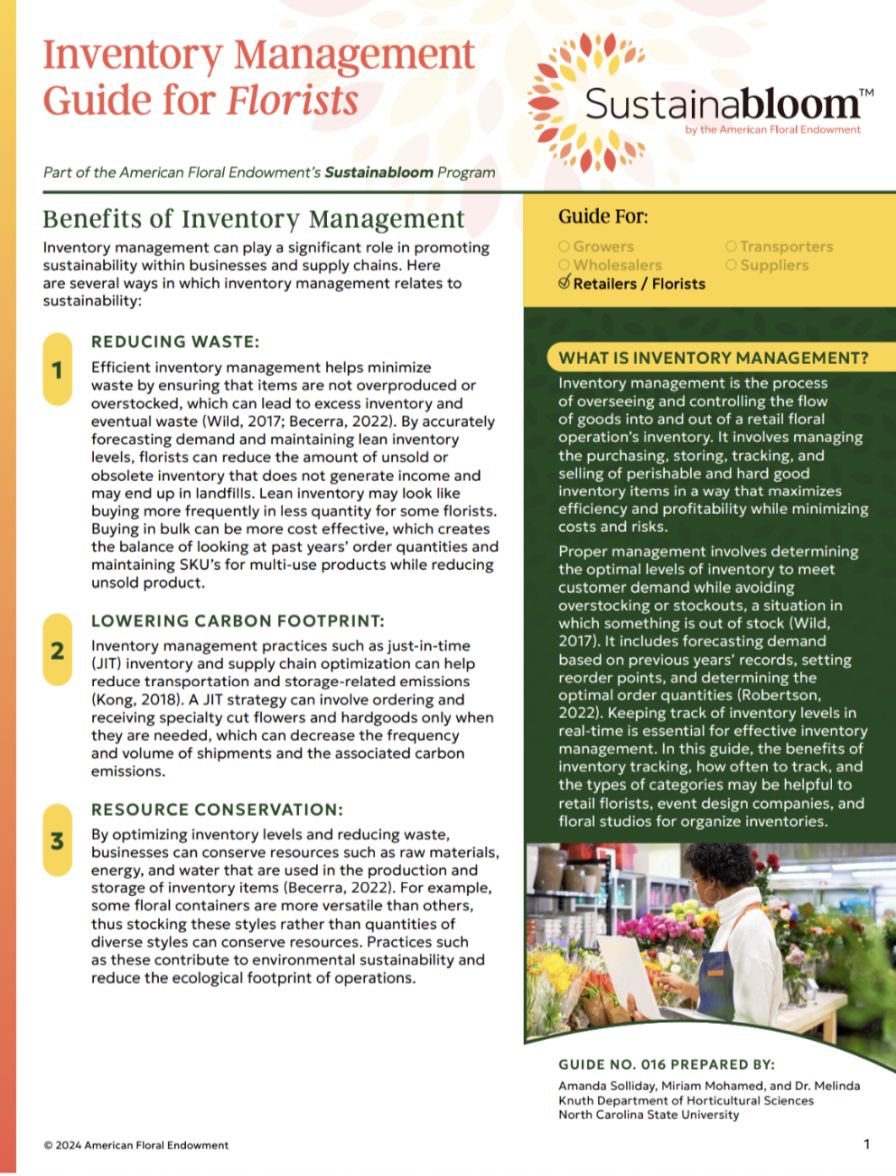
The first page of the Inventory Management guide for Florists. | Sustainabloom
In an effort to help owners develop a schedule to check inventory, the guides offer a list of considerations that must be made for each type of business. For example, the researchers encourage growers and suppliers to rely on accurate records to track the number of plants in storage and the growing schedule of the plants. For retailers, the guide explains the importance of educating the staff on the lifespans of flowers and setting an inventory check schedule ahead of holidays and special events to determine the current need based on previous years’ sales.

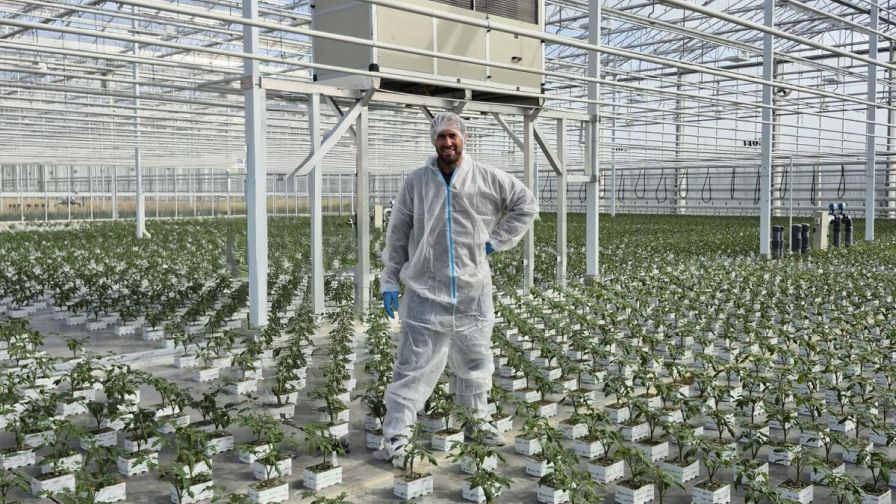



Each guide also highlights sector-specific areas that businesses might overlook, including technology, office supplies, and other supporting materials. By accounting for these items, owners can ensure a more complete and efficient inventory system.
Beyond the guides, Sustainabloom also provides supplemental resources (such as research studies, articles, templates, and reports) to further help businesses refine their inventory practices. These tools offer practical insights and strategies that can be implemented immediately to reduce waste, save resources, and improve overall efficiency.
Whether for a grower, supplier, or retailer, Sustainabloom’s Inventory Management guides can help offer the education and guidance needed to help build a smarter, more sustainable business. With these tools, floriculture professionals can take measurable steps toward better operations, reduced environmental impact, and long-term success.
Click here to read and download the Inventory Management guide for Florists, and the Inventory Management guide for Growers and Suppliers.
Subscribe to eNewsletter