Two master growers share lessons learned and best tips for using plant growth regulators effectively.
Developers of greenhouse crop protection tools recognize the importance of offering sustainable solutions, and are responding accordingly.
AmericanHort offers a leading voice in promoting the funding of research projects through the Specialty Crops Research Initiative.
As more states begin to lift stay-at-home orders and allow more businesses to open, here are some tips on how you can take the same approach while working within social distancing guidelines.
The California Department of Food and Agriculture (CDFA) released the proposed regulations today for the OCal Program, a statewide certification program that will establish and enforce comparable-to-organic cannabis standards.
The release of these regulations marks the official start of the public comment period provided under California law. All interested parties are encouraged to submit comments about the proposed cannabis regulations by Tuesday, July 7, 2020.
The OCal Program will ensure that cannabis products bearing the OCal seal have been certified to consistent, uniform standards comparable to the National Organic Program.
Per Business and Professions Code Section 26062(a)(1), CDFA is required to establish a certification program for cannabis that is comparable to the National Organic Program and the California Organic Food and Farming Act by January 1, 2021. CDFA proposes adoption of Chapter 3, within Title 3 of the California Code of Regulations, to establish the OCal Program for cannabis.
Comments on the proposed regulations may be submitted until July 7, 2020, via email to [email protected]

Vestaron Corp. and BioSafe Systems are each offering new crop protection materials for greenhouse hemp growers.
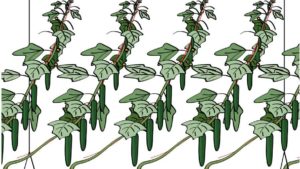
This cultivation system was first introduced in the 1990s, but it took a few years for the industry to catch on to its potential.
Sessions at the Biocontrols USA 2020 Conference and Expo offered plenty of info to help battle your toughest pests with sustainable but effective tools.
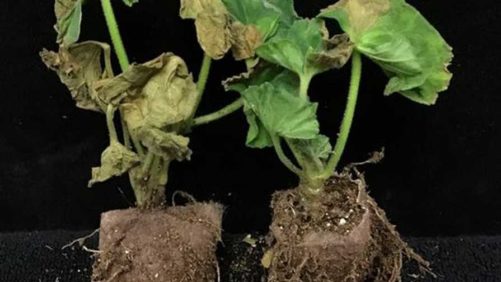
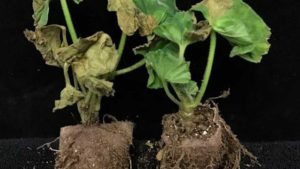
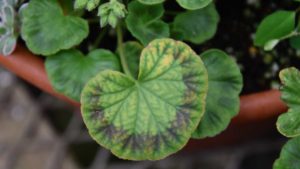
Ralstonia solancearum, a federal quarantine pest, was recently confirmed in a single geranium variety in a greenhouse in Michigan. It is the first confirmed case in the U.S. since 2004.
Michigan State University’s Garrett Owen highlights why growers should monitor and adjust substrate pH to prevent the development of nutritional disorders.
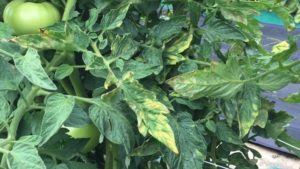
Leaf mold can cause infection under prolonged periods of leaf wetness and when relative humidity remains above 85%.
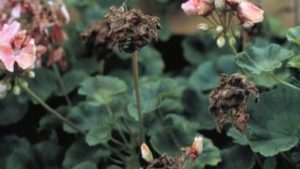
Botrytis cinerea, commonly called gray mold, infects many greenhouse ornamentals and is considered one of the most problematic plant pathogens in the world.
The coronavirus pandemic has had a profound effect on research, Extension, and education programs at land grant institutions, from sudden abandonment of research projects to a shift to online learning.