


Sustainable Blooms: How Floriculture Is Adapting to Consumer Expectations
 October 9, 2025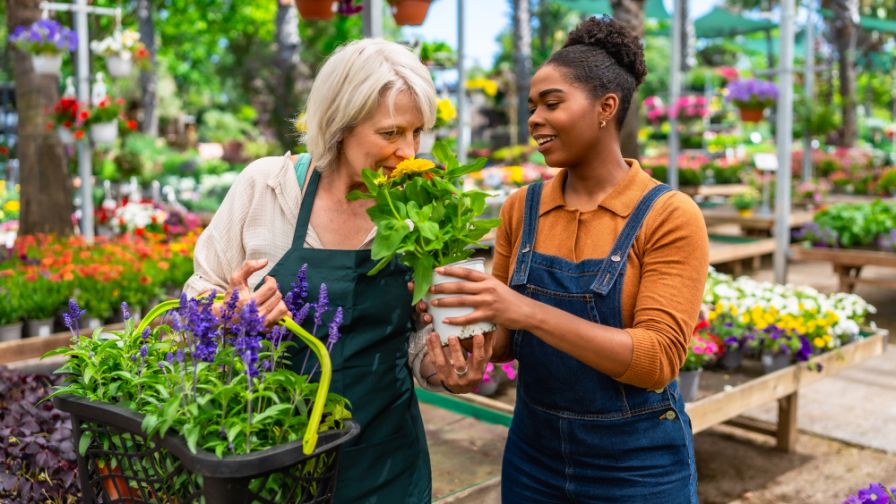
A customer smelling a flower as she’s helped by a female florist. | Unai Huizi Photography via Shutterstock
Sustainability has been a hot topic over the past few years, both overall in the marketplace and specifically in floriculture. Internationally, the Europeans are ahead of the rest by having policies in place on manufacturing, cut flower production qualities, and recirculatory plastic usage. Defining Scope 1 and 2 emissions is a rather regular exercise. As a result, the market had adapted to expect this time of information to be shared by peers, and consumers are selectively buying.
In the U.S., we don’t have the same regulatory pressures (yet), but we do have different pressures that have energized businesses to engage in sustainable practices and programs. Sometimes this comes internally through ESG documents or from encouragement from employees, but other pressures come from consumers. Here’s the latest on what we know:
Packaging is on the mind of consumers. A McKinsey & Company report from this year showed that packaging consistently has ranked as a top action area for consumers. This means that they are seeking out and choosing competitive products that are more recyclable, use less plastic, or are refills instead of full replacements of products they use. They are searching for eco-friendly language on packaging to convey that the product matches their value system. In fact, a PwC report from 2024 showed that consumers are willing to pay 10% more for goods with credible sustainability claims. This wasn’t specific to any product category, but overall consumer packaged goods (CPG).
Now, you may be saying, “Melinda, but that is only a 10% premium.” Yes, however, recall that for many product categories, consumers are price sensitive and will change their spending if they believe the price to be out of their preferred range. Potentially gaining a 10% premium in a price-sensitivity category is great news! In addition, I want to draw your attention to a comforting statistic: the Center for Sustainable Business showed in a study published last year that in CPG from 2013–2024 (a 10-year period), sustainable products represented 24% of total sales and drove 41% of category growth. Year over year, that means there was a +2% growth. The projected growth for the next five years is looking to sustain that. Selling sustainable products seems to be good business.


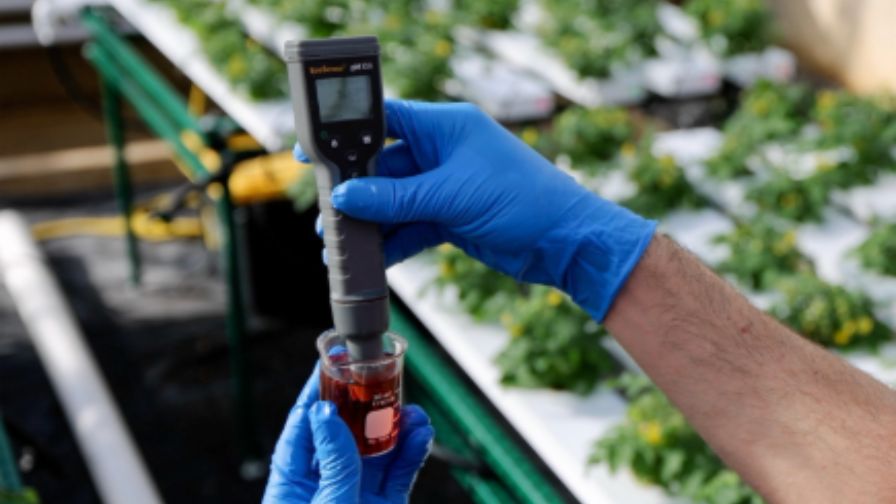
In the floral industry, we have some recent data released by the team at Mississippi State University in collaboration with the Floral Marketing Fund that shows floral consumers favor a retailer sourcing “local” flowers within 100 miles of the point of sale. Granted, this consumer perception of local is different than the legal USDA definition of 400 miles being local, but floral industry members need to be aware of this perceptual difference in definitions. In addition, top categories that consumers cared about are composting floral waste (63.9%) and using reusable/recyclable materials (60.5%). These results don’t surprise me. Consumers are familiar with these concepts by doing them at their homes, and thus, they prefer to see the businesses they support doing these activities, too.
For additional information on seeking sustainability in the floriculture industry, please read the original article from Dr. Melinda Knuth, an Assistant Professor at North Carolina State University, found on the New Bloom Solutions website, as well as her work on Sustainabloom.
Subscribe to eNewsletter