Vegetables Production
New Guide Offers Advice on Plant Nutrition in Hydroponic Production
November 24, 2021
Supplementary feeding has yielded excellent results in greenhouse vegetable crops such as cucumbers and zucchini.
Inspect plants carefully as soon as you receive them from a propagator, as that’s your first opportunity to keep pests out of your greenhouse.
The University of Florida’s final online greenhouse training courses in 2021 will focus on weed management and hydroponic vegetable production.
Designing a hydroponic replenishment solution that matches nutrient supply with plant uptake demands is easier said than done.
Greenhouse strawberry crops are especially sensitive to thrips, which can cause severe plant damage and lead to unmarketable fruit.
Great Lakes Growers has produced a video highlighting the similarities and differences between greenhouse and indoor vegetable production.
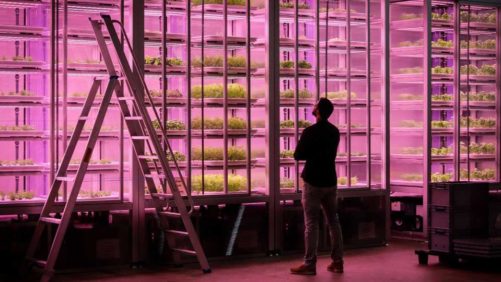
In an upcoming webinar, Michigan State University’s Erik Runkle will focus on the effects of the photon flux density and spectrum at regulating lettuce when grown hydroponically in vertical layers.
Growers across the U.S. share their perspectives on the best fit for biologicals in greenhouse vegetables.
Even greenhouse vegetables are not immune to contamination. Here are some steps you can take to keep your product safe.
The survey is focused on growers’ perspectives on sustainability and how they are measuring specific environmental, social, and governance outcomes.
Mastronardi Produce Ltd. and AppHarvest have announced a new endeavor that will further strengthen their relationship and cement their leadership as visionaries in the ag tech sector.

The two companies have been working together since 2020 to produce new integrated systems to help growers and their artificial intelligence needs.
The University of Kentucky is in the midst of a two-year study that is designed to evaluate cucumber varieties for greenhouse production.