




Identifying causes of root diseases and preventing them
When growing greenhouse crops, it is simply a matter of time before problems occur. These problems can be caused by diseases, insects, fertility problems, pesticide phytotoxicities, plant growth regulator over-application, watering problems, air pollution from heaters, etc. Of course, it is possible to follow useful tips that will help improve the growing environment to reduce potential root disease outbreaks. However, to correct an existing problem, it is necessary to know what it is and what is causing it.
Disease Triangle
Certain conditions must be in place for a plant disease to get started. As shown in the disease triangle (Figure 1), three favorable conditions must coexist to cause a disease problem. These three conditions are the pathogen, a susceptible host (plant) and proper environmental conditions.
Figure 1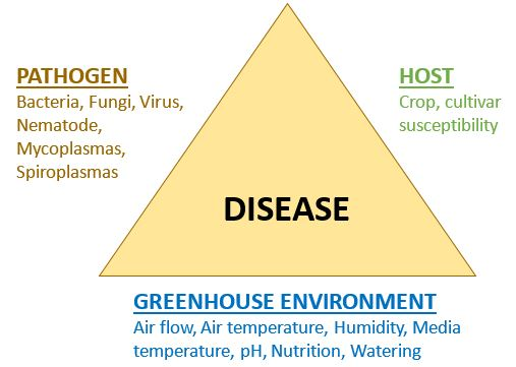
Pathogen
Several types of organisms cause plant diseases such as fungi, bacteria, viruses, nematodes, mycoplasmas and spiroplasmas. These pathogens need to be present in the greenhouse to set the stage for a disease problem. They can be introduced through plant debris, weeds growing under the bench, dust coming in, contaminated tools, stock or left-over plants, insects, etc.
To reduce the risk of an incoming pathogen, keep the environment as clean as possible: remove all plant debris and weeds, cover soil floors with landscape fabric or concrete, disinfect tools that meet plants and do not reuse growing media or pots. If pots must be reused, remove all remaining growing media, then soak the pots in a product containing quaternary ammonium, hydrogen dioxide, hydrogen peroxide or peroxyacetic acid compounds, or use bleach to kill pathogens. Remember to change the solution often and to rinse with plain water.
Host
A plant that can become infected by a pathogen is a host. It is important to note that not all plants are vulnerable to being attacked by the same pathogen, as specific pathogens prefer certain plants. As an example, Thielaviopsis typically attacks pansies, petunias, verbena, etc., but not marigolds. Within the same plant species there can be differences in susceptibility to a specific pathogen, slow growing cultivars often have more issues with root disease than faster growing cultivars. Also, some plants may have been bred to have resistance to certain pathogens.
To reduce the risk of plants becoming hosts before introducing a new crop into the greenhouse: validate that stock plants are disease-free or that seeds and bulbs have been disinfected, quarantine and inspect incoming cuttings, plugs or other plants to verify there are no diseases. Monitor the roots of the plants in the greenhouse. Should you find a root disease, have one tested by a lab to select appropriate fungicide for remaining plants, discard and remove diseased plants from the greenhouse.
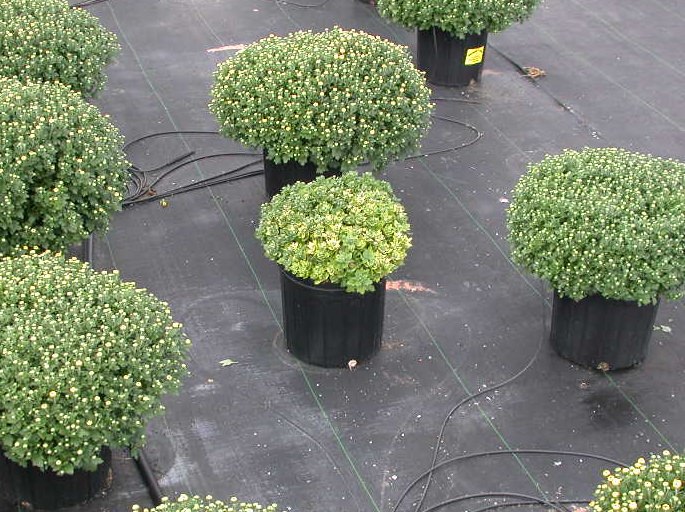 Figure 2. Pythium has infected the smaller mum for some time, which is interfering with nutrient uptake, causing chlorosis and stunting. Source: Premier Tech
Environment
As far the most complex conditions. Any environment that causes plant stress can make a plant more susceptible to a plant disease. The main factors to consider are watering, humidity, temperature, and air movement.
Watering
Overwatering provides the ideal environment for pathogens like water molds, such as Pythium and Phytophthora. It also stresses plant roots, making them susceptible to attack by Fusarium, Rhizoctonia and Thielaviopsis which also require moist media, but do not need wet growing media to thrive.
Temperature
Root disease pathogens have their preferred temperature. For example, Pythium ultimum, prefer cooler growing media, while Pythium aphanidermatum prefer warm growing media.
Crops also have their preferred temperature range and become stressed and more susceptible to pathogen attack if grown hotter or colder.
Air Movement
Poor air movement increases potential for root disease, as humid air stays trapped in the plant canopy, thereby reducing plant water use from the growing medium. The growing medium dries out more slowly, making it easier to overwater. Resulting in plants under stress and susceptible to root disease pathogens.
Humidity
High humidity slows the dry down rate of the growing medium since it limits water usage by the plant and the evaporation from the growing medium surface. Slowly drying growing medium increases plant stress and susceptibility to root disease pathogens.
As for pathogens or host, there are some preventing measures that can be put in place for the environment such as adjusting watering, controlling humidity, and ensuring optimal aeration. Watering frequency should be reduced when it is cloudy, raining, snowing or when days are short from late fall to early spring.
Reduce humidity by heating the air and venting out saturated, warm air for faster water usage by the plant, thereby reducing plant stress and susceptibility to root disease pathogens. Move humid air from the plant canopy by using horizontal air flow (HAF) fans which will also help obtaining more uniform temperatures and dry-out within your crop. Improve air flow by spacing out plants and minimize the number of hanging baskets above a crop as shading slows the dry-out of the growing medium.
For more information, contact our Grower Services
Premier Tech Growers and Consumers