



How to Optimize Supplemental Lighting During Winter’s Shorter Days
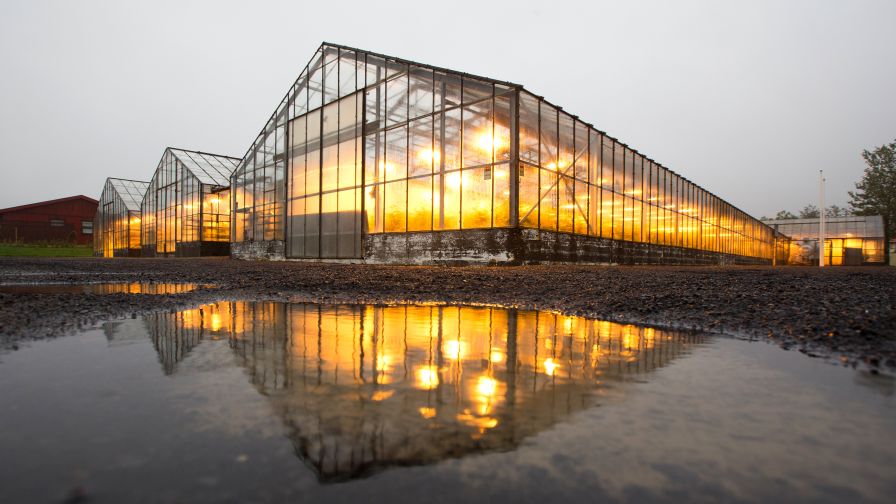
Icelandic greenhouse in winter with lights and heating from geothermal energy. | Pavel, via Adobe Stock
Every fall, as daylight hours shorten, greenhouse operators find themselves at a crossroads. The sun is fading, yields are at risk, and the most obvious solution — turning on the lights — can quickly drive up operating costs.
Justin Morse, Design Consultant at LLK, sees this tension play out every season. When asked about the main lighting challenges greenhouse operators should plan for in the fall and winter, he says, “Mainly increased operational costs with electrical. That’s the big one. Light pollution can be a concern, too, depending on where you are, what you’re growing, what kind of photoperiod you need to supplement. But I think the big one is just month over month: the operational costs of running supplemental lighting and balancing that with the yield.”
That balancing act — how much light a crop truly needs versus what it costs to deliver — defines whether a grower survives the winter profitably or starts eroding their margins.
When Plants Don’t Get Enough Light
Experienced growers know the risks of under-lighting. Seasonal drops in DLI, if not managed, show up quickly in plant quality.




“If you’re not meeting the requirements of the crop, a lot of things can go wrong,” says Justin. For example, “You can have defects in the crop, like slowing growth. Plants get leggy or have longer internodal growth. You can have flower development that’s delayed or just flower abortion. You can have nutrient disorders because there’s just overall less photosynthesis… sometimes you can even confuse some of these crop defects with a virus.”
But light isn’t only for photosynthesis — the effects of lighting ripple into nutrition, morphology, and pest resilience.
Weaker leaves, for example, can be more susceptible to insect damage. Many operators will turn to supplemental lighting as a hedge against production losses.
The Problem of Overestimation
Justin often finds that growers overstate their lighting needs. “More often than not, I’ve seen it that they estimate more than they need,” he says.
“If they say, ‘I need 800 micromoles,’ what they’re not doing is subtracting the pie slice that they would get naturally, even in winter. Even if it’s low — five to ten DLI. If you can subtract that with your photoperiod, then [it’s] ‘Oh, I actually only need 600 micromoles.’”
That “pie slice” of natural winter light might not be enough to grow a crop on its own, but it still counts toward the DLI bucket. Forgetting to include it can lead to oversizing a lighting system, wasting capital on fixtures, and overspending on electricity every month.
The ROI Equation
So, how do you decide whether supplemental light is truly worth it? Justin boils it down to one phrase: “The juice has to be worth the squeeze.”
The equation includes more than just fixture efficiency. Electricity rates — especially time-of-use tariffs — can turn profitable hours into financial losses.
Crop value is another factor: a few extra DLIs might matter greatly for vine crops where fruit quality is at stake, but might not pay back for leafy greens.
Labor schedules, shading strategies, and even local ordinances around light pollution can all tilt the calculation.
For additional information on balancing supplemental lighting needs throughout fall and winter, including implementing smart controls and avoiding hidden costs, please read the original article found on the LLK Greenhouse Solutions website.
Subscribe to eNewsletter