



The Present and Future of High-Tech Agriculture
High-tech agriculture has emerged as a powerful alternative to traditional methods, using technology to produce food indoors with greater precision and sustainability. As the global population grows and arable land shrinks, innovative farming systems offer new ways to meet rising food demand. Controlled environment agriculture (CEA), including vertical farms and smart greenhouses, is steering this transformation.
This shift moves agriculture from soil-based, weather-dependent fields to controlled indoor environments. Farmers now use advanced tools and techniques, such as hydroponics, aeroponics, LED lighting, robotics, IoT sensors, data analytics, and AI, to cultivate crops without relying on natural seasons or outdoor conditions. These technologies allow for precise control over environmental variables like temperature, humidity, nutrients, and light, resulting in higher yields, reduced water use, and minimal pesticide reliance. Beyond just efficiency gains, CEA systems enable all‑year production and year-round local supply chains. Also, vertical farms and urban greenhouses, installed in basements, rooftops, grocery stores, and even skyscrapers, provide fresh, high‑quality produce close to consumers, helping offset the limitations of conventional farming.
Modern Farming Methods
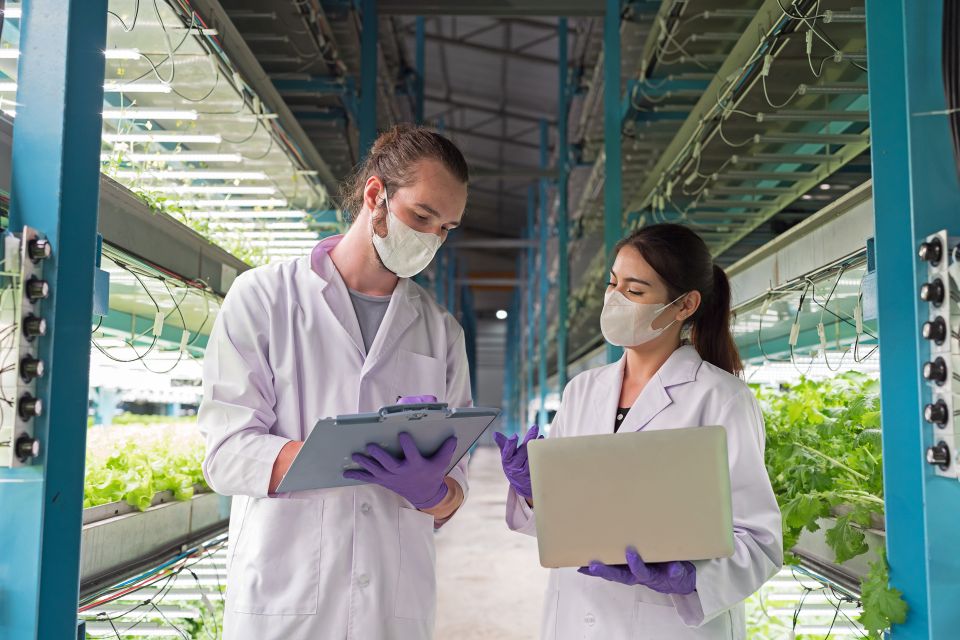
A pair of scientists working in a hydroponic vertical farm. | amorn via Adobe Stock
Today’s high-tech agriculture is shaped by two primary controlled environment systems: greenhouses and vertical farms. Both rely on soilless growing methods such as hydroponics and aeroponics to boost efficiency, productivity, and sustainability.
Greenhouses and Vertical Farms
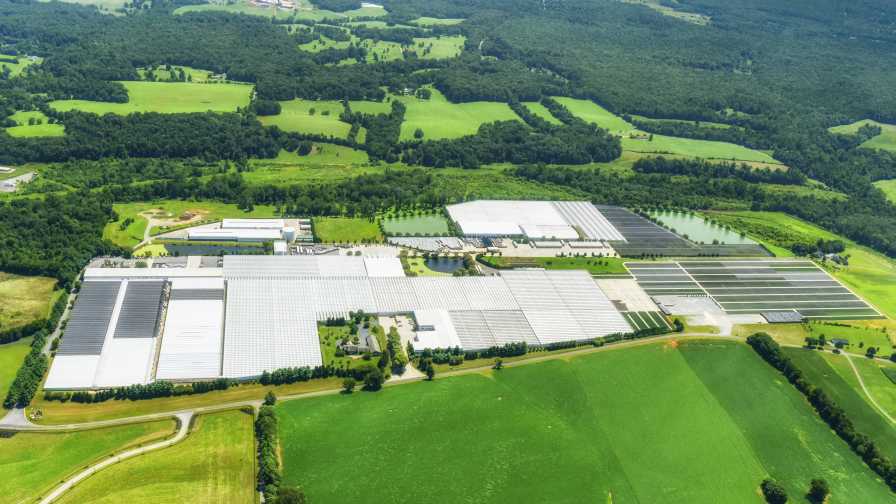
Greenhouses use transparent materials to harness natural sunlight while controlling temperature, humidity, and CO₂ levels. Vertical farms, on the other hand, grow crops in stacked layers within fully enclosed buildings, often using artificial lighting and advanced climate controls. These systems are designed to maximize production per square meter, especially valuable in urban and peri-urban areas.


Both environments support a range of growing techniques, including:
Hydroponics
Plants are grown in water enriched with essential nutrients. By eliminating soil, roots absorb everything directly from the solution. This method uses up to 90% less water than conventional agriculture and allows precise nutrient control, leading to faster, more reliable growth.
Aeroponics
In this method, plant roots are suspended in air and misted with a nutrient-rich solution. The high oxygen exposure promotes rapid growth and increased yields. Aeroponics typically consumes even less water than hydroponics and reduces the risk of soilborne diseases.
Controlled Environment Systems
Indoor farms rely on highly controlled environments to create optimal growing conditions. Farmers adjust factors like water delivery, humidity, temperature, and air circulation to support plant health and productivity.
One critical component is lighting. For instance, energy-efficient LED grow lights for commercial growers mimic natural sunlight, providing the specific light spectrum needed at each stage of plant growth. These lights enable crops to flourish indoors and allow continuous production cycles throughout the year. The result is a consistent and reliable food supply not controlled by outdoor limitations.
Technology and Automation
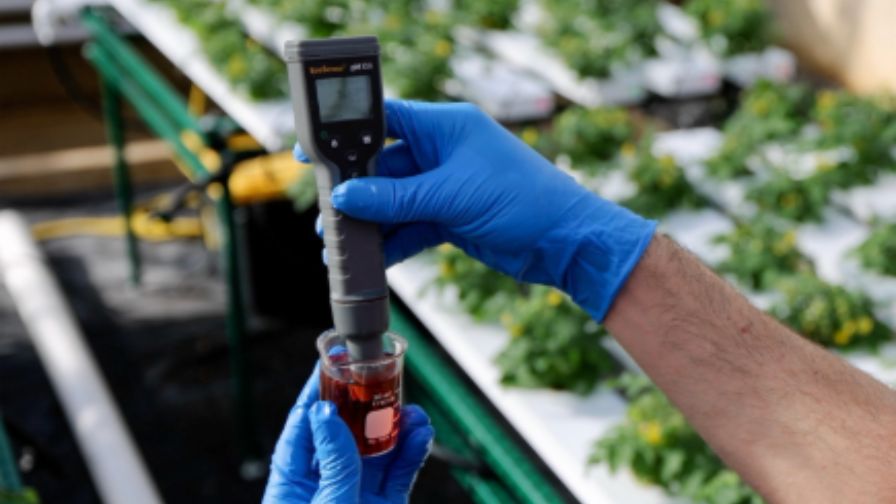
Advanced technology plays a central role in modern indoor farming. For instance, sensors monitor variables such as soil moisture (when used), nutrient concentrations, and plant health. Artificial intelligence analyzes this data to recommend adjustments, which improve efficiency and maximize yields.
Robotics also supports indoor farming operations. Automated systems can plant seeds, manage nutrient delivery, monitor plant development, and harvest crops. It reduces labor demands and ensures consistent quality across large-scale operations. Further, data-driven insights help farmers fine-tune every aspect of the growing process, making indoor agriculture increasingly precise and productive.
For additional information on high-tech agriculture integration, including challenges for its adoption within the industry, please read the original article found on the Agritecture website.
Subscribe to eNewsletter