



How Energy-Efficient Lighting Is Helping Greenhouse Growers Thrive
 June 5, 2025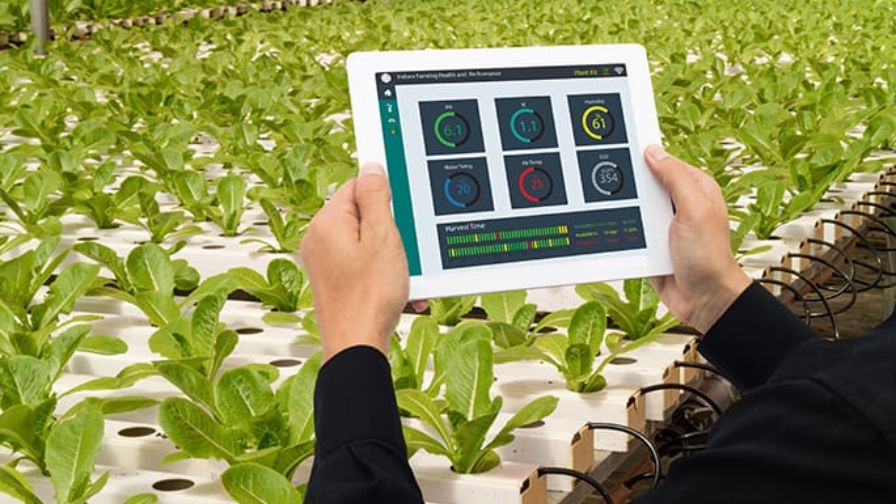
Horticulture facility LED lighting and climate management through tablet. | Monopoly919, via DesignLights Consortium and Adobe Stock
In today’s competitive and sustainability-conscious horticulture industry, growers are continually looking for ways to boost crop yields, improve plant quality, and reduce overhead costs. One area that offers major potential for savings and performance gains is lighting — specifically, the transition to high-efficiency LEDs and controls.
If you’re still relying on traditional high-pressure sodium (HPS) fixtures, you’re not alone. But with energy prices on the rise and environmental concerns top-of-mind, more growers are switching to LEDs because they don’t just cut energy bills. LED-based horticultural lighting solutions offer better spectral control, longer life spans, and lower heat output, all of which translate to improved plant performance and operational efficiency.
However, not all LEDs are created equal. That’s where guidance from the DesignLights Consortium (DLC) comes in.
What is the DLC and Why Should Growers Care?
The DLC is a nonprofit organization that drives energy efficiency through lighting performance standards and qualified product lists (QPLs). For growers, the DLC’s Horticultural Lighting Program is a game-changer. The DLC works with manufacturers to validate the performance of and create a QPL of LED-based horticultural fixtures that meet high standards for photosynthetic photon efficacy (PPE), controllability, warranty, and safety — all critical factors for horticultural success. The DLC also works with utilities across North America to develop energy efficiency incentives for products listed on the Hort QPL.
When a fixture is DLC-qualified, it means it’s been independently tested and proven to meet rigorous criteria for energy performance and reliability in controlled environment agriculture (CEA) settings like greenhouses and indoor farms.
In simpler terms, the DLC helps take the guesswork out of identifying and choosing trustworthy, energy-saving horticultural LED lighting solutions and utilities across North America offer incentives for growers if they use DLC-qualified products.
Top Benefits of Switching to DLC-Listed LED Fixtures
1. Lower Energy Bills
Qualified LED fixtures use significantly less energy than traditional HPS fixtures. For a large-scale greenhouse operation, that can mean tens of thousands of dollars saved annually.
And since DLC-listed fixtures meet strict efficacy standards, you know you’re getting maximum efficiency and safety.
2. Access to Rebates and Incentives
Many utilities and energy efficiency programs offer rebates to growers who upgrade to DLC-qualified lighting. These rebates can significantly reduce upfront costs, making the transition to LEDs more financially feasible.
3. Better Environmental Control
LEDs emit less heat than HPS lights, which means less stress on your HVAC systems and more stable growing conditions for your plants. That can lead to better plant morphology, faster growth, and higher-quality yields.
4. Long-Term Reliability
DLC-listed products are tested for durability, including how they perform over time in high-humidity and high-temperature environments common in greenhouses. That means fewer replacements, less maintenance, and more peace of mind. All DLC-listed products are required to have safety certifications specific to horticultural environments, offer at least a five-year warranty, and meet lifetime performance thresholds to ensure initial performance persists.
5. Advanced Lighting Controls
Modern LED systems — especially those recognized by the DLC — are often compatible with sophisticated lighting and/or environmental control systems. These allow for dynamic dimming, light scheduling, and integration with other environmental controls, giving growers more precision over plant development.
Making the Transition: What Growers Should Know
Moving from HPS to LED isn’t just about swapping out fixtures — it’s an investment in your operation’s future. Consider the following tips:
Evaluate Your Current Setup
Understand your lighting needs by crop type, growth stage, and seasonal sunlight availability.
Check the DLC QPL
Only consider LED fixtures listed on the DLC Horticultural QPL. This ensures you’re investing in a product that meets industry benchmarks.
Consult with Experts
Lighting manufacturers and energy consultants can help design a system tailored to your facility, maximizing both crop productivity and energy savings.
Explore Rebates Early
Talk to your local utility about available rebates or incentives before you buy — eligibility often depends on product selection and pre-approval.
A Brighter, More Sustainable Future
As greenhouse operations continue to modernize, energy-efficient LED lighting is proving to be one of the smartest investments a grower can make. These systems help with cutting costs, improving plant outcomes, reducing environmental impact, and staying competitive in a rapidly evolving market.
With the DLC guiding quality and performance in horticultural lighting, growers have a trusted resource to guide the transition. So, if you haven’t already made the switch, now’s the time to save energy and money by exploring high-efficiency LEDs.
Subscribe to eNewsletter