



How One Young Researcher Is Seeking Sustainable Floriculture Solutions
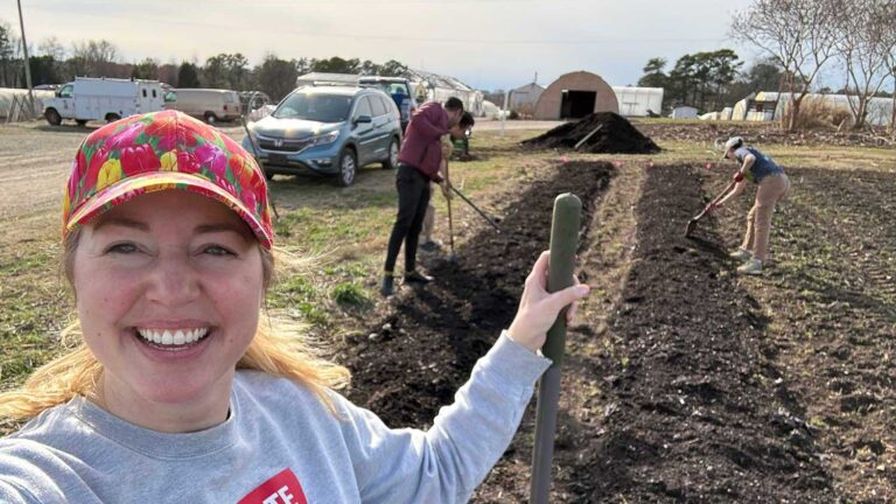
Horticulture graduate students Amanda Solliday, Moein Moosavi and Emma Coogan prepare the cut flower planting beds for the Red and White Garden. | Amanda Solliday, North Carolina State University
When Amanda Solliday began her academic career in biology, she did not foresee herself digging into flower beds or delving into the complex world of floral supply chains. But today, she is a doctoral candidate with the Cognitive Behavioral Lab, with the goal of making the floral industry more sustainable, community-driven, and economically viable.
She gained experience working with drought stress in crops, pesticide risk mitigation, and climate science communication before arriving at North Carolina State University. Floriculture entered the picture when Solliday applied for the doctoral program and had a pivotal meeting with Horticulture Associate Professor Melinda Knuth, her doctoral advisor and principal investigator of the Cognitive Behavioral Lab. “She told me about some of the sustainability issues the floral industry was facing, including green waste management, plastics use, and substrate sourcing,” says Solliday. The meeting altered Solliday’s professional trajectory, now firmly rooted in floriculture sustainability.
“Once I began this Ph.D. program, I also connected with the business sustainability group in the Poole College of Management and began taking classes through their certificate program,” she says. “It’s been invaluable to help me connect horticultural practices with business concepts.”
Cultivating Sustainability on Campus
The intersection of floriculture and sustainability blossomed into a student-led project with tangible impacts, inspired by other cut flower initiatives at Washington University in St. Louis and Mississippi State University. Solliday proposed a sustainable flower garden to provide locally grown blooms for NC State events.
“I wanted to focus on the community element, with the goal of providing a collaborative space with shared labor and goals that centered on sustainable, local production of flowers,” she says.
Michael Palmer, the President of the Horticultural Science Graduate Student Association (HSGSA), helped find a home for the garden in an unused plot at the Horticultural Field Laboratories. “In this space, we thought it would be a good project for graduate students to join,” says Solliday.
The project gained momentum quickly, and Solliday secured the Sustainability Fund grant from the Sustainability Office, critical for purchasing key materials, including seeds, substrate, and an irrigation timer, among others. Coordinated through the Sustainability Office, Solliday collaborated with Horticultural Supervisor Courtney Eads, who helped identify which flower varieties to focus on, planting timing and growing schedule, and other early details about the space.
Campus-Wide Collaboration Makes It Work
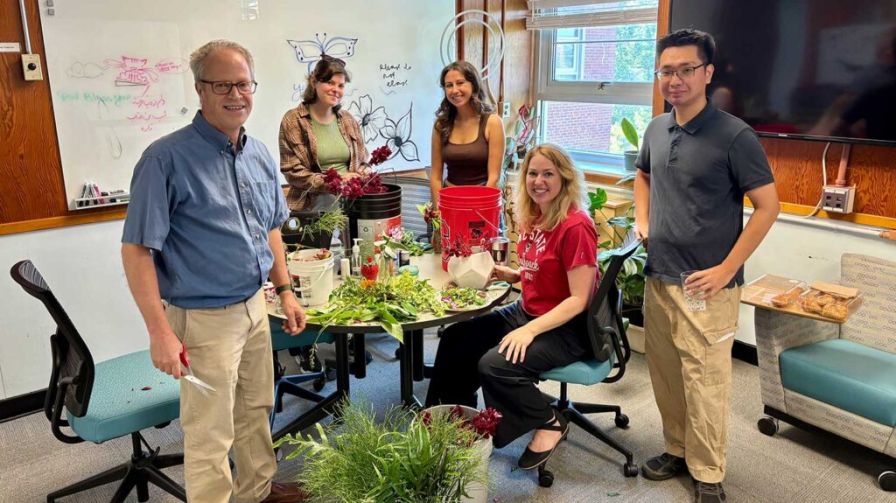
Professor John Dole and students Emma Coogan, Ivy Azzarita, Amanda Solliday and Rick Shih arrange flowers for the horticultural science 2025 spring graduation. | Amanda Solliday, North Carolina State University
Faculty, staff, and students all rallied around the garden project, which became a true cross-campus effort. Tim Ketchie, a horticulture department Research Technician and staff member, provided compost and helped install the irrigation system. Horticultural science graduate students, including Michael Palmer, Emma Coogan, Moein Moosavi, Rick Shih, and Madison Love, provided muscle for the garden preparation, planting, and maintenance. Professor John Dole and Plant Conservatory Curator Diane Mays provided direction for graduation flower arrangements and pest control. Keondra Jenkins energetically coordinated on behalf of the Sustainability Office.
“The connections throughout campus went far beyond one person or group to make this idea a reality,” says Solliday. “I’m still in awe of everyone who stepped in to help with full enthusiasm once they learned about the project.”
Laying the Groundwork for a Long-Term Impact
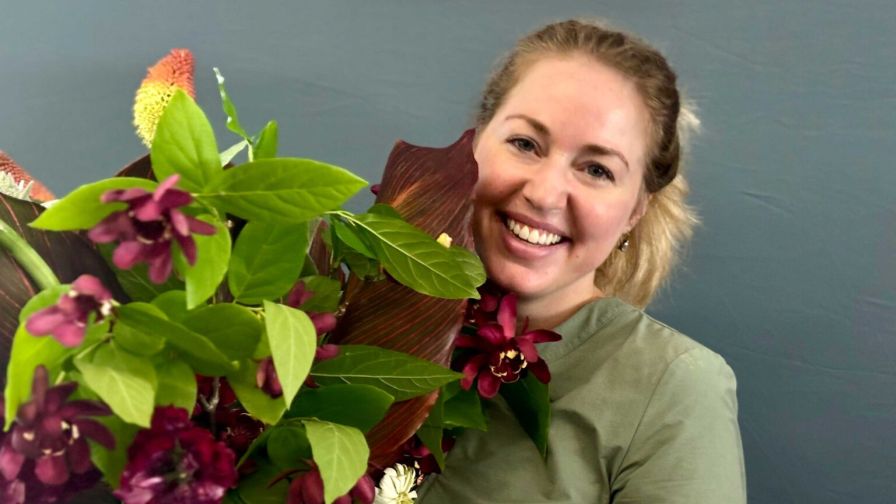
Amanda Solliday holding flowers arranged for the Department of Horticultural Science 2025 spring graduation commencement. | Amanda Solliday, North Carolina State University
This season served as a pilot program with room to expand the cut flower garden. Solliday plans to continue managing the sustainability project until her anticipated December 2025 graduation. To help fund future seasons of the Red & White Garden, Solliday and the HSGSA are planning summer and fall flower sales. She is documenting best practices in planting schedules, crop selection, and resource management for the next student leader.
“Right now, we have two irrigated rows of flowers and some open space, so an expansion to more cultivated space seems reasonable,” says Solliday. “We could start bulbs and other flowers in the winter and get some earlier spring cuts, too.”
For additional information on the Red & White Garden and other sustainable research projects and initiatives tackled by Solliday, please read the original article by Brandon Hopper found on the Horticultural Science section of the North Carolina State University website.
Subscribe to eNewsletter
