



4 Highlights From the 2026 PPA National Symposium
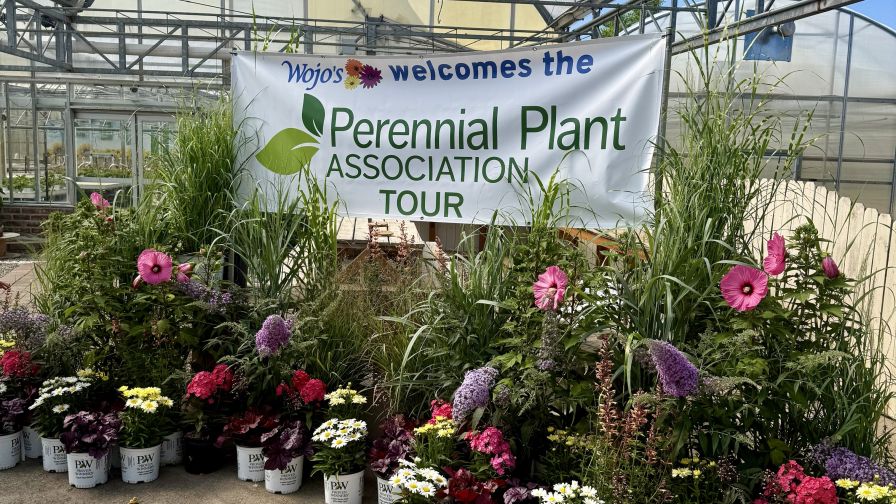
Wojo’s Greenhouse welcomed attendees on the Ideas & Inspiration Tour during the 2026 Perennial Plant Association National Symposium in Michigan. | Marisa Reyes
I’ve always enjoyed attending the Perennial Plant Association (PPA) National Symposium. In fact, PPA was the first industry event I attended back in 2019, when the symposium was held in the Chicago area. At the time, I was working on the grower side of the industry at W. & E. Radtke, Inc. in Germantown, WI, and was still getting my feet wet and wasn’t entirely sure what to expect.
This year marked my third PPA. I traveled to East Lansing, MI, for the Ideas & Inspiration Tour on Wednesday, July 29, followed by the Grower Track on Thursday, July 30.
Michigan was a fitting place for this year’s program. The PPA leaned into the Great Lakes region’s ecology and horticultural community, and native plants were hard to miss. They showed up on the trade show floor, in retail conversations, and throughout the landscapes we toured.
Here are four things I kept coming back to during my time at PPA.
1. Native Plants Took Up a Lot of Space
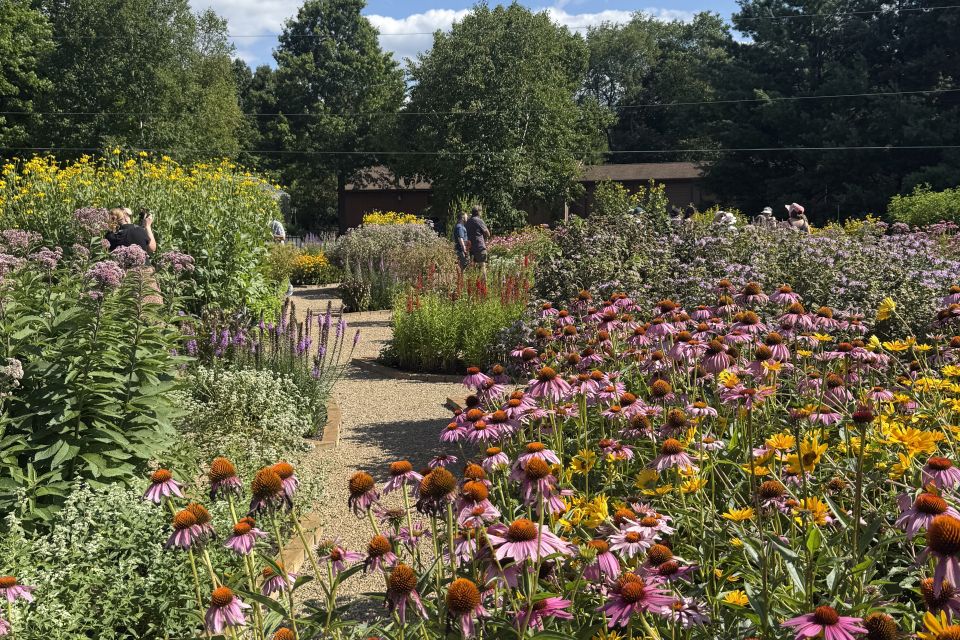
Purple coneflower (Echinacea purpurea) and other native perennials fill the geometric beds of Lynn O’Shaughnessy’s roughly 100-foot Circle Garden in Howell, MI. | Marisa Reyes
My favorite stop on the Ideas & Inspiration Tour was Lynn O’Shaughnessy’s Circle Garden in Howell, MI. I’d had this garden on my radar for a while, so getting to see it in person was something I was especially looking forward to.
O’Shaughnessy began adding native plants to her property after looking into what it would take to establish a Monarch Waystation in 2018. As more butterflies began showing up, she decided to create an entire garden around native plants and pollinator support. The design came after she saw an aerial photo of the lavender labyrinth at Cherry Point Farm in Shelby, MI, and used the 12-point geometric pattern at its center as inspiration for her own Circle Garden.
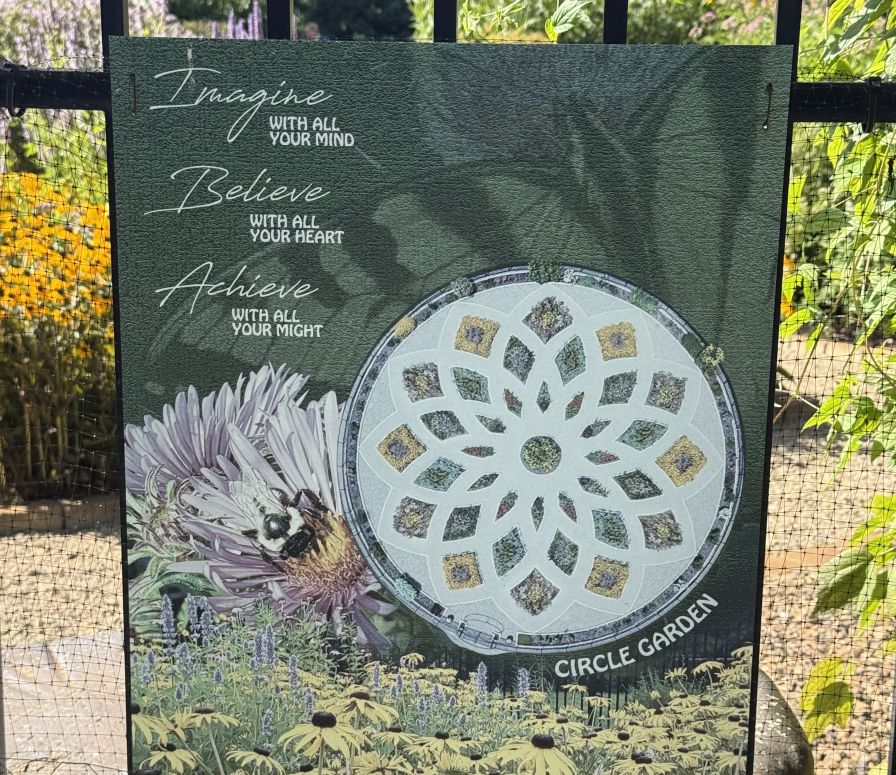
The Circle Garden’s 12-point geometric pattern was inspired by an aerial view of the lavender labyrinth at Cherry Point Farm in Shelby, MI. | Marisa Reyes
The finished garden stretches roughly 100 feet across and is filled almost entirely with native plants. Purple coneflower (Echinacea purpurea), clustered mountain mint (Pycnanthemum muticum), spotted bee balm (Monarda punctata), blazing star (Liatris spp.), and other natives fill the geometric beds, while brick edging and gravel paths keep the pattern easy to read.
O’Shaughnessy’s property is also included on Homegrown National Park’s Biodiversity Map, which connects individual yards and landscapes contributing native habitat across the country.
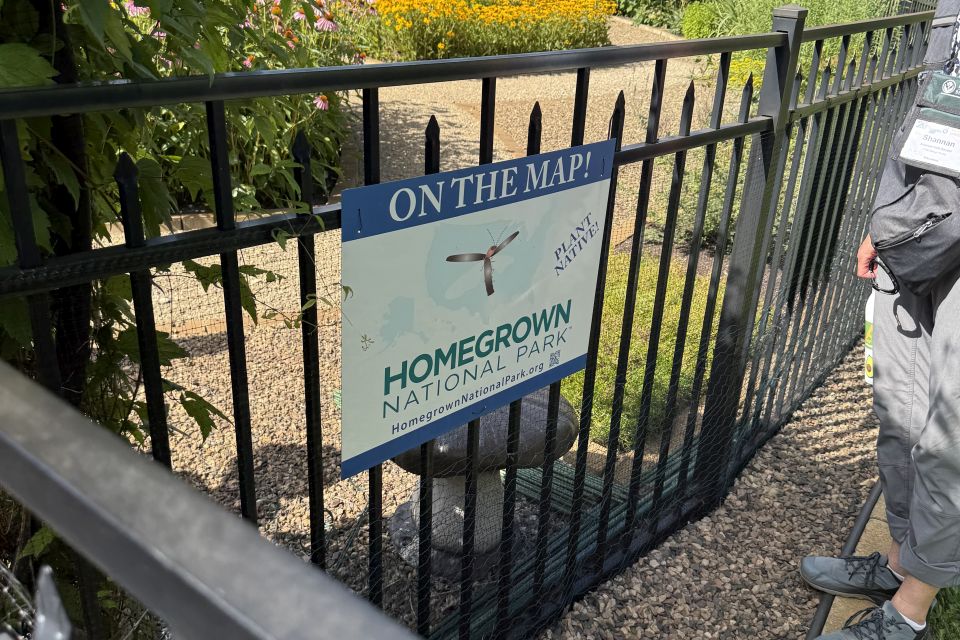
Lynn O’Shaughnessy’s property is included on Homegrown National Park’s Biodiversity Map, which tracks native habitat being created in yards and landscapes across the country. | Marisa Reyes
Pollinators were everywhere while we were there. O’Shaughnessy has documented 26 different pollinators on clustered mountain mint alone and considers Blazing Star one of the biggest butterfly magnets in the garden.
Gardeners and consumers are always looking for plants and planting ideas that inspire something they can recreate at home. Here, native plants weren’t presented only for their ecological benefits. The design gave them scale, structure, and a strong visual identity. I definitely left this stop inspired and thinking about what I might someday be able to do with a little more land of my own.
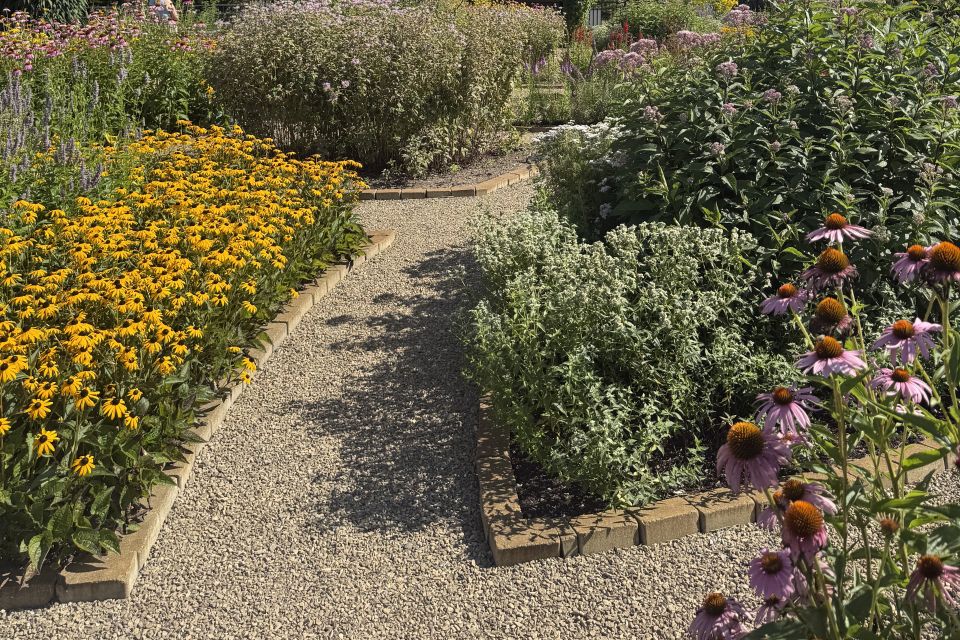
Gravel paths and brick edging define the individual planting areas within the Circle Garden’s geometric layout. | Marisa Reyes
2. Selling Natives Means Explaining More Than Where They Come From
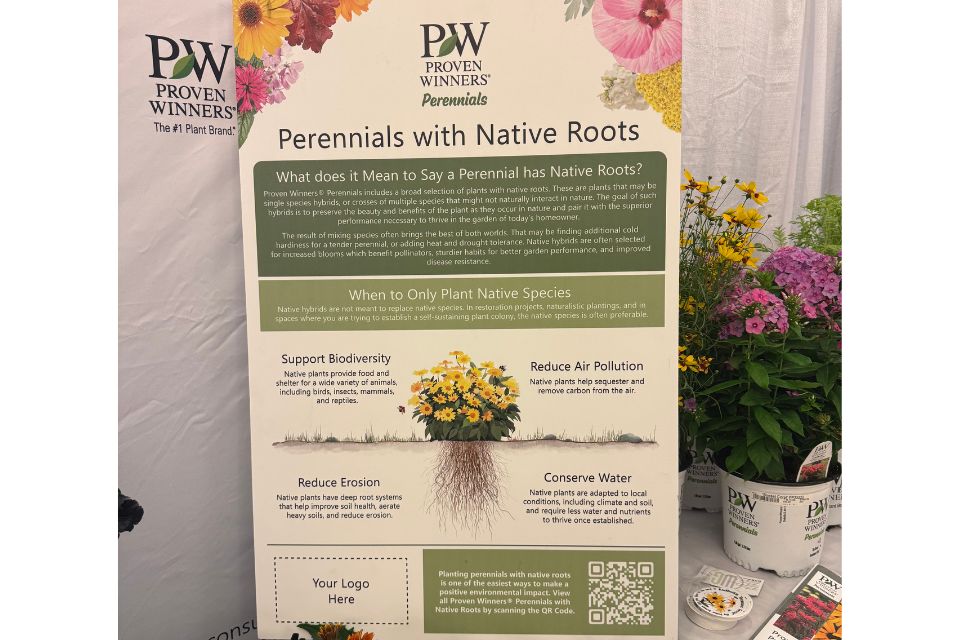
Proven Winners used its “Perennials with Native Roots” display to explain native-derived selections, their landscape benefits, and situations where straight native species may be the better choice. | Marisa Reyes
Native plants carried over from Wednesday’s tour into Thursday’s trade show, but the messaging on the show floor went well beyond simply putting the word “native” on a sign.
Proven Winners devoted an entire display to explaining what it means for a perennial to have “native roots.” The signage addressed the difference between native species and hybrids or selections with native parentage, while pointing to traits such as increased blooms, sturdier habits, disease resistance, drought tolerance, and improved garden performance.
Other displays got even more specific about why someone might choose a particular plant. At Plants Nouveau, Rudbeckia ‘Mega Millions’ was promoted for Septoria leaf spot resistance, more than 200 flowers per plant, and an upright habit that doesn’t flop. Amsonia ‘Blue Behemoth’ was labeled as a native for larger spaces, reaching about 5 feet tall by 9 feet wide, again with “no flopping” called out as a selling point. Baptisia ‘Last Dance’ was highlighted for its later bloom time and ability to extend the season.
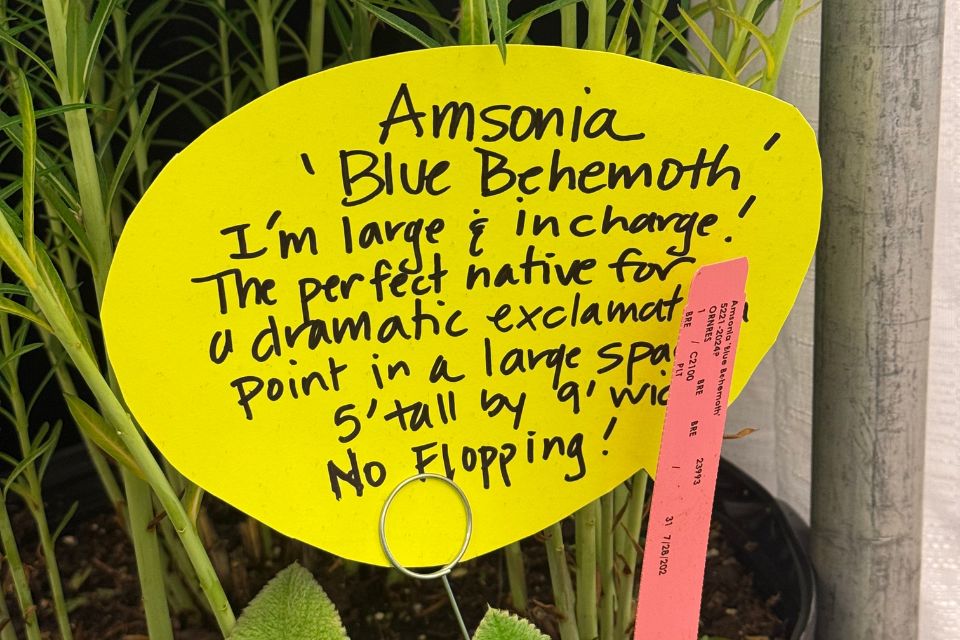
Amsonia ‘Blue Behemoth’ was promoted at the Plants Nouveau display as a native selection for larger landscapes, reaching about 5 feet tall by 9 feet wide with a habit that resists flopping. | Marisa Reyes
Minnesota Native Landscapes (MNL) approached the native conversation from the retail side, showing native plant material alongside information on retail-ready native seed packets and plants.
“Native” may get a shopper to stop, but the next questions are still practical. How big will it get? Will it stay upright? How long will it flower? Does it support pollinators? Will it work in the space they have?
The exhibitors that answered those questions gave retailers a lot more to work with than a native label alone.
3. Sometimes the Planting Is What Sells the Plant
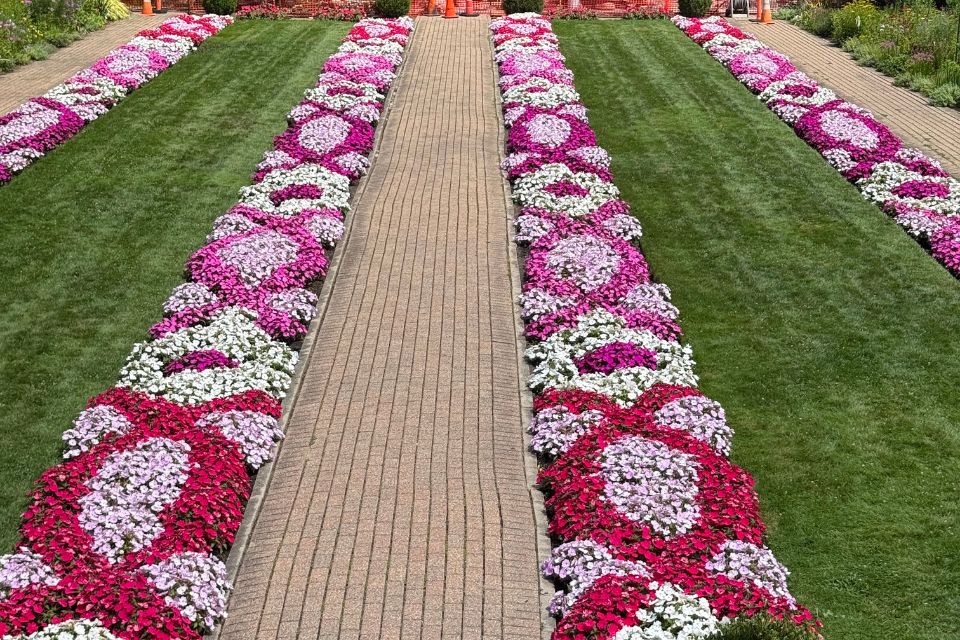
Repeated bands of red, pink and white annuals create a striking pattern through the Sunken Garden at Cranbrook House & Gardens. | Marisa Reyes
The Sunken Garden at Cranbrook House & Gardens was probably the planting I photographed most during the tour. Its four center beds are replanted with a new annual design each spring, while traditional perennial borders line the surrounding fieldstone walls. Cranbrook Greenhouse Co-Chair Paul Nelson has designed the annual display for about 15 years, first laying out the pattern on graph paper before volunteers transfer it to the beds using string as a guide.
This year’s design used repeating bands of red, pink and white, with symmetry and repetition doing most of the work. None of the individual plants needed to be particularly unusual. It was the way they were used, and the number of them used, that made the planting so memorable.
I saw that same kind of creativity in other stops too, whether it was a large sweep of one plant, a tighter color combination, or a mix of heights and forms I probably wouldn’t have thought to put together myself. A familiar plant can look completely different once someone gives you a new way to use it.
Sometimes a gardener or designer doesn’t need to introduce someone to a new plant at all. They just need to use a familiar one in a way that makes someone think, “I want to do that.” That kind of inspiration can be what turns interest in a plant into a purchase.
4. Familiar Perennials Are Still Moving
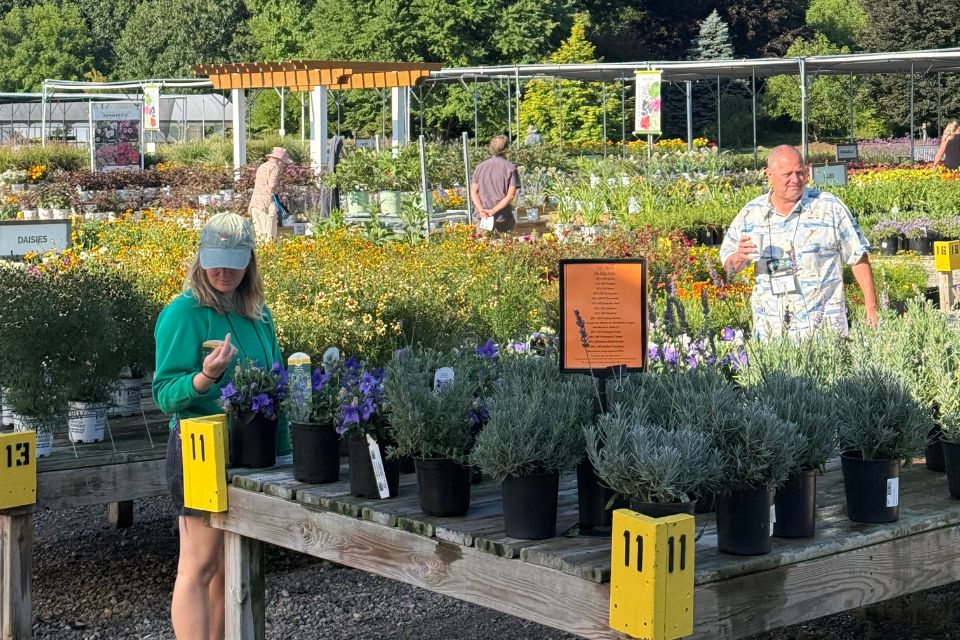
Van Atta’s Greenhouse & Flower Shop dedicates roughly 30,000 square feet of retail space to perennials and carried 1,392 active perennial SKUs in 2025. | Marisa Reyes
Van Atta’s Greenhouse & Flower Shop gave our group a fact sheet with a rare look at the numbers behind its retail plant business. In 2025, the garden center sold more than 59,000 perennial units for $914,393 in retail perennial sales, across 1,392 active perennial SKUs.
The list of best sellers was interesting too. Nepeta ‘Cat’s Pajamas’ led perennial sales with 737 units, followed by Hemerocallis ‘Stella d’Oro’ at 557. Salvia ‘Pink Profusion’ came in at 492 units, followed by Geranium ‘Rozanne’ at 458. Lavender was especially well represented, with ‘Essence Purple’, ‘Big Time Blue’, and ‘Super Blue’ all landing among the top 10.
In fact, the top 10 included three lavenders, two catmints, and two daylilies. New introductions may generate plenty of excitement, but Van Atta’s numbers show there is still considerable demand for familiar plants with an established place in the landscape.
The sheet also included one of my favorite retail details from the trip. Van Atta’s had been merchandising its small fruiting shrubs with trees and shrubs. After moving them closer to vegetables, herbs, and strawberries, unit sales doubled. Same plants. Different location.
Someone shopping for tomatoes, basil, or strawberries is already thinking about edible gardening, so putting a blueberry or another fruiting shrub in that same area gives the customer a reason to notice it. With more than 1,300 perennial SKUs alone competing for attention, what is planted — or sold — next to something can be almost as important as the plant itself.
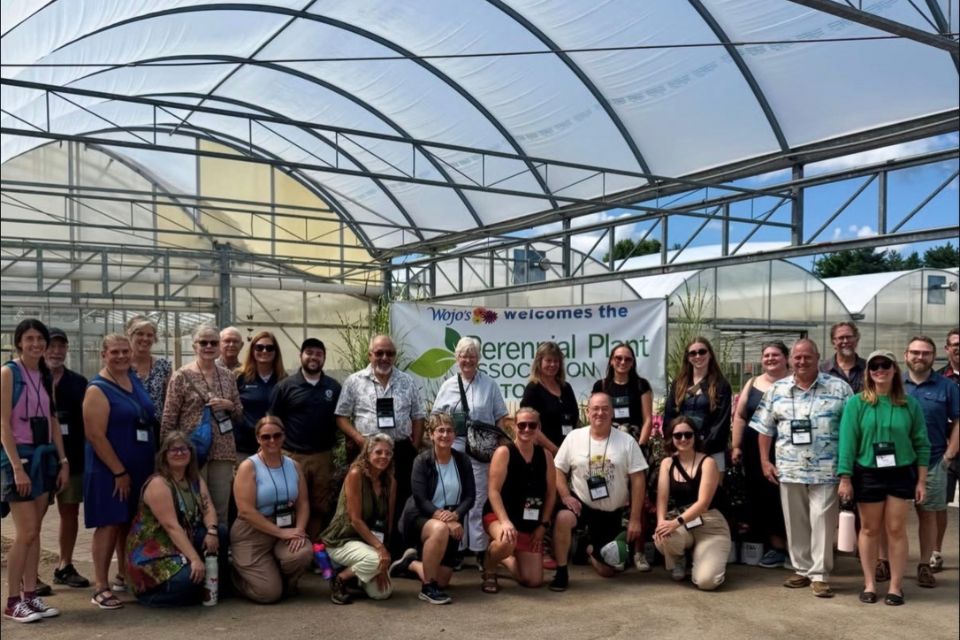
PPA attendees gather at Wojo’s during the Ideas & Inspiration Tour on July 29, part of the 2026 Perennial Plant Association National Symposium in Michigan. | Wojo’s Greenhouse Staff
Subscribe to eNewsletter