




Suntory Announces New Innovation in Blue Rose Coloration
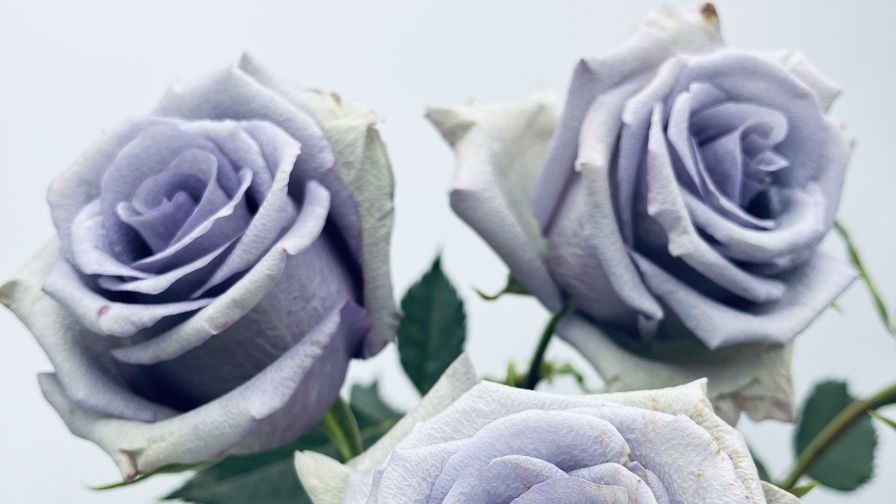
Photo: Suntory Holdings
Suntory Global Innovation Center (SIC), the research and development arm of Suntory Group, has succeeded in enhancing blue coloration in roses through copigmentation by molecular breeding. The findings were presented at the 32nd International Horticultural Congress (IHC2026) held in Kyoto, Japan, from Aug. 23–28, 2026.
Suntory Group has pursued the challenge of creating a blue rose since 1990. After 14 years of research, the Group announced the successful development of the world’s first blue rose in 2004. Following its commercial launch in Japan in 2009 and subsequent introduction to North America, this achievement marked a major milestone in flower innovation. Driven by the desire to achieve an even bluer rose, SIC continued its research efforts, leading to the aforementioned study.
Under the theme “Modification of Rose Flower Color towards Blue by Copigmentation,” this research was conducted by Seitaro Ito, Yukihisa Katsumoto, Naoko Okitsu, Yoshikazu Tanaka, and Noriko Nakamura of SIC; Kohtaro Sugahara of Suntory Foundation for Life Science; Liana Cecilia Tovar Duarte and Carlos Eduardo Romeo Vásquez of Flores Luna Nueva S.A.S.
Research Method
To enhance blue coloration through copigmentation, the researchers combined delphinidin-based anthocyanins (Del-An) with flavone C-glycosides (FCGs) and identified effective combinations through in vitro copigmentation assays. SIC then introduced four biosynthetic genes required for the production of these compounds into roses and evaluated pigment accumulation, color change, and color stability under natural growing conditions.
Research Findings
The in vitro copigmentation assay demonstrated strong copigmentation when malvidin, a delphinidin-derived pigment, was combined with FCGs such as isovitexin and isoorientin. To enable the production of these compounds in rose petals, four biosynthetic genes were introduced into roses. As a result, malvidin and isoorientin accumulated in the petals, producing a violet-blue flower color. The blue coloration became more pronounced as FCG levels increased.
Three years of field trials in Colombia further confirmed that the blue coloration remained stable under natural growing conditions.
Future Outlook
This achievement represents another step forward in SIC’s long-standing pursuit of even bluer roses. As blue roses do not occur naturally, creating one remains a longstanding challenge in plant science. By further advancing this research, SIC expects to achieve even bluer and more stable flower colors. The knowledge gained through this research is expected to have applications beyond roses to other plants, contributing to further advances in plant science.
Subscribe to eNewsletter