



New Ways to Slow the Spread of Spotted Lanternfly
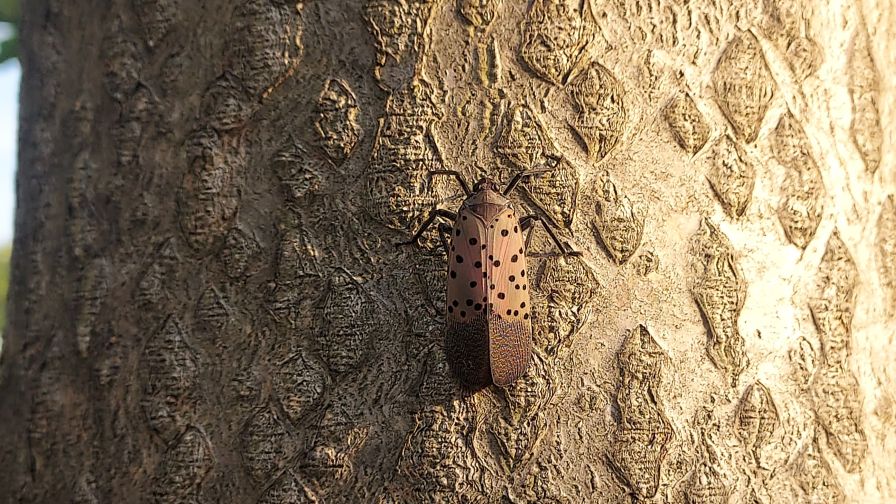
Adult spotted lanternfly on a tree of heaven near the Wayne State University campus. | Lindsey Kerr, MSU Extension.
The Michigan Department of Agriculture and Rural Development (MDARD) recently confirmed a population of spotted lanternfly, marking the first confirmed population in southwest Michigan.
First detected in Michigan in 2022, the spotted lanternfly feeds on more than 70 plant species, with tree of heaven being a preferred host. As the insect continues to become established in Michigan, Michigan State University Extension researchers and educators are working with growers, residents, and state and federal partners to detect new populations, slow its spread, and help growers prepare for what may come next.
How to Trap Spotted Lanternfly
MSU Forestry Entomology Researchers Deborah McCullough and Tim Harrison are using a simple “lampshade” trap designed to attract female spotted lanternflies looking for protected places to lay their eggs.
The researchers began evaluating the design after a USDA colleague noticed spotted lanternfly females laying eggs on the rough surface of similar traps in heavily infested areas of Pennsylvania. McCullough and Harrison wanted to know whether females would show the same preference in areas with much lower populations.
During the first two years of research, about 80% of the egg masses found at their study sites were laid on the lampshade traps, even when spotted lanternfly populations were low.
That makes the traps useful for more than simply catching egg masses. They can help detect spotted lanternfly near the edges of known infestations and show whether populations are increasing from year to year.
The traps are made from inexpensive, easy-to-find materials and designed so anyone can make them. McCullough and Harrison’s how-to guide for building and deploying a lampshade trap conveniently lists what to buy, where to find materials, and gives step-by-step instructions for building and installing the finished trap.
The traps are put out in late summer, ideally on a tree of heaven. Traps can stay out through October or mid-November. Unlike other monitoring traps, they don’t require regular replacement of sticky material or collection bags. They also don’t require insecticides and, unlike sticky traps, don’t capture native insects.
At the end of the season, the trap material can be removed and egg masses soaked in soapy water before disposal, preventing the eggs from hatching the following spring. Each egg mass can contain 30 to 50 eggs.
Preparing Michigan Gardeners and Growers
For MSU Extension, preparing for an invasive pest also means reaching the people most likely to encounter it, sometimes before it ever reaches their community.
“Gardeners, flower enthusiasts, and small-scale growers are some of Michigan’s best early detectors for invasive species because they spend a great deal of time closely observing plants, landscapes and seasonal changes,” says MSU Extension Floriculture Educator Caitlin Splawski.
In February 2026, Splawski presented “Managing Dahlia Pests and Michigan Invasive Species Update” during a Michigan Dahlia Society meeting. The program reached 18 participants from at least nine Michigan counties, including home gardeners and commercial cut-flower growers. Along with common dahlia pests and integrated pest management practices, Splawski covered emerging invasive species, including spotted lanternfly.
Among participants who completed an evaluation survey, 92% reported increased knowledge of pest management, 75% planned to improve their pest management practices, and 67% planned to share what they learned with others.
Splawski said that understanding spotted lanternfly, including where it may appear, its life cycle, and how to report it, gives gardeners and growers another way to contribute to tracking the pest as it spreads.
“These audiences can play an important role in helping researchers and regulatory agencies track the pest’s spread and respond appropriately,” says Splawski. “Even in areas where spotted lanternfly has already been detected, continued reporting helps us better understand where populations are established and how they are moving across the landscape.”
Working to Slow the Spread
Spotted lanternfly is continuing to spread in Michigan. Where it appears next may be difficult to predict, but finding it doesn’t depend on researchers or regulatory agencies alone.
Spotted lanternfly changes appearance throughout the year, from tiny black-and-white nymphs to larger nymphs with red, black, and white markings and eventually becoming grayish-brown adults with spotted wings. By fall, attention also turns toward egg masses, which can resemble gray or mudlike smears and may be easy to overlook.
“As the adults feed on a wide range of plants this fall, they’ll leave the next generation of spotted lanternfly to overwinter as egg masses on tree trunks and other surfaces,” says Splawski. “These can be scraped off, soaked in soapy water or otherwise disposed of to prevent them from hatching next season.”
Reports from residents can make a difference. In 2025, a report submitted through DNR’s Eyes in the Field led to the confirmation of a new spotted lanternfly population in Jackson County. That year, MDARD received almost 700 spotted lanternfly reports from the public.
“It’s one of the most important things we can do to help track the spread of invasive species and inform conservation practices,” Konieczki says. “Talk to your neighbors and share what you learn!”

For additional information on stopping and slowing the spread of spotted lanternfly, including educational workshops from MSU and additional preventative measures to take, read the original article from Mallory Marienfeld on the Michigan State University Extension website.
Subscribe to eNewsletter