



How Longwood Gardens Has Shifted to Fiber Pots
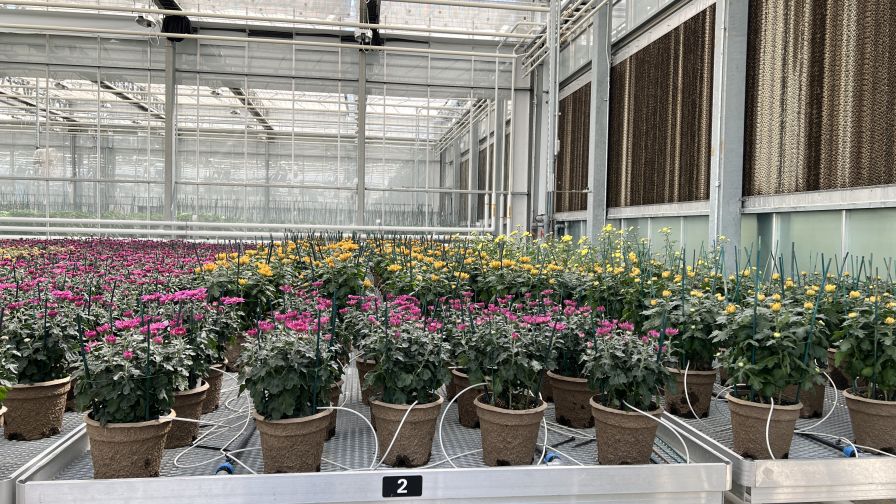
Photo: Britt Long
Anyone lucky enough to have visited Longwood Gardens in Kennett Square, PA, has been fortunate to experience an abundance of plants spanning more than 1,100 acres. Longwood Gardens is the former home of Pierre S. DuPont, which became a public garden in the 1950s. Many of DuPont’s original gardens at Longwood are now mainstays in the garden today, reflecting his legacy and stewardship.
“We welcome more than 1.7 million guests annually, so we are pleased and fortunate to have so many people from all over the world come to visit the gardens,” says Dr. Kate Santos, Associate Vice President of Science at Longwood Gardens.
Longwood produces many of its own plants — approximately 60% in-house, with the remainder coming from outside sources, resulting in a wide variety of thousands of plants that are swapped out seasonally. The work of propagation with seeds, cuttings, and tissue cultures is accomplished in 100,000 square feet of greenhouse space, offering 29 distinct growing zones, with another 100,000 square feet of outdoor space.
It’s a large operation that, naturally, leads to a lot of containers as well — something that Healthy Pots, Healthy Planet is particularly interested in. Our mission is to reduce the use of petroleum-based plastic plant containers by advocating for and promoting sustainable alternatives. Because advancing sustainable alternatives depends on sharing what works, we invited Dr. Santos to share Longwood’s experience.
Fiber Pots as Plastic Alternatives
Petroleum-based plastic containers have been the industry default for decades, but Longwood has been searching for an alternative. Ultimately, they landed on a fiber pot for the finished stage of growing before being transplanted outdoors. They have been using fiber pots with satisfaction for more than 25 years, making Longwood an early adopter of alternative pots. “We were well ahead of our time compared to other growers and gardens in the industry,” notes Santos. The majority — about 70% — of their in-house production is completed in fiber pots.
The fiber pot that Longwood uses is manufactured by Growscape. It’s made from 100% recycled paper in a facility that utilizes a closed-loop water recycling system. According to Growscape, the pot is strengthened with a biobased binder sourced from wood. It has no microplastics and no added PFAS (the recycled paper used may contain some).
One thing that Longwood especially appreciates about the pot is that the walls are thicker than other fiber pots, increasing the durability so that the pot can hold for up to a year before transplanting. The recycled paper content is certified by SCS Global Services and the pot is certified as biobased by the USDA BioPreferred program.
Longwood propagates in plastic trays because it has not found a suitable alternative for that stage of production. In their experience, due to the watering requirements and humidity surrounding the plants, the paper-based solutions fall apart. Once the plants have rooted, however, they are transplanted into larger fiber pots to continue growing and await transplanting outdoors or placement in displays.
No Concerns With Hand Labor
Growing an exceptionally diverse range of plants, often in small batches, means nearly every aspect of greenhouse production at Longwood is performed by hand. That makes the Gardens an ideal test of whether fiber containers can withstand the demands of daily production. Other growers may be surprised to learn that “we’ve had no issues with fiber pots in terms of handling,” according to Santos. The thicker-walled fiber pots are less fragile, and after years of working with them, the highly skilled staff know how to handle them. Santos herself admits to past skepticism about fiber pots, but “I’ve been here now almost five years, and [fiber is] very consistent and reliable in our production streams, so it is definitely a good alternative to plastic pots.”
When it is time to transplant, gardeners remove the fiber pot before planting. While the containers are designed to be plantable, Longwood’s frequent seasonal changeouts don’t allow enough time for them to decompose in the soil. Removing the pots also encourages faster root establishment in the surrounding soil. What Longwood does instead is add the discarded fiber pots to their composting, which eventually becomes mulch for the gardens. It’s an environmentally sound way to manage waste that the Garden is justifiably proud of.
As for the petroleum-based plastic containers they use, in addition to plastic trays for liners, they turn to plastic pots for larger plants that require at least a 3-gallon container and more than 1 year to produce. They have not found an alternative pot that works for the “little plants and the big plants,” as Santos says. They do their best to stretch their use of plastic and limit single-use by re-using containers as much as possible. This means washing both the smaller and larger containers and putting them back in production; however, the propagation trays often get sent to recycling. Longwood’s Floriculture Production team is clear-eyed about the likelihood that plastics sent to recycling may just end up in landfills, highlighting the difficulty of plastic waste disposal and sufficient recycling outlets to accommodate the volume of plastic entering landfills.
Longwood continues to search for ways to reduce reliance on single-use, petroleum-based plastics. So far, plant-based plastics have been too costly and have similar challenges to petroleum-based plastics regarding suitable recycling outlets to accept the waste. “As scale and demand increase, recycling outlets are developed, and the technology to produce it gets simplified, then hopefully we’ll see the price go down and more sustainable options come to market,” Santos says. Like many, she sees the biggest challenge in the industry as the need for pots that can withstand heavy watering and are durable over months and years in the field and still biodegrade or are compostable when they are no longer needed.
“It is really a unique product that someone needs to make.” “I’m hopeful,” Santos says. “I think there will be a solution. Many organizations are working toward that goal, and when the right alternatives become available, we want to help evaluate them and demonstrate what successful implementation can look like in practice.”
Longwood remains committed to identifying more sustainable alternatives while minimizing the amount of material sent to landfills and building resilient production systems that can adapt as new solutions emerge.
Although surrounded by a sea of black plastic pots in the marketplace, Longwood has found an alternative pot made from recycled paper that covers 70% of its in-house production, building a 20-year track record that demonstrates plastic can be replaced successfully.
Subscribe to eNewsletter