


How CSPMA Is Updating Its Peat Moss Resources for Growers
 November 26, 2026
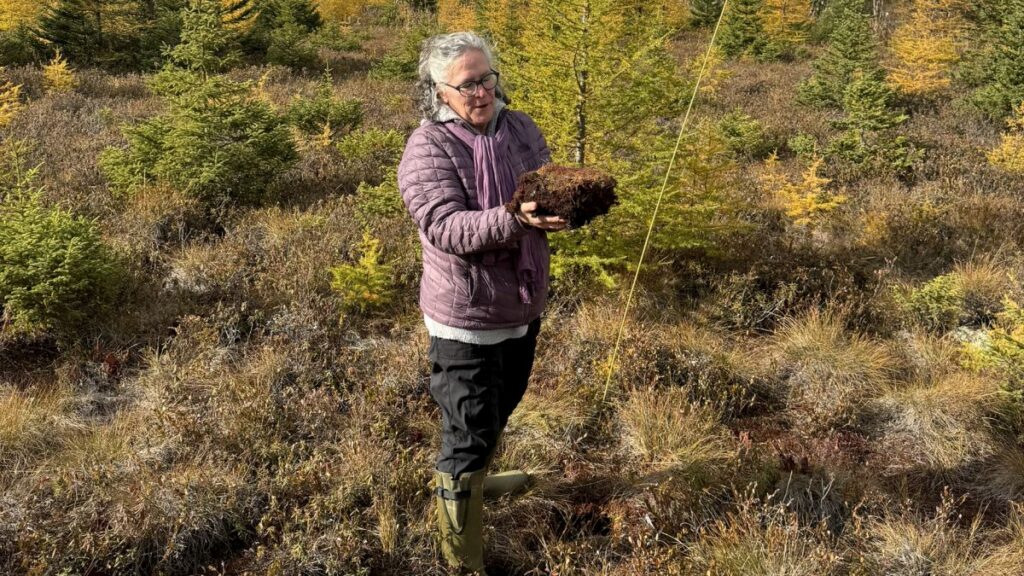
Stéphanie Boudreau, CSPMA’s Vice President of Science and Research Partnerships, holds accumulated peat from a restored bog. | CSPMA
The Canadian Sphagnum Peat Moss Association (CSPMA) has many missions, but they essentially boil down to two goals: building a long-term future for the peat industry through research-supported innovation, and providing clarity about peatland restoration, sustainability, and supply chain management.
Stéphanie Boudreau, Vice President of Science and Research Partnerships at CSPMA, says it all starts with understanding peat’s environmental footprint.
“We’re focused on evaluating the carbon footprint of peat across its entire life cycle, particularly at the end user level,” Boudreau says. “There’s a science behind how peat breaks down in peatlands and once it is extracted, and we want to have better data that can be incorporated into a life cycle analysis.”
To accomplish this, CSPMA works directly with various researchers, including the U.S. team behind the Soilless Substrate Science project, a national transdisciplinary collaboration developed to support growers as they advance to the next generation of substrates. “We want to make sure that what we’re doing in Canada aligns with research taking place in the U.S. and around the world,” Boudreau says.
Charleen McCartney, Communications and Sustainability Manager with CSPMA, says sustainability continues to be top of mind.
“We want to make sure growers have credible answers to their questions and are able to make their own informed decisions on the products they’re using in their operations,” she says.
Just the Facts
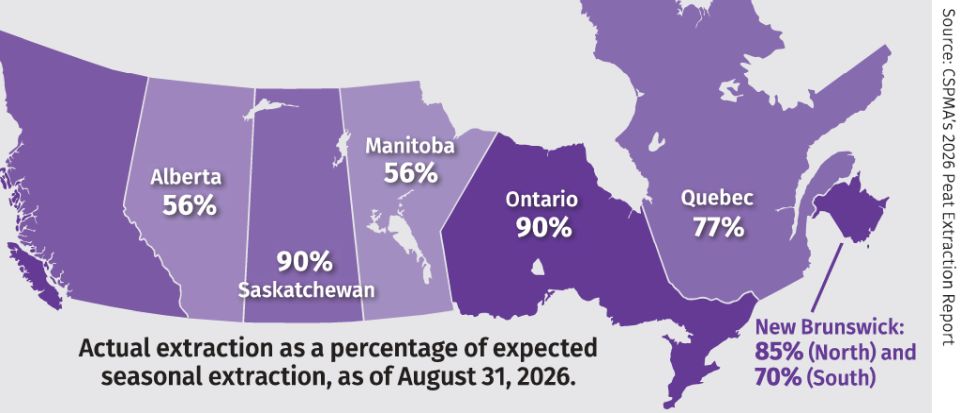
Actual extraction as a percentage of expected seasonal extraction, as of August 31, 2026. | CSPMA
CSPMA’s fact sheets, found at PeatMoss.com, explain the association’s research and positions on peat production and use. Over the past 18 months, the organization has updated several of these resources.
“We pulled in a group of scientists to review the information to make sure it was accurate and credible,” McCartney says. “In doing so, we discovered much of the information was highly technical, and we wanted to make it more accessible for those who may not have a strict scientific background.”
The Greenhouse Gas Emissions fact sheet was subsequently reworked to explain how greenhouse gas emissions from peat extraction are measured and accounted for in Canada’s emissions totals. The revision removed some technical details about carbon accounting methods. Another change was renaming and reframing the “Alternative Materials and the Wise Use of Peat” fact sheet to “The Wise Use of Canadian Peat & Other Growing Media Components.” The revision shifted the focus from comparing peat with alternatives to examining peat’s role alongside other components in growing media blends.
“Every type of growing media component has an environmental footprint, and we wanted to clearly highlight the differences between each material,” says Asha Hingorani, President of CSPMA.
Reaching Growers and Future Industry Leaders
“Over the past year, we’ve had to clarify the situation around tariffs, and we’ve worked with AmericanHort to make sure both countries have the most accurate information,” Hingorani says. “We obviously want to make sure any tariffs on peat are avoided.”
These outreach efforts have become a key priority within CSPMA, Hingorani says.
“Part of our strategic plan is to reach out to academics, media, and end users in the U.S., so they know who to talk to when they’re questioning or have questions about peat,” she says.
Earlier this year, for example, CSPMA worked with Dr. Charlie Hall to organize a seminar for students and faculty in the horticulture department at Texas A&M University.
“That gave us an opportunity to connect with the next generation of the industry,” McCartney says. “We’re looking to do more of these types of visits, either in person or virtually.”
Hingorani says these discussions can do more than promote sustainability and responsible management.
“They can also help us shape the mindset of future industry leaders,” she says. “The more they can learn from us and about us, the easier it becomes to work together.”

For more information on the CSPMA’s resources or educational opportunities, email Asha Hingorani at [email protected].
Subscribe to eNewsletter