


Juan Ponce of Metrolina Greenhouses on Keeping Up With Trends in Production, Innovation, and More
 November 23, 2026
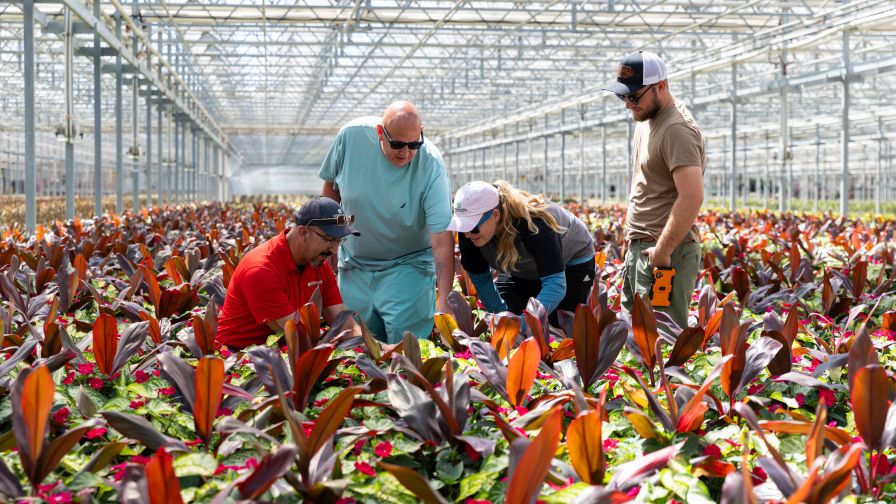
Photo: Metrolina Greenhouses
Juan Ponce of Metrolina Greenhouses was recognized as the 2026 Head Grower of the Year by Greenhouse Grower during our Evening of Excellence event at Cultivate’26. Juan was featured in the cover story of our November 2026 issue, but those of you who know Juan know there’s so much more to his story. This article is the third of a four-part series where we highlight everything from Juan’s early career, to how to has built a strong and dedicated team at Metrolina, to his approach to IPM and technology. You can find Part 1 here and Part 2 here.
Greenhouse Grower: How have you worked to implement and advance IPM into Metrolina’s production practices?
Juan Ponce: I started working to improve Metrolina’s IPM program almost from the day I joined the company. Because of my background in entomology, IPM, and biological control, I was able to become involved early with the different supplier companies, consultants, and technical experts supporting our pest management programs.
Over the years, I have helped establish and improve many of the practices that are still part of our IPM program today. These include the broadcast application of beneficial mites and insects, the use of insectary plants and banker plant systems, and the integration of biological controls with preventive, biorational pesticide programs.
One of my main goals has always been to look beyond simply treating a pest after it appears. I believe a successful IPM program starts with prevention, monitoring, understanding pest biology, and using biological, cultural, and chemical tools together.
The program continues to evolve as new pests, beneficial organisms, products, application technologies, and research become available. For me, IPM is never a finished program; we are always learning, evaluating, and looking for ways to make it more effective and sustainable.
Greenhouse Grower: How do you keep yourself updated and educated on the latest trends in areas like varieties, pest management, technology, etc.?
Juan Ponce: Staying current with industry trends requires more than simply asking AI to search for information; it requires the ability to evaluate, validate, and apply that information effectively. In today’s digital environment, there is an overwhelming amount of information available online, but most of that just an opinion with no data with some influence by sales driven motivations. One of the most important responsibilities that I have as a head grower is to navigate this data system and being able to distinguish reliable information from advertising and identify solutions that align with the company’s goals and production needs.
My approach begins with trusted internal and external sources. Internally, we benefit from a strong team of horticultural professionals, researchers, and technical specialists who continuously evaluate new ideas, products, and practices. At Metrolina Greenhouses, our Research and Development team plays a critical role in testing and validating new offered technologies and plant protection solutions before they are implemented as a standard procedure in our growing knowledge base.
Externally, we as a company maintain connections with growers from different greenhouses to share experience and results, which helps identify practical solutions that can be adapted to different operations, as well as connections with universities, researchers, and industry experts who provide the science behind new developments. Professionals like Dr. Royal Heins and Suzanne Wainwright-Evans have contributed valuable knowledge to our Horticulture Department by providing their professional technical guidance. Industry publications, magazines, supplier meetings, webinars, and educational resources also offer valuable opportunities to stay informed.
Attending industry conferences and seminars such as Cultivate provides access to the latest technologies, research findings, and growing tools. These events also create opportunities to connect and exchange ideas with other growers.
At Metrolina Greenhouses, we have developed a structured process for accessing new information across the organization. Under the leadership of our Chief Horticulture Officer Ivan Tchakarov, we host “Lunch and Learn” sessions where researchers, technical specialists, and industry partners present new products, technologies, and research to our growing teams. These sessions allow us to critically evaluate new solutions, ask questions, and ensure our decisions are based on need and results.
More recently, podcasts have become another great resource for me, especially Greenhouse Grower to Grower and Tech on Demand, which I can listen to while driving.
Greenhouse Grower: What steps do you take to improve plant quality and operational efficiency?
Juan Ponce: My philosophy is simple: “If it isn’t broken, don’t fix it.” I focus our efforts on the areas that present challenges or opportunities for improvement. When an operational process or crop program is already producing consistent, high-quality results, I avoid making unnecessary changes simply because new products, technologies, or recommendations become available. Any change must provide a clear benefit before it is implemented.
Plant quality begins with attention to detail and proactive crop management. My team and I continuously monitor crop performance, irrigation practices, fertility, pest and disease pressure, plant growth regulator applications, cultural practices, and production timing to identify potential issues before they become significant problems.
My background in agriculture and entomology has helped me develop a preventative approach to crop production that supports both plant health and operational efficiency. I strongly believe in training and educating my team so that problems are identified early through proper scouting, crop monitoring, and performance tracking. Detecting issues early allows us to take corrective action before quality or efficiency is impacted.
When challenges arise, we first utilize our internal resources to identify solutions. We discuss issues during our daily horticulture meetings with the Directors and the Chief Horticulture Officer. These discussions allow us to determine whether the issue is something we have encountered before using their experience to solve it. If the challenge is new, we work together to develop potential solutions.
When necessary, we involve our Research and Development team to design and conduct trials that evaluate different approaches before establishing a new protocol. If the issue is related to genetics or factors we can’t control, we work closely with breeders and suppliers to identify alternative varieties or products that can meet the quality expectations of our customers.
Operational efficiency also requires strong cross-department communication. We hold regular meetings with production, shipping, maintenance, IT, and other departments to ensure that production practices align with operational goals and business needs. Continuous evaluation, data analysis, collaboration, and communication are key components of improving both plant quality and efficiency.
Subscribe to eNewsletter