




Juan Ponce of Metrolina Greenhouses on Why the Future of Floriculture Lies in Both Technology and People
 November 28, 2026
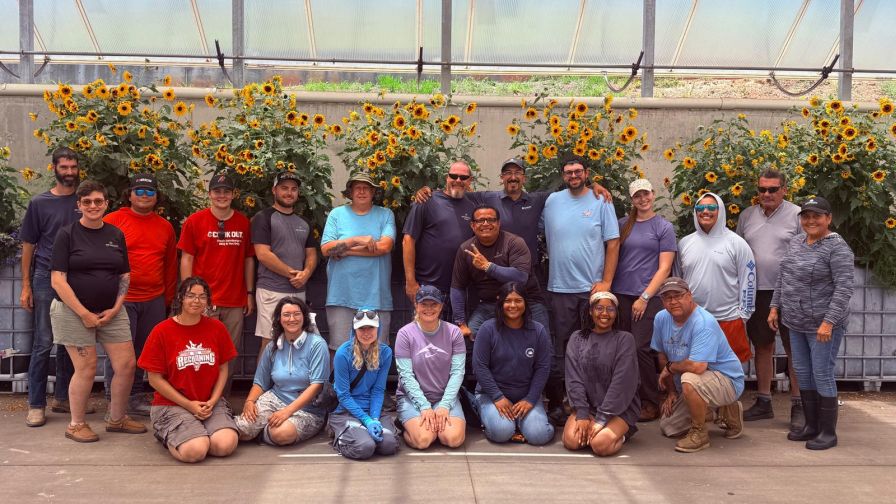
Photo: Metrolina Greenhouses
Juan Ponce of Metrolina Greenhouses was recognized as the 2026 Head Grower of the Year by Greenhouse Grower during our Evening of Excellence event at Cultivate’26. Juan was featured in the cover story of our November 2026 issue, but those of you who know Juan know there’s so much more to his story. This article is the last of a four-part series where we highlight everything from Juan’s early career, to how to has built a strong and dedicated team at Metrolina, to his approach to IPM and technology. You can find other parts of the series here.
Greenhouse Grower: How have automation and technology helped you grow better plants?
Juan Ponce: “Automate or stagnate” is a phrase I first heard from Metrolina Greenhouses founders Tom and Vickie Van Wingerden, and later from members of the Van Wingerden family. Over the years, I have adopted this philosophy because it reflects an important reality of our industry: growers must continuously evaluate and adapt technologies that help meet the changing needs of production while maintaining the highest quality standards.
Every generation of growers has faced new technologies that were considered revolutionary at the time. While the tools have changed, the objective has remained the same: to grow healthier, higher-quality plants more efficiently and consistently. Today, automation and technology are focused not only on improving production efficiency and reducing labor intensive tasks, but also on helping growers collect, organize, analyze, and act on large amounts of production data for a big company, like is the case for Metrolina Greenhouses.
Climate control software, automated irrigation systems, inventory management platforms, and advanced reporting tools allow growers to make more informed decisions and respond quickly to changing crop requirements. These systems improve consistency, increase precision, and help ensure that crops receive the environmental conditions they need to perform at their best.
As greenhouse operations continue to grow in scale and complexity, data management has become increasingly important. The ability to collect information, generate meaningful reports, identify trends, and share knowledge across teams is essential for maintaining consistency in crop decisions and production practices. Today’s growers have access to this information from virtually anywhere through mobile devices, allowing faster communication and decision making.
Automation also allows horticultural professionals to focus more of their time on crop strategy rather than repetitive tasks that can be performed more efficiently by machines. New production equipment, irrigation technologies, and automated systems help reduce labor demands while improving operational efficiency. However, technology is obsolete if is not combined with experienced growers who can provide the proper use. Successful crop production still depends on growers who can apply critical thinking, understand plant responses, and make informed decisions when situations fall outside of standard parameters.
Ultimately, automation is not about replacing growers or employees. It is about empowering them, improving consistency, supporting sustainability, enhancing decision making, and allowing growers to focus on what matters most: producing better plants for consumers and our retail partners.
Greenhouse Grower: Are there any new projects currently in the works you’re involved in at Metrolina?
Juan Ponce: In my role, there are always new projects that I am involved in. One of the major projects I am currently working on is our online grower training and career development program. I have been working with our growers and head growers and other professionals from different areas in Metrolina Greenhouses to help develop training through Litmos classes. The program is designed to support employees from the assistant grower level through management positions. We are now completing the last face of training. Our next step is to develop this material in Spanish, which will provide better training opportunities for our Spanish speaking employees, including H-2A employees who may have limited English educational level but have the potential to develop into assistant growers and other horticultural positions.
I am also continually working on improvements to our IPM and biological control programs. This includes evaluating new products and beneficial organisms that could be incorporated into our program. Another project is our beneficial insectary gardens, where we continue evaluating plant species that can attract, support, and conserve beneficial insects. The goal is to make these gardens another practical biological control tool within our overall IPM strategy.
Technology is another major area I am involved in. Last year, we introduced the Entomatic system to allow large scale and more efficient releases of beneficial organisms. We are now working on another project involving an integrated dipping belt system for incoming plant material. The goal is to strengthen our sanitation and pest prevention program by treating incoming material more consistently, reducing pest pressure before plants enter our greenhouse production, and using treatments that are more compatible with our biological control program, big part of this was covered during my talk in the plug and cutting conference.
For me, these projects are all connected. Whether it is developing our people, improving our IPM program or introducing new technology, the goal is to find better ways to improve plant quality, efficiency, sustainability, and the long-term success of our horticulture program at Metrolina Greenhouses.
Greenhouse Grower: What are you most excited about for the future?
Juan Ponce: It may sound cliche, but new technology and automation are still very exciting to me. I consider myself visionary when it comes to how much our industry can continue to grow and the positive impact ornamentals can have on our communities from bringing enjoyment to consumers and supporting biodiversity.
I am also very excited about the future of plant genetics. I enjoy seeing how breeders continue developing stronger plants that produce better quality flowers, have improved stress, pest and disease resistance, and perform better for both growers and consumers.
What excites me most, however, is the next generation of growers. They are entering the horticulture industry with a completely different set of tools and perspectives. Our role as experienced growers is to pass along our horticultural knowledge while helping them combine that experience with new technologies. AI can be a powerful tool, but growers still need the knowledge, judgment, and critical thinking to use it effectively. They don’t necessarily see AI as something unusual or as a replacement for people. They see it as another tool in their toolbox. I believe that, in the right hands, AI can be extremely valuable, but the grower still needs the horticultural knowledge, experience, judgment, and critical thinking to know how to use the information correctly.
I’m also passionate about developing Spanish-speaking horticulture professionals. Through my involvement with the AmericanHort Spanish speaking community, I’m working with other industry leaders to strengthen educational opportunities, create clearer career paths, build Spanish language resources, and help develop the next generation of Spanish speaking growers and horticulture leaders.
That combination of experience, new technology, and developing the next generation is what excites me most about the future of horticulture.
Subscribe to eNewsletter