



How Plant Breeding Is Changing
Plant breeding has never operated in a vacuum, but heading into 2026 and beyond, the pressures shaping new variety development are becoming more clearly defined. Climate volatility, shifting consumer lifestyles, rising production costs, and logistical realities are converging to influence what breeders prioritize, what makes it to market, and what ultimately succeeds at retail.
To better understand where breeding is headed, we asked breeders across the industry a simple question: What two to three trends do you feel will shape plant breeding in 2026 and beyond? Their responses revealed a set of common themes that cut across crops, categories, and company size.
Performance Under Stress Is the Baseline
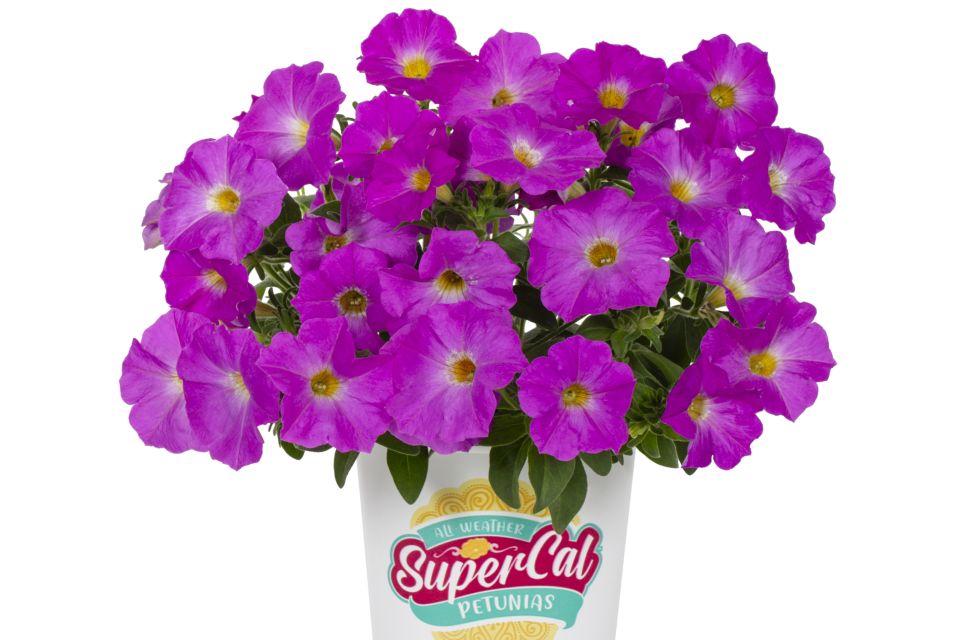
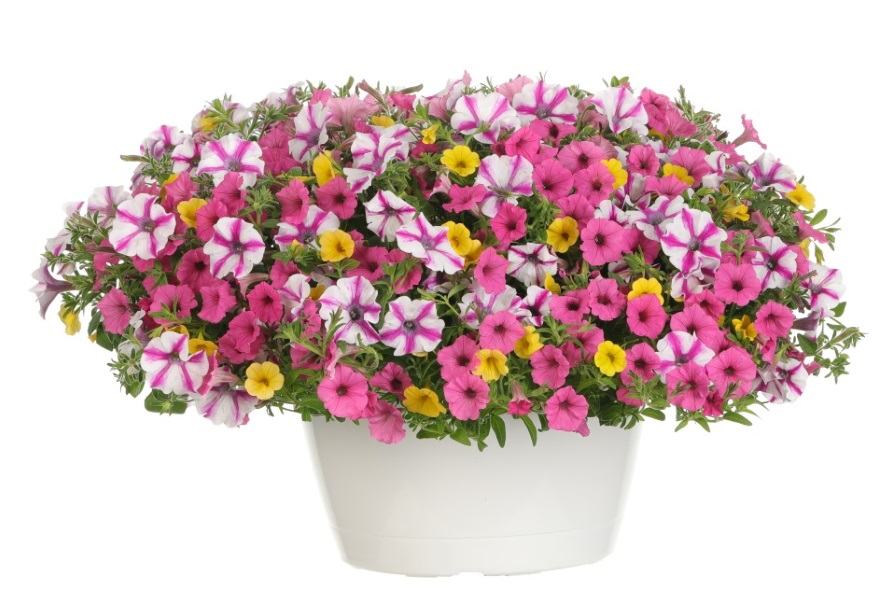
Petunia Petunia x Calibrachoa hybrid Rose Pink. | Sakata Seed America
Heat, drought, disease, and extreme weather tolerance are no longer differentiators. They are expectations.
Across nearly every response, breeders pointed to climate-driven stress as a defining force in breeding priorities. Increasing heat tolerance, drought tolerance, and resilience to heavy rain and wind are now foundational traits, not premium add-ons. As Jim Putnam of Proven Winners notes, breeding programs are increasingly focused on helping plants withstand not just one stressor, but combinations of them.

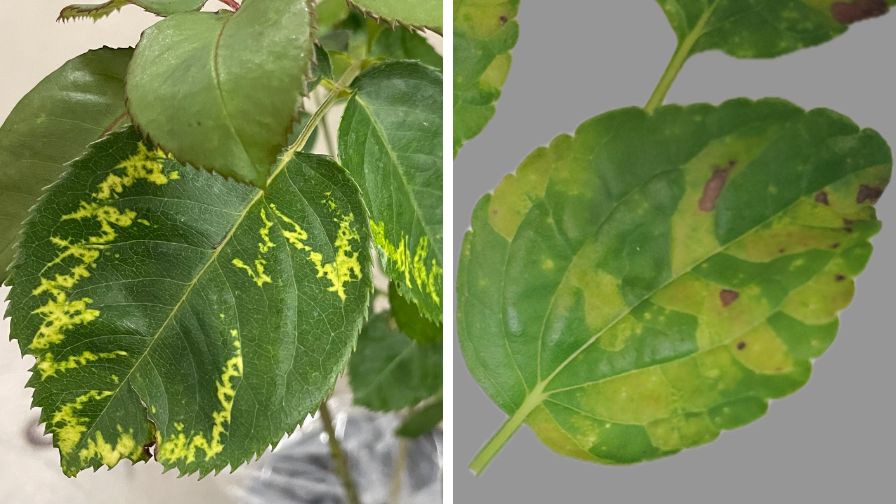

This emphasis extends to disease resistance as well. Brad Smith of Sakata points to downy mildew-resistant sunflower introductions such as Vincent’s Choice DMR and Vincent’s Fresh DMR, along with broader all-weather performance in crops like SuperCal petunias, which are bred to tolerate heat and cold and recover quickly from heavy rains. At the same time, companies such as Dümmen Orange have made disease resistance a baseline expectation rather than a value-added trait. In petunias, for example, TMV resistance is now considered essential for reducing operational risk and simplifying production protocols. From a breeder’s perspective, garden durability also matters. Amir Zuker of Danziger notes that resistance to both biotic and abiotic stress, paired with longer-lasting performance in the landscape, remains central to breeding goals moving forward. Delilah Onofrey of Suntory Flowers also emphasized the need for varieties that stay reliable through heat and weather swings, with strong retail hold and season-long landscape performance.
Data, Technology, and Precision Breeding
Behind the scenes, how plants are bred is changing as much as what is being bred. Multiple respondents pointed to the growing use of data-driven tools to increase efficiency and accuracy in breeding programs. Jim Putnam highlights the role of artificial intelligence, genomic selection, and marker-assisted breeding in improving parental selection and accelerating progress.
Syngenta Flowers’ Li Jiang emphasizes high-throughput phenotyping and genetic prediction as key tools shaping modern breeding decisions. These technologies allow breeders to make more informed selections earlier, reducing time to market while increasing confidence in performance outcomes. While conventional breeding remains essential, as Jim Berry of J. Berry Nursery notes, breeders are also rediscovering the untapped potential of natural genetic diversity, using advanced tools to work more precisely with nature rather than around it.
Low-Input, Low-Maintenance Plants for Growers and Consumers
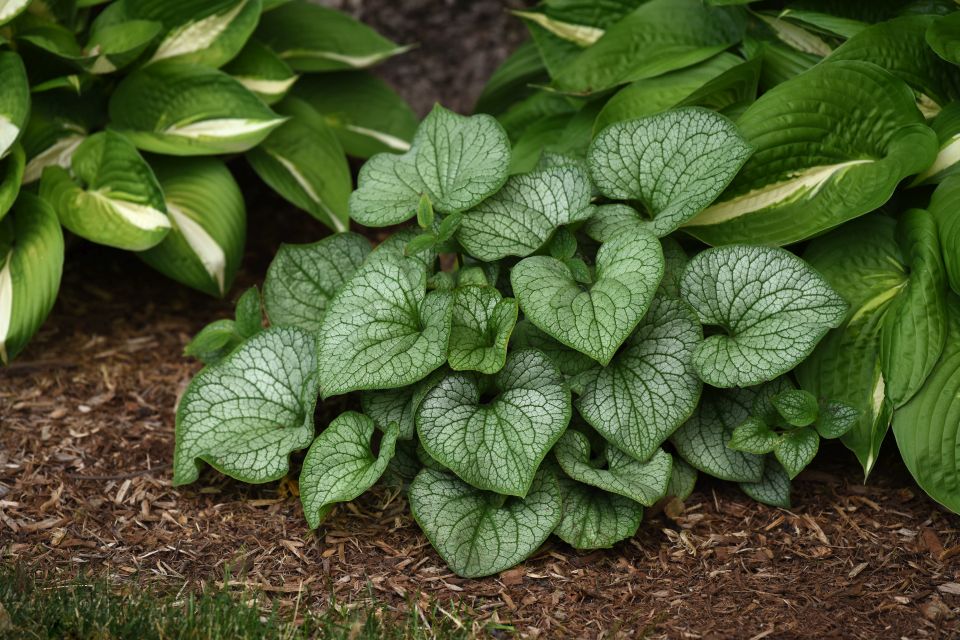
New Brunnera introductions from Darwin Perennials. | Darwin Perennials
Breeders are increasingly designing plants that succeed with fewer inputs, from production through the garden. Bart Hayes of Westhoff points to the continued demand for low-maintenance, high-impact plants that combine heat and drought tolerance with ease of care. Crops like Helianthus, Dipladenia, and hybrid Impatiens exemplify this direction, offering strong performance without requiring intensive management.
That same philosophy carries through production. Darwin Perennials’ Sarah Greenwood notes that growers are looking for plants that require fewer PGRs and lower energy inputs, while still delivering consistent results. Their latest introductions of Brunnera — Frostbite, Frost King, Permafrost, Frostline, and Frost Magic — reflect that focus on problem-solving genetics that perform reliably with fewer inputs. From both sides of the supply chain, the goal is greater efficiency.
At retail, ease of care remains a major driver. Sakata emphasizes breeding for consumer-friendly longevity, while Ball FloraPlant highlights low-maintenance lifestyles as a core trend shaping product development across categories, from coleus to mixed container programs.
Reliability, Uniformity, and Predictability
Beyond stress tolerance and efficiency, breeders are placing renewed emphasis on reliability and predictability across production environments. Uniform growth, consistent flowering, and dependable timing are becoming essential traits as growers work to manage labor, scheduling, and increasingly tight ship windows.
Breeding for predictability helps reduce risk at every stage of the supply chain. Varieties that perform consistently across locations and climates allow growers to plan with greater confidence, while retailers benefit from uniform appearance and dependable shelf performance. For national and multi-regional programs in particular, consistency is critical to meeting expectations at scale.
Several breeders noted that this focus on reliability also supports operational efficiency. When crops behave as expected, growers can streamline inputs, reduce corrective actions, and simplify decision-making. In that sense, predictability is not just a breeding goal but a management tool that supports profitability and long-term planning.

These pressures are shaping not just how plants are bred, but what those plants look like when they reach growers, retailers, and consumers — from compact containers to pollinator-forward selections.
Stay tuned for Part 2!
Subscribe to eNewsletter