



On the Art of Creating Successful Combos
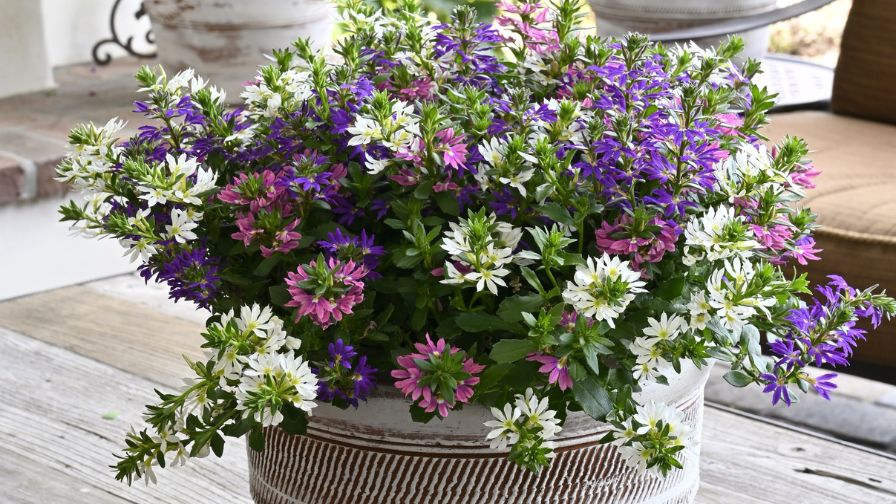
Scaevola ‘Surdiva Disco Diva’ combo. | Suntory Flowers
Combination planters may look simple on the retail bench, but behind the scenes, they’re the result of careful planning, extensive trialing, and understanding what growers and consumers need. For growers, they’re a way to streamline production and add value at retail. For consumers, they’re an easy grab-and-go option that delivers instant impact and season-long performance.
To better understand how breeders are helping make combos more successful, we spoke with three industry experts: Delilah Onofrey, Marketing Director at Suntory Flowers; Becky Lacy, Product Manager at Selecta One North America; and Lauren Kilpatrick, Technical Trial Manager at Syngenta Flowers. Together, they illustrate how combo programs are evolving to serve the industry at every step of the chain.
Meeting Grower Needs
For Suntory Flowers, simplifying production is always top of mind. The company’s Mixers program began with straightforward color blends in petunias and scaevola before expanding into more diverse combinations that incorporate bidens, lobelia, and verbena. Onofrey notes that one way Suntory encourages adoption is by offering price incentives on royalties. “Instead of paying three royalties for three cuttings, growers pay for two,” she explains. “Even if you didn’t mix them together, it’s advantageous. At scale, that adds up.”
Syngenta takes a different approach with its Kwik Kombo program, which is centered on confidence through trialing. Kilpatrick explains that each year about 50 experimental combos go through multiple stages of evaluation, including rooting together as multi-liners, finishing in the greenhouse, and enduring all summer in outdoor trials. “That way, the grower can be successful, but also the homeowner can be successful,” she says.



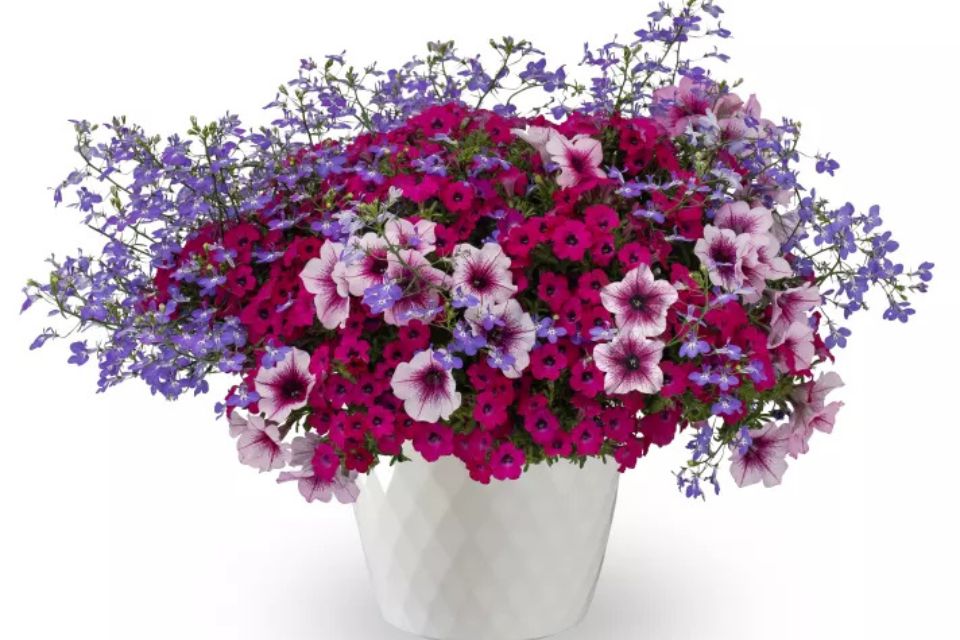
Violet Riot combo from the Kwik Kombo program. | Syngenta Flowers
At Selecta One, the focus is on consistency and scheduling ease. Its Trixi program, along with Ball FloraPlant’s MixMasters program, are sold as kits with unrooted cuttings intended to be stuck and rooted together, ensuring a uniform crop from the start. “I like everything to be stuck on the same week,” says Lacy. “That way, growers don’t have to juggle calibrachoa one week, lobelia another, and geraniums on a third. Uniformity makes it much easier.”
What Consumers Want
While efficiency and reliability are critical for growers, breeders agree that combos succeed at retail when consumers feel both confident and inspired. Onofrey highlights the role of color harmony and novelty, pointing to Suntory’s Beedance series of combos — including names like Bee-utiful!, Bee Fabulous, and Bee Daring — which help tell a visual story that resonates with shoppers. Lacy adds that novelty often drives the purchase. “A lot of people buy the combo for the one item they thought was really cool or unique,” she explains. “That novelty sparks interest and can make the sale.”
Performance is another non-negotiable. Kilpatrick sees steady demand for combos that are heat-tolerant, pollinator-friendly, and forgiving. “Low maintenance and plants with a purpose — that’s the big trend right now,” she says. Consumers want planters that continue looking good through summer without intensive care.
Design preferences are shifting as well. Onofrey observes that while baskets full of trailing plants remain popular, more gardeners are gravitating toward containers with structure. “You’re seeing more planters with a thriller in the center, like angelonia or grasses, rather than just a round hanging ball,” she says. This movement toward mixed-height containers gives consumers more options to express creativity on patios, balconies, and entryways.
Trialing and Technical Support
To ensure combos perform consistently, Syngenta evaluates combos in California, New Jersey, and public gardens across the U.S., tailoring recommendations to early-, mid-, and late-season slots. Selecta runs trials in Utah, California, Florida, North Carolina, Chicago, and even Germany, checking not just spring performance but how well colors and components hold up in the heat of midsummer. “Sometimes a combo looks great in spring but fades by July,” Lacy notes. “You have to test it through the whole cycle.”
Resources also play a role in helping growers succeed. Syngenta offers its Patio Playbook and a custom combo catalog, which combines inspiration with cultural guidance on timing, fertility, and crop scheduling. Selecta’s approach focuses on providing proven kits that reduce uncertainty and labor on the production line.
Following Trends and Setting Them

Ball Game 26 combo from the Trixi program. | Selecta One
Trends in color, seasonality, and gardening habits strongly influence the development of new combo introductions.
For Selecta, seasonal demand also shapes development. Lacy observes that while growers always have ample options for Mother’s Day, they often struggle to fill gaps in off-peak holidays. “Tell me what works for Valentine’s Day or Labor Day — those are the seasons where greenhouses are often empty and looking for additional sales,” she says. That has driven her work with dianthus for early spring, as well as heat lovers like lantana and angelonia for late summer.
Shade gardening is another emerging opportunity. With more consumers gardening in small urban spaces, often with balconies or yards shaded by trees or neighboring buildings, Lacy sees value in designing combos that thrive in partial to full shade. Coleus, fuchsia, and other underutilized genera are being tested to provide fresh solutions for this growing demographic.
The Bigger Picture
Ultimately, the goal of these combo programs is to create confidence at every stage of the process: for breeders developing recipes, for growers producing them at scale, and for consumers who want something that will thrive on their patio without fuss. Onofrey puts it succinctly: “Growers want to take as much thinking out of it as possible when workers are on the transplanting line. And consumers want something that just works.”
Kilpatrick emphasizes the importance of engagement. “If a gardener has a positive experience, they’ll keep coming back. Combos help us make sure they succeed.” And for Lacy, it’s also about inspiration and joy. “You can make something sunny and bright, or moody and dark. Tones really set the stage for whatever vibe you’re going for. That’s the fun of it.”
As the demand for reliable, ready-made containers continues to rise, combo programs will remain an essential link between breeders, growers, and consumers. By pairing trialed genetics with creative design and production-friendly tools, breeders are helping growers put their best product forward while giving gardeners containers they can count on. In the end, the art of making combos is more than mixing plants; it’s about cultivating confidence, creativity, and success across the industry.
Subscribe to eNewsletter