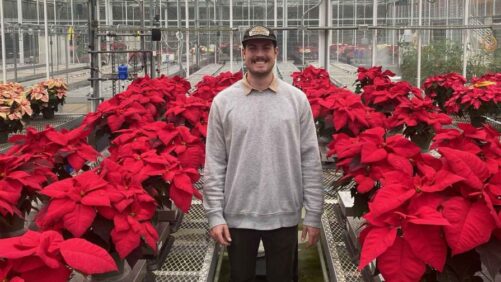
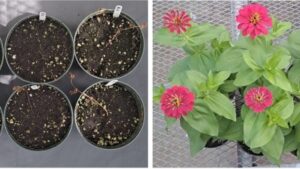
Jack Bobo, a doctoral student at North Carolina State University, is studying the preconditioning of horticulture wood fiber substrates for use in the production of floriculture crops.
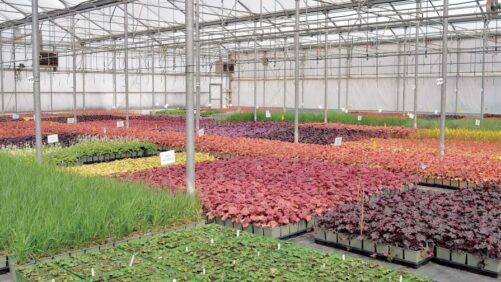
The Northeast Greenhouse Conference has teamed up with Cornell University to develop a joint guide for the integrated management of greenhouse floriculture crops and herbaceous ornamentals.
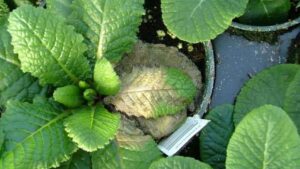
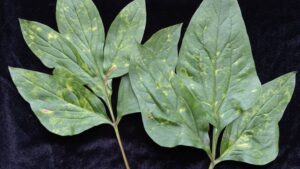
Tobacco rattle virus has a wide host range that includes peony and other plants, and symptoms can vary according to host plant and environmental conditions.
Research funded by the American Flower Endowment and the Association of Specialty Cut Flower Growers is evaluating the suitability of anaerobic soil disinfestation for soilborne disease management.
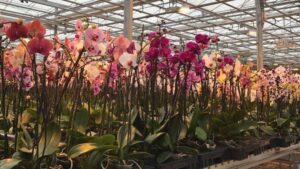
According to research at Sollum Technologies, the lighting recipe applied to a particular flower type can significantly influence its growth, development, and aesthetic appeal.
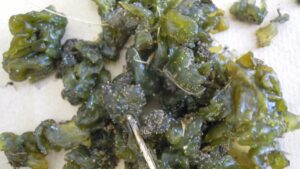
Hard surfaces like the concrete in a greenhouse or compacted ground of a nursery are perfect environments for the development of this blue-green algae.
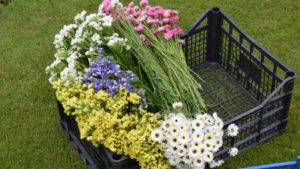
American Floral Endowment’s Grow Pro Webinar on June 20 will cover techniques for extending the time cut flowers can be successfully stored, and hints for handling challenging species.