


The Status of Drone Tech in the Greenhouse Market
 May 22, 2025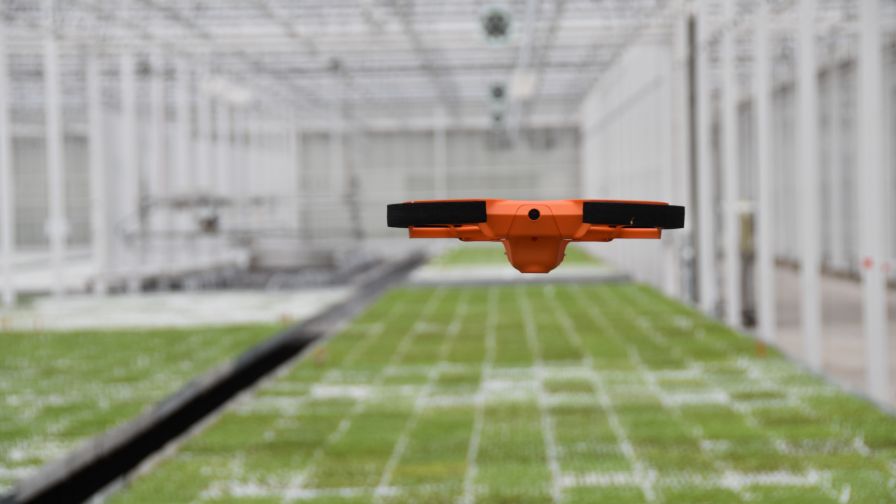
An orange drone flying inside a greenhouse. | Corvus Drones.
It’s easy to envision a drone flying over a farm field, performing some task as it buzzes along. Drones have been around for quite some time, but adapting them to the challenges of flying in and around the greenhouse has been a little slower to develop. If you’ve been wondering whether or not drones have a place in (or above) a greenhouse, the answer is yes for more and more growers.
Making Drones More Practical for Greenhouse Use
Frans-Peter Dechering, CCO and co-founder of Corvus Drones, explains that it’s not enough for a drone to safely fly inside the greenhouse; it needs to be versatile and capable of multiple tasks. It’s what they’ve been working on, and they’re making significant progress.
“The biggest advancement has been the expansion of use cases. We now offer comprehensive packages, including pest and disease scouting, growth monitoring, and inventory management. This makes the system more valuable for growers, as they can address multiple needs with a single solution,” says Dechering.
Drone use is catching on, as the technology becomes more versatile. As Dechering says, the ability to address multiple problems in the greenhouse makes the idea more practical
for growers.

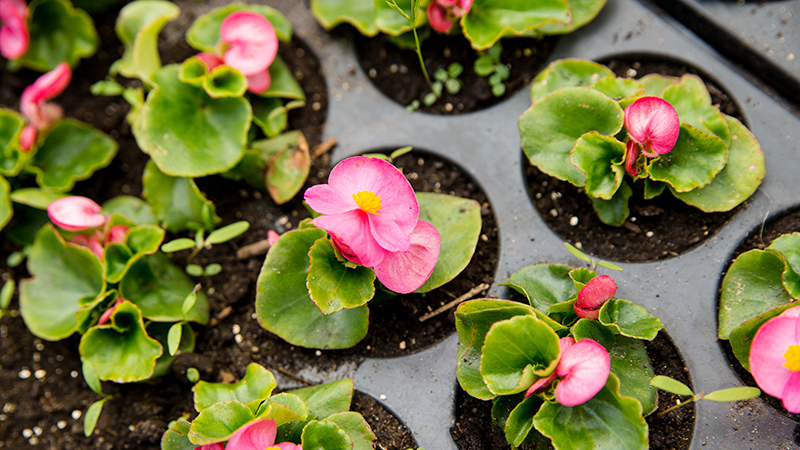
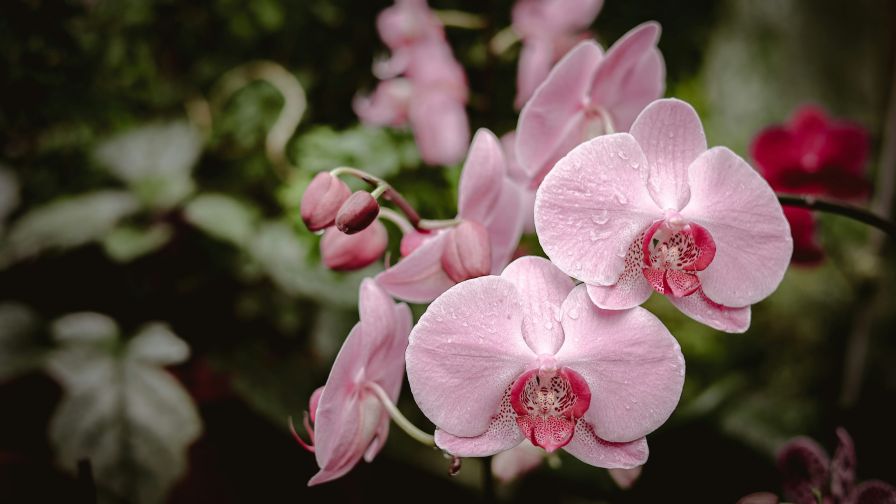
“We’ve expanded to serve around 45 customers worldwide, with significant progress in rose yield prediction in Central America and the Netherlands, enhanced inventory management for potted plants, and advanced plant anomaly control for breeders. We’re also making strides in orchid markets with growth monitoring and disease detection,” he explains.
Newer capabilities for greenhouse and floriculture operations include:
Floriculture Yield Prediction
Drones can provide high-fidelity image collection, which allows accurate forecasting of sellable blooms in roses.
Innovative Inventory Management
Using QR codes and computer vision, a drone becomes a system that can recognize batches of plants and separate the data.
Future Technological Developments
A versatile system is more valuable to the grower, and more use cases are on the way.
Big Growers Using Drones
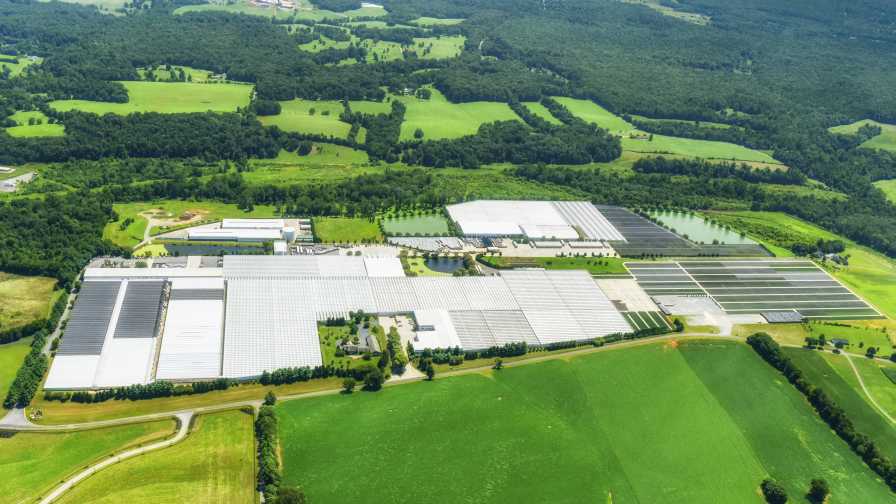
Sure, drones are cool. But how and where are growers using them? We talked with OK Plant in the Netherlands, which grows more than six million orchids and other plants annually for customers in Europe — and Costa Farms stateside — to see how they’re using drones and what the experience has been.
Autonomous Navigation and Operation Indoors
When setting up our virtual interview, Friso Van der Kruk, Cultivation Specialist at OK Plant, asked if I’d like to see the drone fly around and do its thing in the greenhouse. I have to admit, it was anticlimactic. I’m not sure what I expected, but the smooth, controlled flight wasn’t very exciting. But that’s what makes it good — for growers.
He took me along (virtually), and we watched the drone launch from a platform no larger than a pizza box, fly over to a post with a QR code and start its mission. It flew a few feet above the crop of Phalaenopsis, taking imagery. The drone operates autonomously, navigating with visual markers instead of GPS due to interference from the greenhouse.
“Since GPS doesn’t function effectively within the steel greenhouse structure, the drone relies on markers placed on poles throughout the facility. Each pole has a unique numbered marker, allowing the drone to accurately determine its position and navigate.” Van der Kruk says he put the QR code stickers on the greenhouse poles and vertical supports himself. Then the vendor came out to help with the initial mapping flights. Now, it flies multiple times daily without requiring dedicated staff.
“The drone flies by itself, going back to its charging station. The next hour it’s ready to fly again. We’re flying three times a day.” Van der Kruk says each flight is about six minutes in duration, and the drone recharges automatically when it returns to its platform. Flight speed is adjustable for tasks that need increased image quality.
OK Plant has been using drones for about a year and a half and has found that the drone system integrates well with its existing greenhouse infrastructure and is highly reliable. It’s connected to the internet in their greenhouses and uploads the imagery automatically. A partner company processes the data. Usually, their results come in an hour or two, and “reliability is excellent, with 98% of the flights classified as good,” says Van der Kruk.
The drone’s capability to detect pests, particularly thrips, earlier than human scouts was what first interested OK Plant in using drones. “The system is particularly valuable for early detection of thrips damage. While the drone cannot see the insects directly, it can identify leaf damage patterns,” says Van der Kruk. Early detection, often days ahead of when human scouts would notice the problem, can also reduce the need for chemicals, which he says are getting harder to use due to increasing regulations. It’s working well with their IPM efforts, allowing targeted use of biologicals to get ahead of problems.
Plans are underway to expand their use of the drone’s capabilities to include plant growth monitoring, allowing for earlier intervention in plant development issues. As Van der Kruk explains, the drone is already flying over the plants, so making more use of it makes good sense.
Drones Outside the Greenhouse
Costa Farms has experimented with drones for several applications, with mixed results across use cases. Chauncy Jordan, Vice President of Innovation, talks about their experience and what they want to keep improving.
“We’ve trialed it in several different areas, looking at it for both poly roof cleaning and shading compound application.” They’ve also found success with infrared imaging. “We used infrared cameras to detect heat leaks at one of our locations. That was a pretty straightforward use case and did expose problems and cue us to go check our poly where the drone had spotted an issue.”
Jordan views using drones to apply shading compounds to greenhouse coverings as their most promising application. “Right now, we’re a little bit further along with the roof treatment application, spraying the paint,” he says, noting that a drone applying shading is less risky to personnel.
“There’s an advantage not only in terms of labor but also in risk management, particularly when working at heights. It’s a significant factor. There are companies successfully implementing this technology both on the supply side and the drone side, and I believe it’s gaining traction. Wherever we apply paint, it’s a job we want to mitigate risks for,” Jordan says.
Going aloft with a drone large enough to apply greenhouse shading compounds requires bigger drones and a certified operator with an FAA license.
“We’ve generally had better success outsourcing these tasks because of the size of the drones required, and we’ve been pleased with the results from both a value and effectiveness standpoint,” Jordan explains. While they’ve outsourced most of this work, Costa Farms is also exploring ways to build this capability internally. “We’ve made significant progress, but it has been challenging. The difficulty lies in the fact that if someone isn’t passionate about drones, obtaining the Remote Pilot Certificate (commonly called FAA Part 107) can be a bit of a journey. There’s quite a lot involved in the process, and it requires a genuine interest to see it through.”
Subscribe to eNewsletter