




Selecting the Right Growing Media for Your Greenhouse Crop
Growing media are one of the most widely used materials for growing greenhouse crops. With many different formulations available for growers, it can be a challenge to choose which is the best blend to use.
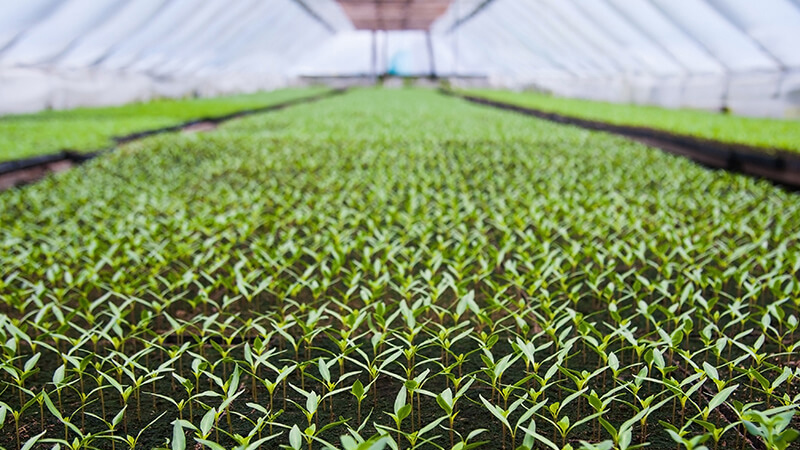
Growing media provide a reservoir for water holding, a nutrient holding and exchange system, a zone for gaseous exchange for the plant root system and anchorage for plant roots. These physical characteristics are determined by the components used and the proportions in which they are blended. These components are either organic (e.g. peat moss, bark, coconut coir, wood fiber) or inorganic (e.g. perlite, pumice, vermiculite, sand). Each component has its own ability for water and nutrient retention that will vary greatly in its source and its structure depending on how it is processed, aged, composted and screened. If you blend your own growing media, your source materials should be consistent to produce a quality and predictable growing medium.
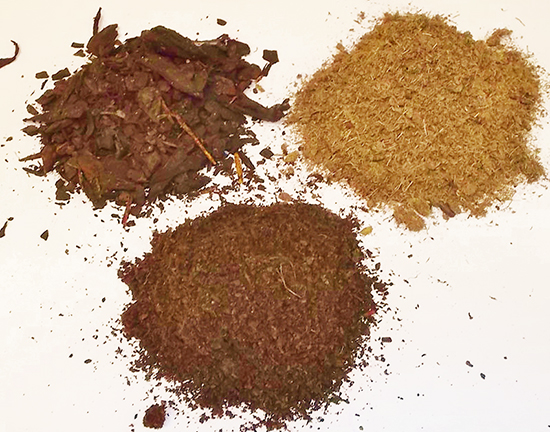
Organic components (bark, Sphagnum peat moss and coir)
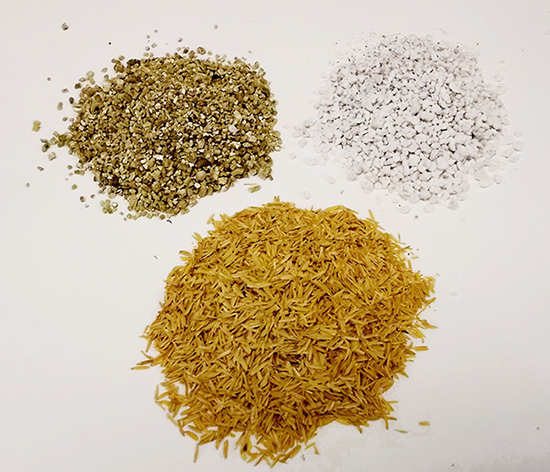
Inorganic components (vermiculite, perlite and rice hulls)
For the most part, peat based growing media products have a low bulk density, since the majority are made with a base of Sphagnum peat moss which is valued by growers and gardeners since it is virtually free of weeds, insects, and diseases. It also has a high water holding capacity with good air space, it is consistent from year to year, and crops thrive in it.
Using the wrong media in your greenhouse can cause uneven growth, creating a wavy appearance. The cause may be uneven starter charge content in the growing media and the easy solution is to apply the appropriate fertilizer at the recommended rate right after seeding or transplantation. It could also be caused by variation in the size of growing media components from one container to the other. As well, if your growing media does not dry out, you should consider changing your mix, consider a high-porosity or bark-based growing media that dries out more rapidly.
Consider using a growing medium with active ingredients that can enhance plant growth or reduce incidence of root disease. Mycorrhizae PTB297 is a popular active ingredient, which is a beneficial fungus that attaches to plant root systems and acquires nutrients and water for the plant so that plants grow healthier, faster and is more prolific in flowering and fruiting. There are also active ingredients that reduce incidence of plant root disease, such Bacillus pumilus PTB180. This natural bacterium is a biofungicide that suppresses certain fungal pathogens, such as Fusarium, Pythium and Rhizoctonia that cause plant root disease. Active ingredients are a smart option to benefit your plant production and when you want to limit the amount of chemical inputs during the crop cycle.
Purchasing a pre-formulated growing medium provides peace of mind because the manufacturer has done all the blending and consistency checks for you. If you make your own growing medium, you should consider the time and effort to make it, results predictability and consistency, and the return on investment. You can use the calculator Compare your Costs to determine the cost of making your own mix.
For more information, contact our Grower Services
Premier Tech Growers and Consumers