



How LED Lighting Gives Greenhouse Growers a Competitive Edge
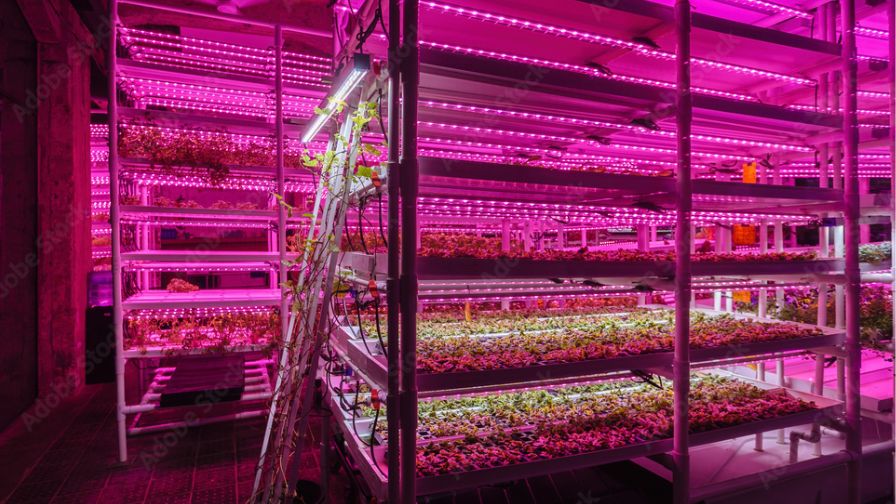
A modern greenhouse interior with artificial LED lighting. | Mulderphoto via Adobe Stock
In a controlled environment, growing is all about managing different parameters as best as possible compared to open field conditions.
Greenhouses give producers an edge to grow any crop, from juicy tomatoes to delicate orchids. When growing indoors, light is everything. Traditional lighting just doesn’t cut it anymore. That’s why more and more greenhouse operators are switching to LED greenhouse lighting and reaping the benefits of lower energy consumption, healthier plants, and increased yields.
Why Light Matters in Greenhouses
Plants depend on something called photosynthetically active radiation (PAR), which is the range of light wavelengths (400-700 nm) they need to photosynthesize. When plants receive the right kind of light at the right time, they grow faster, stronger, and more consistently.
However, natural sunlight isn’t always sufficient. This is especially true in northern latitudes, and even more so during winter months. Enter supplemental lighting.
High-pressure sodium (HPS) lights have been the go-to option for years. However, they are not the most energy-efficient. Adjustable LED greenhouse lighting provides a more customizable way to support your crops.
What to Look for in a Modern LED Lighting System
Not all greenhouse LED lighting solutions are created equal. To ensure maximum value, a system should be designed with the grower’s evolving needs in mind. The most advanced and effective solutions include:
- Cloud-Based Control Platform: A cloud-based platform allows growers to manage and monitor LED greenhouse lighting and energy consumption from anywhere.
- AI-Powered Adaptability: The lighting should automatically adjust its intensity and spectrum to maintain optimal levels as ambient light, seasons, or production goals change.
- Crop-Specific “Recipes”: A dynamic lighting system must allow for crop-specific light recipes that growers can create and fine-tune in real time.
The Advantages of Using LED Greenhouse Lighting
LED greenhouse lighting offers numerous advantages over traditional systems.
1. Improved Energy Efficiency
How much energy can you save? LEDs use significantly less power than traditional grow lights, often reducing lighting-related energy consumption by 40% or more compared to HPS systems. This translates directly into lower utility bills and, for large-scale greenhouses, significant cost savings over time. This also reduces an operation’s carbon footprint and environmental impact.
2. Targeted Spectrums
Full-spectrum LEDs allow growers to replicate sunlight with precision. However, the key advantage lies in dynamic control over that spectrum. While a static LED is an improvement, it cannot adapt. A dynamic system allows you to create custom light recipes to meet the specific requirements of different crops and growth stages. Whether encouraging rooting, vegetative growth, or flowering, the plants receive the exact light they need at all times.
3. Longer Lifespan
Modern LEDs have a typical lifespan of more than 50,000 hours; a dramatic increase compared to the 10,000-24,000-hour lifespan of HPS bulbs. This means fewer replacements, less maintenance, and more peace of mind.
4. Less Heat, More Control
Because LEDs emit less heat than HPS lights, it is easier to control the greenhouse’s temperature and humidity, both of which are crucial to plant health.
Dynamic LED Lighting: Precision Agriculture’s Secret Weapon
Dynamic LED lighting takes your ability to control the greenhouse environment to the next level. These systems adjust the lighting in real time based on the greenhouse’s ambient conditions, crop type, growth stage, and exterior weather. In other words, it’s not a “set it and forget it” system; it’s responsive, adaptive, and completely under your control.
In a sense, dynamic LED lighting is like a smart thermostat. If you need more red light to encourage flowering or want to mimic the long sunny days of July in the dead of January, you can. Dynamic controls and cloud-based technology provide crops with a tailor-made lighting plan as per the crop’s needs.
For additional information on greenhouse LED lighting, including what crops benefit most from the technology and how to ensure your fixtures are performing effectively, please read the original article found on the Sollum Technologies website.
Subscribe to eNewsletter