



Here’s Why September Is Best for Sedums
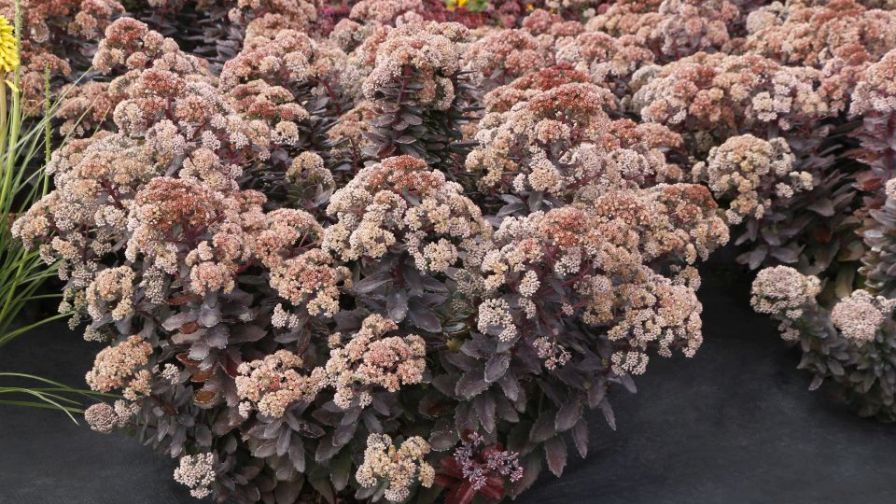
Sedum ‘Mocha Magic’. | Terra Nova Nurseries
With fall well in motion, Terra Nova Nurseries wanted to share its thoughts on sedums and why the perennials are perfect for September weather.
Sedums vs. Hylotelphiums
Many sedums from Terra Nova Nurseries are now more accurately classified as Hylotelephium, having been removed from under the Sedum genus for botanical reasons, according to North Carolina State Extension. The prefix hylo, derived from the Greek hȳ́lē, means “wood,” “matter,” and “telphium.” The meaning of “telphium” is suspected to honor the mythical King Telephus, the son of Heracles and Auge, who was wounded by Achilles at battle and subsequently healed by him, too.
Breeding and Selection of Sedums
At Terra Nova Nurseries, sedums are bred and then selected years later after observing them in less-than-ideal conditions. Some of the metrics employed by the team for the selection process include:
- Upright habit with little to no lateral spreading
- No bald spot in the middle as they age
- A long bloom period with added features
Some examples of added features include ornamental foliage as the plant grows, often changing colors with the seasons, and brightly colored seed heads. Sometimes the seed heads are so showy, they’ll outshine the flowers — and they are longer lasting than the flowers.
How to Care for Sedums
Sedums are easy to grow and are undemanding, provided that a few guidelines are met, including:
- Full sun
- Light summer watering
- Low soil fertility
- Well-drained soil in winter
Not much bothers sedums in the garden. Sometimes, they are affected by slugs in the spring, occasionally aphids, and rarely spider mites. Treatment can be as easy as a good spray from a hose, because sedums are quite tough. In the spring, pink buds will emerge from the crown, and that’s a good time to fertilize with an organic fertilizer that’s balanced, or at least low in nitrogen, or a commercially prepared slow-release type. Once established, water sparingly in the summer, especially if you’re growing them in an area that gets summer rain.
Sedums, particularly hylotelephiums, are great pollinator attractors, bringing in several different bee genera and species, plus butterflies and moths. In the summer, you’ll be able to hear the bees on a grouping of plants, once they’re established.
Why Sedums are Perfect for September
Though summer blooming, most varieties reach their peak in September, just as annuals finish their displays, making them a valuable transition plant for the fall to winter garden.
For additional information on sedums, as well as a selection of sedum varieties available from Terra Nova, please read the original article found on the Terra Nova Nurseries website.
Subscribe to eNewsletter