


School’s in for Summer: Why Growers Can’t Afford to Stop Learning

 May 22, 2026
 Summer is traditionally when school lets out, but for horticultural business owners and their teams, the learning never stops.
Let’s face it. The bar keeps rising every year, and AI’s rapid adoption has accelerated that trend. Nearly every level of the organization now faces a choice: adapt or fall behind. While that may sound dramatic, it underscores a simple truth: our industry must double down on advocacy and education to stay competitive. Doing so helps owners, teams, and entire businesses remain nimble in a landscape that is evolving faster than ever.
According to the 2025 State of Succession and Exit Planning in the Horticulture Industry survey conducted by BEST-PivotPoint Business Solutions, the guiding principle is simple: invest your time where you can have impact. Leave the lobbying to the experts and the Capitol Hill debates to the associations and advocacy groups that represent horticulture at the highest levels, but don’t disengage entirely. Your job is to stay informed, stay connected, and show up when and where it counts.
Here are three ways to keep class in session this summer and stay ahead of the curve.
1. Know Where to Turn and Use Every Source Available
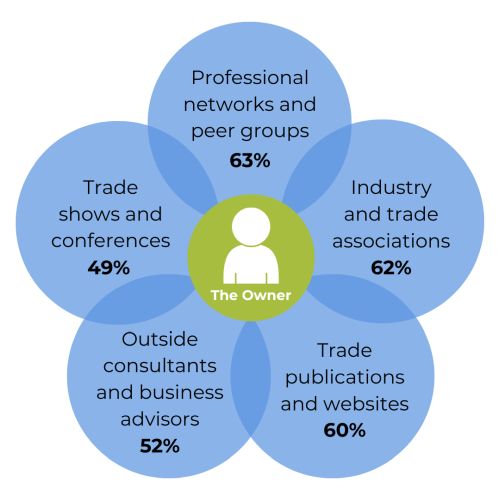
We asked owners where they turn for industry insights and guidance on critical issues impacting their business. The answer wasn’t from a single source. Instead, they drew insight from a combination of trusted channels. The most commonly selected sources are:
- Professional networks and peer groups (63%)
- Industry and trade associations (62%)
- Trade publications and websites (60%)
- Outside consultants and business advisors (52%)
- Trade shows and conferences (49%)
What stands out is the pattern. This interconnectedness is a strength. When owners engage across these sources, they gain a more complete picture: one that’s timely, relevant, and actionable. The best insight doesn’t come from one source; it comes from a connected community.
2. Your Associations: Engage and Back Them Up
Associations like AmericanHort and your state and regional associations invest millions annually fighting on your behalf on immigration, tariffs, climate, and more, which directly impact your labor supply, input costs, and competitive landscape. They also deliver trade events — such as AmericanHort’s Cultivate — webinars, newsletters, tools, and reports that, according to our survey, owners rely on.
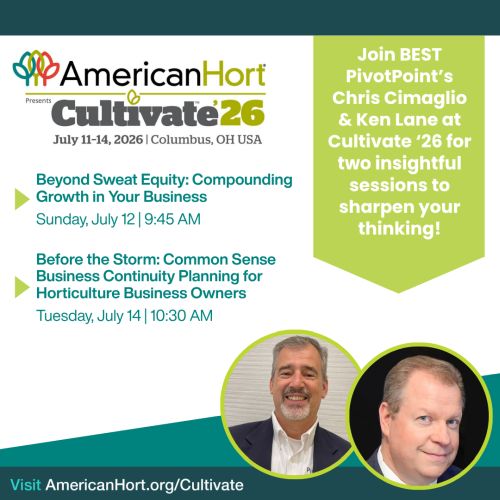
You don’t need to become a lobbyist, but become an active industry member. Engaging in advocacy can be as simple as attending an event or conference or taking 15 minutes to email a local state or federal representative about a policy that impacts your workforce, supply chain, or product availability. In an age when the squeaky wheel seems to get the oil, ensure your business is part of a unified, influential voice. When the industry speaks collectively, policies around water usage, pesticide regulation, labor, and funding are shaped with real‑world horticultural insight. Staying present in these conversations ensures that policies support, rather than hinder, your day-to-day operations.
More than half of the owners we surveyed lean on outside advisors for exactly this reason: they can often translate what’s happening in the statehouse into what it means for your headcount or margins. Advisors often serve as the bridge between a policy change and its operational impact, translating what’s happening in a statehouse into what it means for your headcount, margins, or expansion timeline. Advocacy, in this light, isn’t a side project. It’s a form of risk management that safeguards long-term stability while strengthening the industry’s collective influence.
3. Invest in Educating Your People
If you, as an owner, are turning to professional networks, associations, trade publications, outside advisors, and trade events to sharpen your strategic thinking, are you extending the same learning mindset to your people?
Educating emerging talent is one of the most reliable ways to secure our industry’s long-term health. When young people understand horticulture’s creativity, its science, and its environmental impact, they begin to see it as a meaningful career path, not just a summer job between semesters. That shift in perception matters.
Early adopters, particularly in areas such as plant health diagnostics, sustainability practices, digital marketing, and real-time trend analysis, will benefit from a first-mover advantage. But technology is only as powerful as the people trained to use it. Build a culture that values curiosity, and the returns compound.
Peer groups and mentorship networks are where the next generation of owners learn the business before they inherit, buy, or build. The knowledge transfer that happens in those rooms, during trade events, or over coffee with a trusted mentor, is irreplaceable.
Advocacy and education work hand-in-hand. One protects the external environment in which your business operates. The other builds the internal capability your business runs on. Together, they create the conditions for resilience, relevance, and sustained growth.
Industry education and advocacy are not nice-to-haves; today, they are essential. The organizations championing them are already working hard for you. Make sure you’re leveraging what’s available:
- Become a member of our industry’s leading trade associations, such as AmericanHort, as well as state and regional associations.
- Attend at least one industry trade show or conference per year.
- Block time monthly for webinars, newsletters, and podcasts.
- Collaborate and learn with professional networks and peer groups.
- Follow trusted trade publications and sources, such as Greenhouse Grower® Magazine
- Reach out to local Extension offices or universities with horticulture and agriculture programs for expertise and research.
Don’t Sit This Summer Out
For you and your company, staying competitive requires a deliberate focus on advocacy and education. AI, shifting regulations, and changing customer expectations demand that businesses invest in continuous learning, workforce development, and strong industry representation.
By cultivating knowledgeable teams, engaging in policy conversations, and supporting emerging talent, growers will strengthen both their internal capabilities and their external environment. These efforts not only protect day‑to‑day operations but also position the industry for long‑term stability. When education fuels innovation and advocacy shapes supportive policy, the entire sector becomes more resilient, adaptable, and prepared for the future.
Most importantly, don’t forget that you’re your own best advocate. Use your voice. Your representatives work for you.
Advocacy and education work best when we all show up — together.
Get the Survey

2025 State of Succession and Exit Planning in the Horticulture Industry Report QR Code
View and download your complimentary digital copy of the 2025 State of Succession and Exit Planning in the Horticulture Industry report by clicking HERE or scanning the QR code above.
Subscribe to eNewsletter