



Cultivating the Next Generation of Growers
 June 24, 2026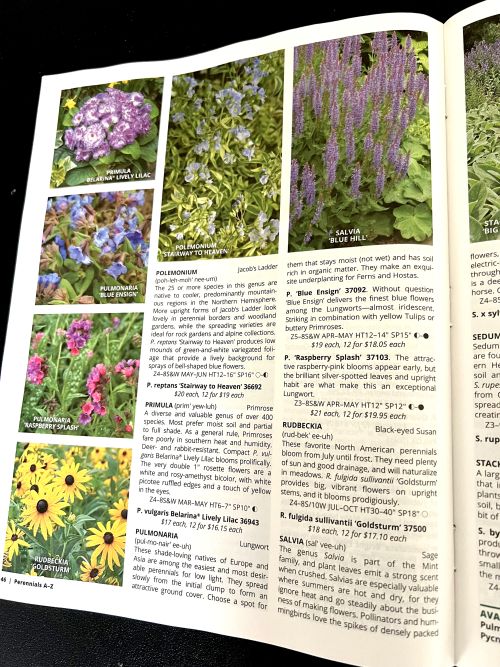
Mail-order catalogs played an early role in sparking my interest in plants. This White Flower Farm catalog from Litchfield, CT, is like the one that first drew me into the world of ornamental annuals and perennials. | Justin Lombardoni
I recently learned that the University of Wisconsin (UW)-Madison will stop offering a horticulture degree in the coming years. If this change moves forward as planned, it will mean one fewer pipeline of students trained in the fields necessary to grow plants in a nursery or greenhouse setting. Candidates with degrees in related fields such as agronomy, ecology, or general biology could certainly fill horticulture roles, but they would likely require additional on-the-job training.
Whether this change at UW-Madison is an isolated occurrence or a “canary in the coal mine” signaling a broader shift from horticulture programs, it is a reminder that the industry needs to do more to foster a love of plants in Gen Z and the even younger Gen Alpha.
Although it may take a decade or two to fully see the benefits of inspiring the next generation, the potential payoff justifies the effort. The amount of encouragement required to get someone to consider a career in horticulture will vary greatly from person to person, but it may not always be a heavy lift. For some, it may be as simple as exposing them to plants and letting them develop their own curiosity as they learn how to grow plants and how different taxa work together in a garden.
Other, more inquisitive minds may respond well to guided learning about plants and their many interactions with biotic and abiotic factors. This could require a seasoned horticulturist or master gardener to explain how a plant turns sunlight into fruits and vegetables, how an insect pest damages a crop, or why certain plants thrive in one environment but struggle in another. And while this article focuses on nurturing the next generation, it would not hurt to promote plants to their parents and other influential relatives as well. In doing so, adults may pass along their newfound interest to their children, allowing horticulture to blossom into a shared hobby.
From a nursery’s perspective, encouraging children and teenagers to interact with plants might seem like a challenging task. People generally have to visit a nursery, greenhouse, or garden center to see the full array of plants available, but perhaps nurseries could do more to bring plants directly to younger audiences through schools.
Offering a few hundred plants in small containers — anything up to a quart in size — would not be too burdensome for many growers. If provided as a donation, this could serve as meaningful community outreach while also introducing families to the nursery. If quart-sized plants require too much input to provide for free, another option would be something even smaller, such as a 32- or 72-cell tray. Students could pot up these seedlings themselves and, in turn, feel more invested in the plants they are growing.
How I Was Led to Horticulture
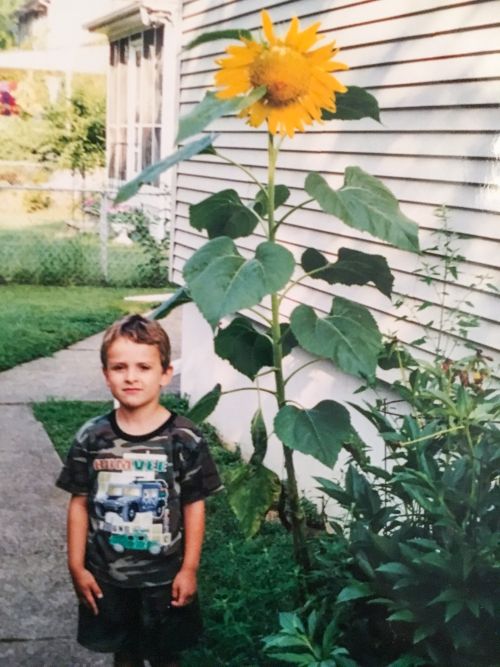
At four years old in 1998, I stood next to the sunflower I grew from seed. It was one of my earliest experiences growing a plant — and one I still remember today. | Justin Lombardoni
In preschool, I grew a sunflower from seed, starting in a plastic cup. The resulting plant grew to roughly twice my height, and the day it snapped during a storm was heartbreaking enough to cause a meltdown. But the sunflower debacle happened when I was too young for it to have a lasting impact on my relationship with plants.
It was not until seventh grade that a neighbor shared a Burpee catalog with me and piqued my interest in plants, specifically ornamental annuals and perennials. I went on to order a seed-starting kit — essentially a mini-greenhouse — along with seeds of the plants that appealed to me most, since I did not have the money to buy finished plants.
From there, I decided I wanted a career involving plants in some way. It all began with a simple Burpee catalog. And if it can happen to a teenager growing up on an eighth of an acre in the dense suburbs of New York City, I believe anyone can be drawn to plants and horticulture if that seed of interest is nurtured.
Subscribe to eNewsletter