




In Horticulture, the Simplest Path Is Often the Smartest
 July 22, 2026
 It is amazing how far technology has advanced since I started my career in horticulture. However, all these technological wonders are not without issues for the common folk such as you and me.
Just the other day, I noticed my Wi-Fi signal was very slow. How to get it back to normal was a mystery to me. My son was home and downloaded an app to check the speed. Very slow indeed. He went on the chatbot with the provider (no real person was available, of course) and spent at least an hour going nowhere.
And then, the few technological brain cells I possess finally yelled, “KISS!” — keep it simple, stupid. I went around to all the parts of the system — the router and each of the Wi-Fi mesh extenders — and unplugged them. I can hear all of you wondering what took me so long, but alas, I was so tied up in the complex, I forgot about the simple.
After a couple of minutes unplugged, the system was rebooted, and Wi-Fi speeds were re-established.
When Simple Works
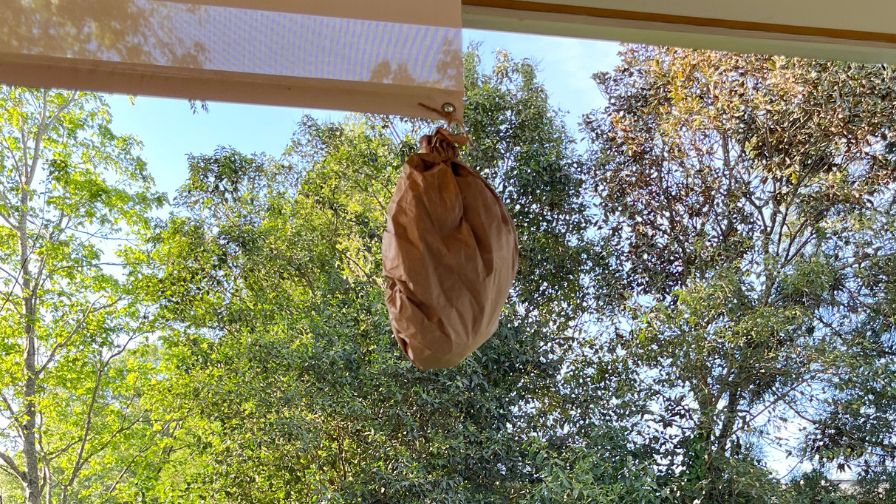
A homemade faux wasp nest hangs from the deck as a simple, low-tech attempt to discourage carpenter bees. | Allan Armitage
This spring, our wooden deck and cover were being attacked by carpenter bees. If your home or office has ever suffered such assaults, then you have seen the perfect circular holes and the sawdust from their forays. As I once again teetered on a ladder putting foam into the hole, I decided there had to be an easier way.
Everyone I asked had a solution: traps, attractants, chemicals, and even battery-operated tennis-racket things. Regardless of the method, everyone expressed frustration.
And then KISS kicked in.
A neighbor told me about wasps. It turns out that wasps and hornets can be predators of other insects, so we made a couple of fake wasp nests using paper bags and plastic filling and hung them on the deck. Like magic, the bees disappeared. Nary a one made even an exploratory venture to the deck.
In fact, when crazy gardeners come through the garden, more photos of our “wasp nests” are taken than of any flowers in the garden.
Ah, simplicity.
Today’s last piece of simplicity affects all tomato plant sellers and gardeners. Without a doubt, tomatoes are the number one home vegetable plant. People cannot get enough fresh, homegrown tomatoes.
Nor can squirrels.
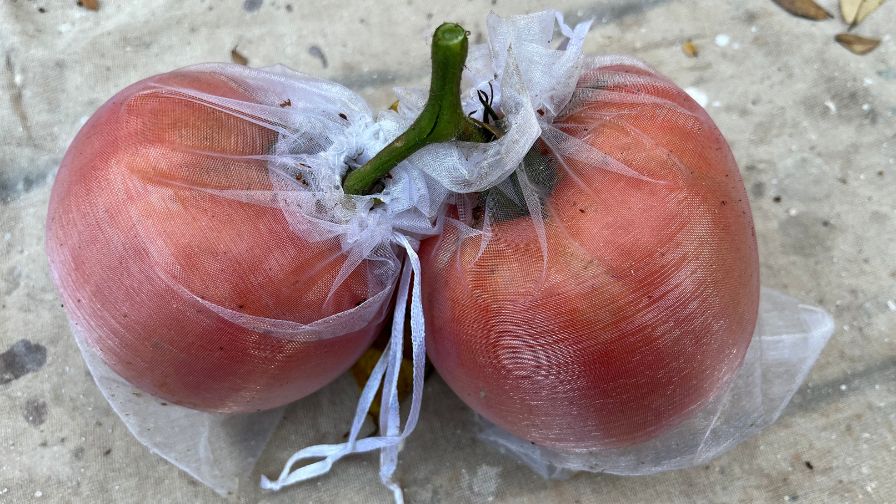
Instead of complicated cages or sprays, organza bags offer a simple, low-tech way to shield individual tomatoes as they ripen. | Allan Armitage
They will take one bite out of a ripening tomato, and it is ruined. Many of my gardening friends will no longer grow them. It is simply too frustrating.
What to do? I read about cages, spraying with pepper, and even encompassing the entire plant in mesh. Way too complicated. That was not going to happen.
And then KISS kicked in.
Someone told me about organza bags. Since I only had a few tomatoes in the garden, this was easy. I put an organza bag around the developing fruit and allowed it to ripen. The squirrels stayed away, and I was eating BLTs the next week.
Ah, simplicity.
We sometimes get so caught up in the complex that we forget to think of the simple. Many of us may be lacking in technological, entomological, or rodent-control skills, but we should trust our intuition and embrace the simple.
After all, as the saying attributed to Leonardo da Vinci reminds us, “Simplicity is the ultimate sophistication.”
Subscribe to eNewsletter