




Growers Share Lessons and Wins in Automation
 July 23, 2026
 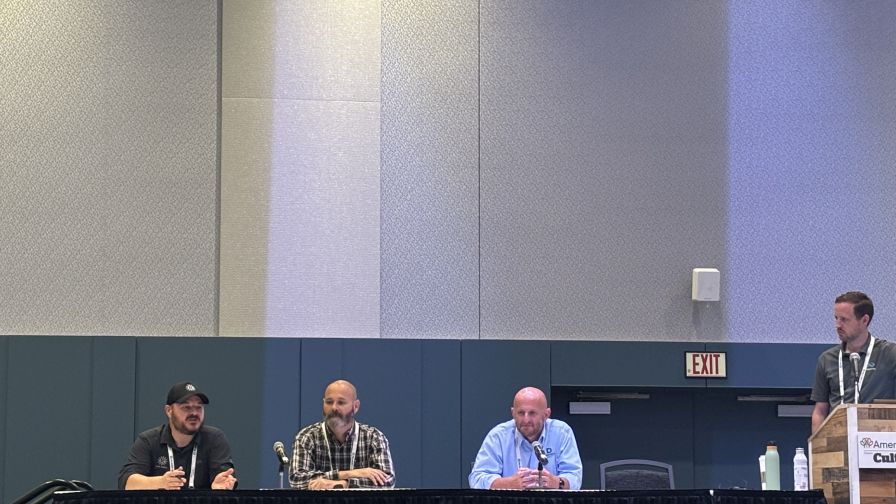 The shift to automation works different for almost any greenhouse operation, but when done right, this shift should involve a few common themes: budget and ROI considerations, workflow changes, and training/implementation.
During Cultivate’26, a panel featuring three growers featured candid, practical lessons on automation implementation in real operations. The group shared how they approached training and culture shifts, mistakes they would avoid next time, and how actual ROI compared to projections.
The panel included:
- Brian Groves, Commercial Lead, Ornamentals at AdeptAg (moderator)
- Mike Miller, General Manager and CEO of Decker’s Nursery in Ohio
- Joseph Capps, Operations Manager at Worthington Farms in North Carolina
- Casey Stanton, Production Manager at Raker-Roberta’s Young Plants in Michigan
Keep reading for an overview of some of the questions raised during the discussion, and insights shared by each panelist.
When did you decide that automation was necessary at your operation?
- Miller: “During the recession, we noticed that our sales numbers were hiding a lot of internal errors. We also knew we didn’t want to be the same business we’d always been.”
- Capps: “We added a production line that produced smaller plants. This shortened our production timeline, so we needed to become more efficient for the betterment of our business and our team.”
- Stanton: “For us, it was not one singular decision. We made automation a part of our culture and looked at all of our processes so we could identify any bottlenecks that were preventing us from becoming more efficient.”
How did you decide what to prioritize?
- Capps: “We knew we couldn’t produce plants faster with the equipment we had, so we focused on updating our potting equipment for smaller pots. This also gave us a chance to take our crews to other operations and see how they were using new equipment.”
How has automation played out with your team?
- Miller: “Once we made the shift, our team quickly learned how their jobs would become easier.”
- Capps: “We were able to run the machines in less time than I thought. Our employees became really interested in learning how to use them.”
- Stanton: “We were surprised at how quickly some of our employees stepped up and wanted to learn more. Our success comes from a mix of top-down and bottom-up ideas, and we encourage our team to suggest better ways of doing things.”
How do you manage the change-over process to a new piece of equipment?
- Miller: “Through communication and follow up. We trust that our team will eventually manage the process themselves.”
- Capps: “We try to highlight both the day-to-day and the long-term, big picture benefits.”
- Stanton: “We started using a live dashboard to show efficiency gains in real time.”
How important is your relationship with the manufacturer?
- Miller: “We’re close in proximity to the main company we work with. That nearby technical support is critical as equipment gets older.”
- Stanton: “It can be very important. We want to make sure there’s consistency in the technology we’re using so that when we choose to upgrade, the process will be easier.”
How do you measure return on investment?
- Miller: “You have to build profitability into your costs, and you have to measure as much as you can. Also, don’t just go with the shiny new piece of equipment. There’s a lot of smaller, less expensive options that can make a big difference.”
- Capps: “Don’t look at where you are now as a company. Look at the numbers for where you want to be five years from now.”
Subscribe to eNewsletter