




Expert Tips for Setting Up a Commercial Aquaponics Greenhouse System
 September 10, 2026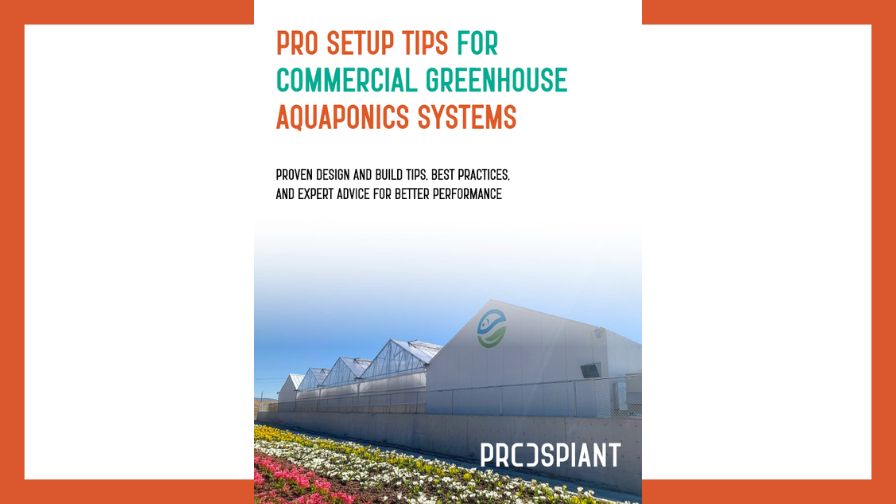
Cover for the “Pro Setup Tips for Commercial Greenhouse Aquaponics Systems” cover. | Prospiant
Prospiant released a whitepaper titled “Pro Setup Tips for Commercial Greenhouse Aquaponics Systems” to assist growers seeking greenhouse load balance through structural layouts, system flow, and operational efficiency. Highlights from the whitepaper include:
Choosing the Right Greenhouse Structure for Aquaponics
The best greenhouse structure depends on the specifics of your aquaponics operation.
Gutter-connected greenhouses are best for large, commercial-scale operations, as their single-structure layout allows for easy expansion and energy savings.
Ground-to-ground greenhouses work best for small-scale and beginners to aquaponics operations, as they cost less to build up-front, are more manageable with a smaller team (or a single individual), and have much lower inspection thresholds, though at the cost of flexibility found in gutter-connected structures.
The Importance of Design and Material Standardization
Applying the same frame style across an entire greenhouse build gives aquaponics growers greater flexibility, with the option to adapt the same structure for different purposes that can be swapped out as needed. Additionally, for the fish house portion of an operation, growers should heavily consider investing in non-rusting components due to their high contact rate with water, as well as consider plumbing needs (current and future) for water transportation and how compatible those needs are with selected materials and available space.
Automation Tips for Energy Efficiency
Beyond labor, energy is often the highest cost driver in aquaponics. Recommended plans (for new facilities) and upgrades (for existing facilities) to cut energy costs include:
- Automation systems to save on labor costs and increase system precision
- Energy shade curtains to prevent crops from overheating
- Insulation to assist climate control with efficient heating and cooling
- LED lighting for more usable light and less heat waste
- Variable speed pumps and aerators to adjust water flow.
For more information on design and build tips for commercial greenhouse aquaponics systems, including aquaponics do’s and don’ts learned from the field, download the full whitepaper from Prospiant here.
Subscribe to eNewsletter