


How Tagawa Greenhouses Consolidated to Improve Profitability
 September 17, 2026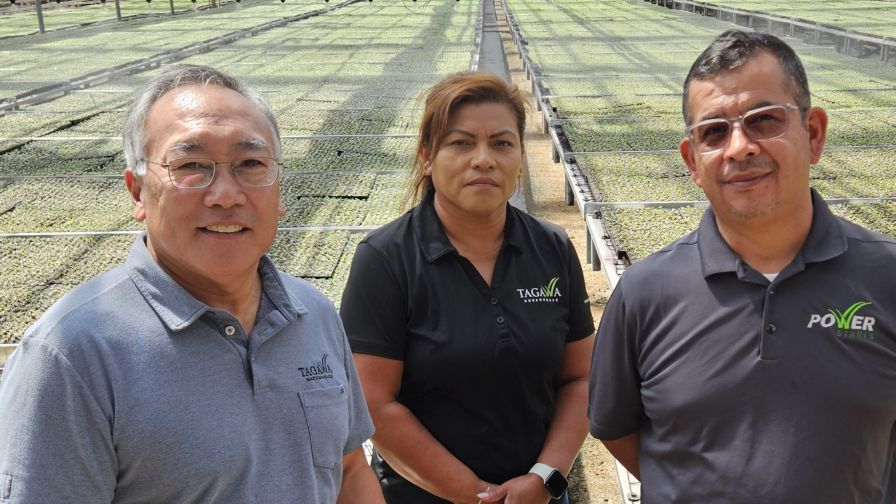
From left: Tagawa Greenhouses CEO Randy Tagawa, Operations Manager Blanca Castro, and Production Manager Carlos Castillo at the company’s consolidated Colorado operation. | Tagawa Greenhouses
For Tagawa Greenhouses, improving profitability meant getting smaller.
By reducing overhead and concentrating on its core business, the company has spent the past three years reshaping its operation to strengthen profitability. “We’re talking about what were the right profitability moves in 2025, but it’s actually been a three-year process,” says Randy Tagawa, CEO of Tagawa Greenhouses in Colorado. “There isn’t a silver bullet that can turn your company around. I believe in many cases, you need fundamental change. Incremental changes just get you back to the status quo.”
For Tagawa Greenhouses, that meant consolidating four Colorado facilities into one.
“If we didn’t make the change, we would have eventually gone out of business,” says Tagawa. Inventory risk was a major factor. Colorado’s geography makes it difficult to move excess plants quickly into another major market if spring demand falls short.
“Our bedding plant season is very spiked, and Denver is more like an island because of the large distance between us and the other large cities across the country,” says Tagawa. “We wanted to reduce our risk on inventory during the spring season. It comes back to the number one factor, weather, and that has a big influence on profitability and our inventory risk.”
Reducing that exposure was only part of the goal. The company also used the consolidation to reconsider where it wanted to put its resources.
“We also wanted to focus on quality, especially on plugs and liners, which is our core young plant business,” says Tagawa. “And we wanted to make it easier for our team to be successful.”
That shift ultimately changed the physical structure of the business.
“We decided to consolidate to one location to reduce duplication of cost,” says Tagawa. “We went from four facilities down to one as of this summer.”
At its peak, the operation encompassed approximately 2.5 million square feet. Today, it operates about 800,000 square feet.
Previously, Tagawa says, some facilities were kept full during slower periods largely to generate enough revenue to offset their overhead.
“Our choice was either filling up the greenhouses or cutting the overhead costs,” he says. “In our case, less is more.”
Reducing the Real Estate Footprint
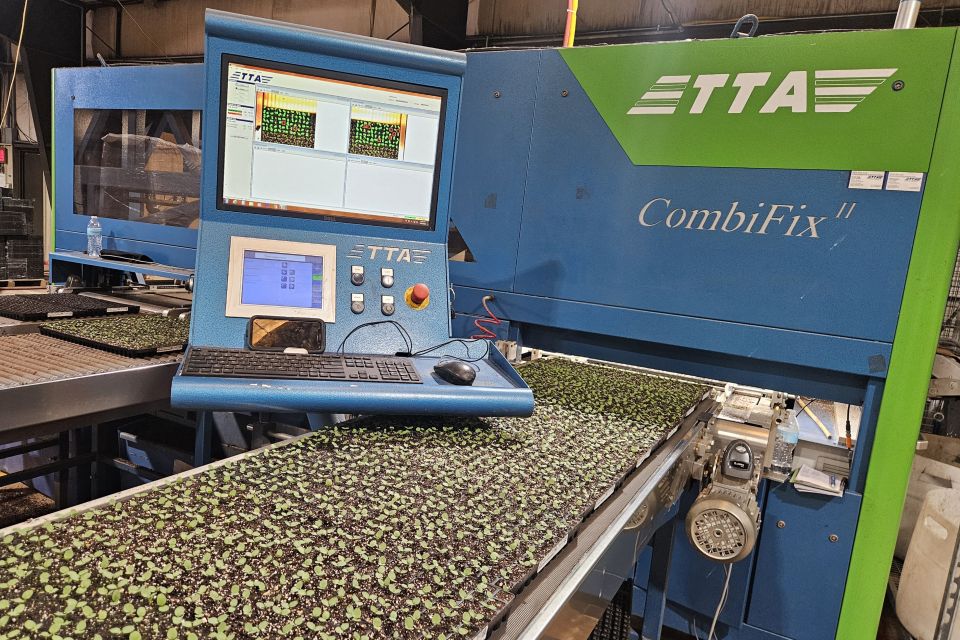
A CombiFix II system at Tagawa Greenhouses automatically patches plug trays to 100% fill, one example of the automation concentrated at the company’s Colorado operation. | Tagawa Greenhouses
Consolidating also meant deciding what to do with the properties the company no longer needed.
“The idea is to reduce overhead,” says Tagawa. “Because of the value of the locations, it made more sense on the balance sheet to take advantage of that current real estate market and sell them outright instead of taking a recurring income.”
The facilities were not closed simultaneously. Instead, the company took a progressive approach over several seasons, evaluating its customer base and determining which locations made the most sense to close and when.
“The toughest decisions are relative to people,” says Tagawa. “Closing down a facility means reducing staff. You have to pivot and make adjustments according to what the market is doing.”
Those decisions went beyond which facilities remained open.
“We do know that we want to be the number one best young plant producer, and it was hard to do that with four facilities,” he says. “You must make difficult decisions about reducing customers and staff when consolidating multiple locations.”
Concentrating Capital Investments
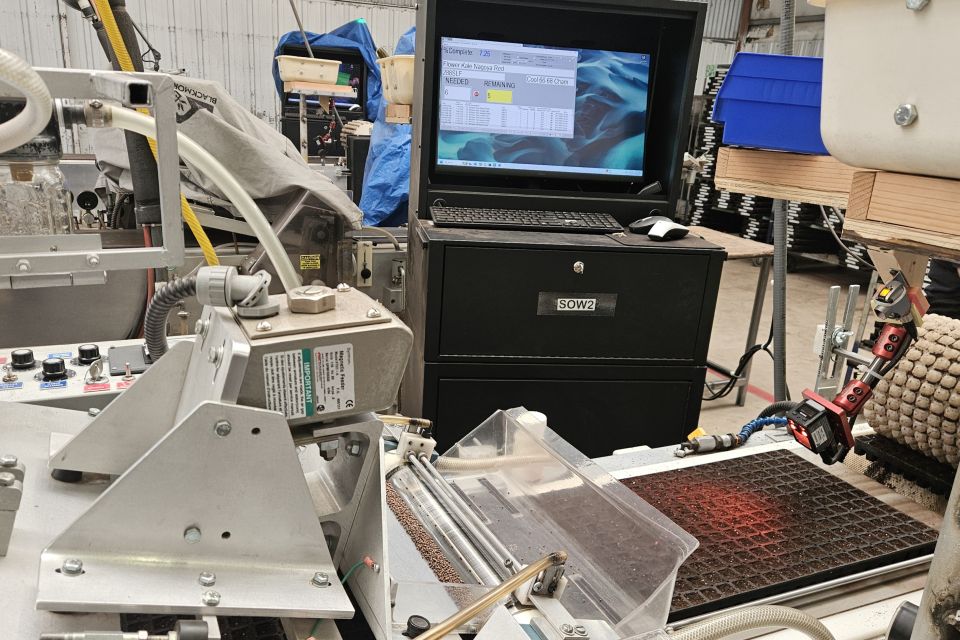
Tagawa’s seeding lines are connected to the company’s centralized production system, part of a broader shift that has made 99% of the operation paperless. | Tagawa Greenhouses
Operating fewer facilities has also changed how Tagawa Greenhouses directs its capital.
Maintenance and improvement budgets previously supported four locations, each with its own equipment and infrastructure. Now those dollars can be directed toward a single operation.
“We’re just now starting to see the capital going back into the organization, not just to keep the facility going, but to make those larger improvements,” Tagawa says.
Recent investments include a new Picas inventory system that integrates operations across the company. The main location also uses Argus environmental controls, and the company is upgrading its collation area.
“We’re looking forward to really focusing on making improvements,” says Tagawa. “New equipment, improved efficiencies, and hopefully building new greenhouses for future demand.”
Consolidation also gave Tagawa an opportunity to redistribute equipment it already owned.
“We’re selling some of those pieces of equipment and bringing others back to the main site,” says Tagawa. “As an example, we didn’t have water booms in every house at the main facility. Now we do. We just brought those booms back.”
Rather than simply shrinking the operation, Tagawa is using the consolidation to rethink how space, equipment, and resources are used at the remaining site.
“Being centralized to one location equals focus and concentrated efforts,” he says.
A More Manageable Operation
“From a management standpoint, it’s a lot easier to manage one facility than four,” says Tagawa. “Our team enjoys having some downtime. We’re just going through the final transition, but it feels better. It’s more manageable.”
That more manageable pace can carry into slower production periods.
“Our staff, if they want to take extra time during the summer, they can,” he says. “They can take advantage of some of that lower production time to grab that family vacation or to take a little time off.”
Profitability Improves Over Time
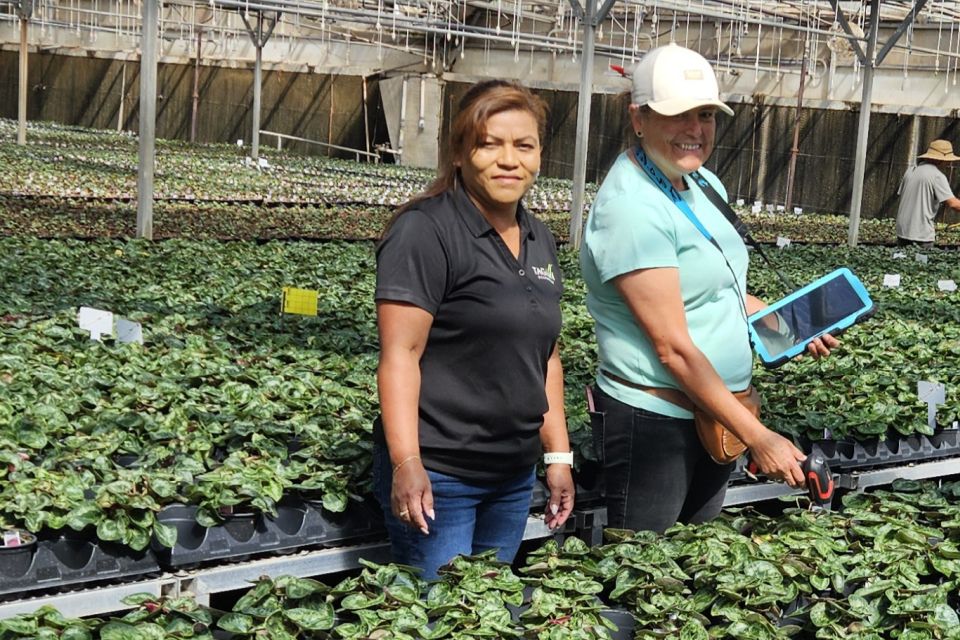
Operations Manager Blanca Castro and Rosa Rodriguez use Tagawa’s digital system to manage an operation with roughly 10,000 SKUs. | Tagawa Greenhouses
Tagawa says profitability has improved over the past two years, although the company does not expect to see the full effect of consolidation until next year.
“It’s little by little; it doesn’t happen overnight,” he says.
Before making the changes, the company developed multiyear financial models to understand how consolidation could affect the business.
“It gets back to looking at overhead costs,” says Tagawa. “If you’re only using the facility profitably for two months of the year during peak spring, and the other 10 months you’re growing a product which doesn’t make much money just to keep the facility filled, I see that as actually losing out.”
Although Tagawa Greenhouses has substantially reduced its overall square footage, the remaining site still offers room to expand production.
“We have 20 acres here at the main location, but not all of it was able to grow young plants due to the level of environmental controls and systems,” says Tagawa.
Equipment moved during consolidation has helped upgrade those greenhouses for young plant production and improve efficiency.
Stay Focused on the Core Business
For growers considering similarly significant changes, Tagawa says the process starts with staying committed to a clear strategy.
“First, stay focused on your strategies,” he says. “It doesn’t happen in one year. The second piece of advice is, if you want to achieve big results, you have to make tough decisions.”
Making those decisions also requires an outside perspective.
“You’ve got to get help. You can’t do it yourself,” says Tagawa. “I have a fantastic board who gives me great advice and helps develop strategies to make us successful.”
For Tagawa, the result is a smaller footprint, a sharper focus, and a business positioned to grow on stronger footing.

To read more articles written by Andy Wilcox, click here.
Subscribe to eNewsletter