


How AI is Changing the Way We Plan Greenhouse Production
 October 29, 2026
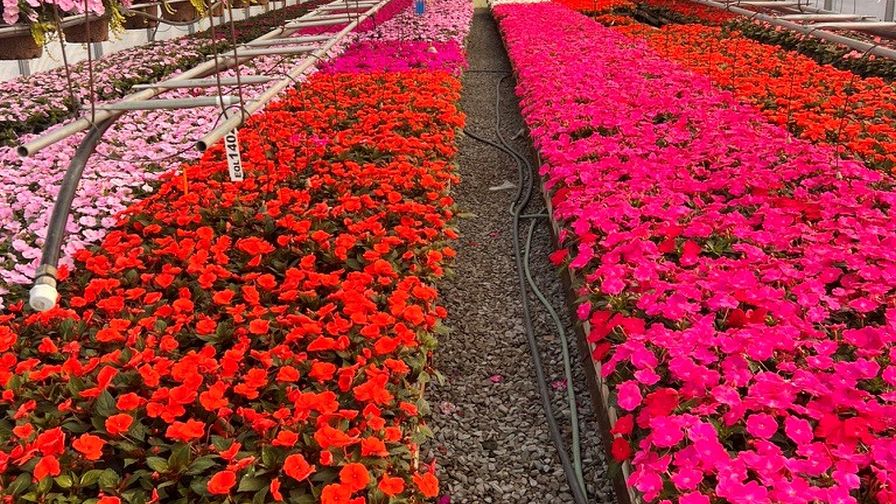
Photo: Schlegel Greenhouse
Every summer, we visit plant trials, talk with breeders, and hunt for exciting new varieties. Then we get home and have to figure out how to actually grow them.
There’s a petunia we’d love to try, but incorporating it means checking availability, sorting out shipping requirements, understanding its growing conditions, and finding room in a production plan that’s already filling up. Meanwhile, our brokers want next spring’s orders in so we can lock in availability and early-order discounts.
So we often end up sticking with the petunias we’ve grown for years. They’re reliable, beautiful, and easy to work with.
When trying a new plant takes this much work, it starts to feel like an indulgence, something to get to when there’s time. Make that call enough times, and the catalog stops changing.
But for independent growers, trying new plants isn’t an indulgence. It’s necessary. Our customers count on us to bring in standout varieties and offer something they can’t find everywhere else. If making changes were practical, we’d act on more of the improvements we already see.
Lately, I’ve been using artificial intelligence to make changing course a lot less costly.
Building a Better Production Plan
I’m not a programmer. I’ve spent my career in our family’s wholesale greenhouse business in Indianapolis.
In March 2026, I started experimenting with Claude, an AI assistant made by Anthropic, because I wanted something better than the Google Sheets we’d used to plan production for years. I wanted to change a variety in one place and see that change flow through the entire program.
What started as a better spreadsheet has become a custom production planning system. I built it with Claude Code, a version of Claude that writes and runs software.
Our operation includes roughly 150,000 square feet of greenhouse space, plus about 4 acres of outdoor growing pads where we finish around 100,000 garden mums each fall. Between the different varieties, combination recipes, planting weeks, and supplier orders, even a small change can affect several parts of our production plan.
It hasn’t been easy. I’ve spent days building features I later abandoned, and almost everything has changed since I started. But I’ve learned that you don’t need to know how to write software to get started. You need to understand your business, explain clearly what you want, and be persistent.
From an Idea to a Purchase Order
Recently, our sales director sent me four PowerPoint slides showing new combination planters he wanted to produce. They had plant names and photos, but no counts or production details.
I gave the system the container size, planting density, greenhouse location, planting week, required arrival dates, and broker. From there, it checked what was already on order, calculated quantities to fill the available space, created production records, and assembled composite images for our sales team. We could show customers the colors and varieties in combinations that hadn’t been planted yet. Then it checked availability in our broker’s online ordering system and built the cart.
One variety wasn’t available in our preferred shipping weeks. The system flagged the problem, found alternative dates, and asked me how I wanted to handle it.
I still review every order and hit submit myself. AI makes mistakes. I’ve watched it catch its own wrong shipping weeks while reviewing a finished cart. That’s reassuring, and it’s also exactly why a person still checks the work.
Once an order is placed, the system collects the acknowledgment PDFs and checks them against the production plan. If something is missing, it alerts me. Then I can have it investigate supplemental liners, alternate ship dates, or extra plants from an earlier planting. In October, it flagged two hiemalis begonia colors coming in about 200 cuttings short, and we covered them with a different begonia.
Instead of discovering a shortage when we’re ready to plant, we can address it while there’s still time.
Better Information, Better Purchasing
I upload quotes from our brokers, along with their terms and conditions. Then I use AI to reconcile the different product names so I can compare identical plants side by side.
In some cases, the same unrooted cutting from the same supplier was about 10% cheaper through a different broker. That information helped me negotiate better pricing with two brokers.
It also helps evaluate supplier minimums and freight. Sometimes paying a small minimum order charge makes far more sense than buying another 1,500 cuttings you never intended to grow.
And it searches our breeders’ cultural guides. If I need a compact calibrachoa in a particular color, it can suggest alternatives and help evaluate whether they’ll grow well in the same environment.
The result is that we’re considering varieties and suppliers we would have overlooked before.
Making Changes Worth Making
The biggest difference this process has made is how easy it has become to change our minds. If I decide a different coleus would improve a dozen combination planters, I can ask the system to find every affected recipe, prepare the substitutions, recalculate quantities, and work out what needs to change in purchasing.
Before, even a small improvement could mean hours of extra work. And after making the change, I’d still worry that something else in the plan had fallen out of sync.
Now, once the system is set up, a change like that takes minutes. I can see what it affects, check that everything still lines up, and move forward with more confidence. That makes small improvements worth making.
Which brings me back to the petunia. In summer 2026, our sales director saw a petunia called Veranda Compact Double Sugar Plum at plant trials in Michigan. It’s a newer variety, and not many growers know it yet. We wondered whether it might be a better component for one of our large mixed baskets than Headliner Blackberry Vein, a petunia we’ve grown for years.
In the past, I might have made a note to try it next year. Or I might have decided it wasn’t worth complicating an established plan.
This time, I told the system I wanted to trial Veranda Compact Double Sugar Plum alongside Blackberry Vein. It worked the new variety into the program, sorted out quantities and purchasing, and kept the production plan reconciled.
We’re going to grow both and see which performs better in the basket. I’ll report back next summer.
When it’s that easy to investigate a potentially better plant, it almost feels irresponsible not to.
A Different Way to Plan
Has AI made planning next spring easier? Not necessarily. In some ways, I’ve created more work for myself because my expectations have gone up. I want more accurate orders, better production plans, and fewer avoidable problems. And 2026 meant building the system from scratch. In 2027, the setup will be done and I’ll have a full season of data behind it, so I can spend that time growing the business instead.
Even now, I have tools built around how our greenhouse actually operates.
That flexibility has become particularly important to me. Just before spring 2026, the company behind our sales, inventory, and B2B ordering software unexpectedly discontinued its product. We had to switch providers during our busiest production season, which was enormously disruptive.
Building our own tools doesn’t eliminate the risks of software. Things still break, and someone has to maintain them. But it gives us greater control over how the system works and how we adapt it to our business.
Our sales director and grower can both run the system without me, and our work is backed up. When something needs changing or repairing, I can describe the problem to the same AI tool that helped build it. More often than not, it can help me work through the fix.
For years, I’ve been looking for affordable ways to manage our business without forcing it to fit software designed for someone else’s operation. This is the most promising approach I’ve found. I own what I’m building.
For growers interested in trying AI, I wouldn’t start by building an entire production planning system. Pick one problem, like comparing broker quotes, checking acknowledgments, or reconciling spreadsheets. Expect mistakes, and don’t be afraid to throw out something you built if you find a better approach.
I don’t want AI deciding what we grow. I want it to help us make better decisions and give our growers the best possible chance to succeed.
Because the exciting part of this business was never scrolling through spreadsheets. It was seeing what we could grow next.
Subscribe to eNewsletter