



Gomphrena Is Reliable, Colorful & Easy, Yet No Respect
 September 16, 2009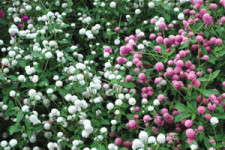
I have watched the onslaught of new plants with keen interest and an excited eye. In the last 10 years, breeders everywhere have brought new genera, new species and new hybrids to the table. In most cases, breeders have improved the quality of plant material.
The tidal wave of change, however, has brought a number of unexpected consequences. The first, which I’ve talked about for some time, is confusion. We already have too many cultivars but too little information, all of which results in one confused buyer. However, too many plants will continue to be a problem, and perhaps not a bad problem to have.
Another unexpected consequence is the demise of old workhorse plants that have been overshadowed by some of the new glamour girls on the block. In the greenhouse trade, fewer ageratum, marigolds and zinnias are being grown, sometimes with good reason, or perhaps because other things are easier to grow or perform better in the landscape. While I am not longing for the “good old days”–I do not miss growing dozens of marigolds–we have thrown the baby out with the bathwater in some cases.
No-Brainer Annuals


One of the plants that annually earns an A-plus for ease of production and landscape performance is globe amaranth (gomphrena). Grown from seed and finished in eight to 10 weeks, globe amaranth used to be on every landscaper’s must-have list. It was also a required plant for the beginning gardener.
In the last 10 years, we have trialed fewer and fewer as breeders work on other, more lucrative genera. That is not to say we didn’t enjoy the Gnome series and the Buddy series when they appeared, and I can’t say enough good things about ‘All Around Purple,’ but things have been very quiet on the gomphrena front recently.
So it was with great pleasure that we were able to look at some new breeding in 2009, and as always in the case of gomphrena, I do not hesitate to add these to my “no-brainer annuals.” The Las Vegas series from Benary comes in three colors, and sports clean, bright colors and an impressive flower count. Growth is consistent, producing plants 18 to 24 inches tall.
The hit of the globe amaranth party, however, is ‘Fireworks’ from PanAmerican, which flaunts the “short and compact” rule fervently adhered to by breeders. It is impressively massive for a gomphrena, easily topping 4 feet. It is, however, as tough as any other gomphrena we have trialed, and its rosy pink flowers just keep coming and coming. ‘Fireworks’ bears strong stems but staking may be necessary if wind and afternoon storms are frequent. Garden visitors just love it.
Many years ago, a song called “Little Red Rented Rowboat” was made popular by singer Joe Dowell. Compared to the sexy motorboat and trim sailboat, it was “not much better than no boat,” but when the sailboat ran out of wind and the motorboat ran out of gas, the song stated: “But at least it will go when I row, row, row.”
I feel the same way about gomphrena, because regardless of heat, rain, cold or drought, at least it will grow, grow, grow.
Subscribe to eNewsletter