



What Happens When Data Challenges Greenhouse Tradition
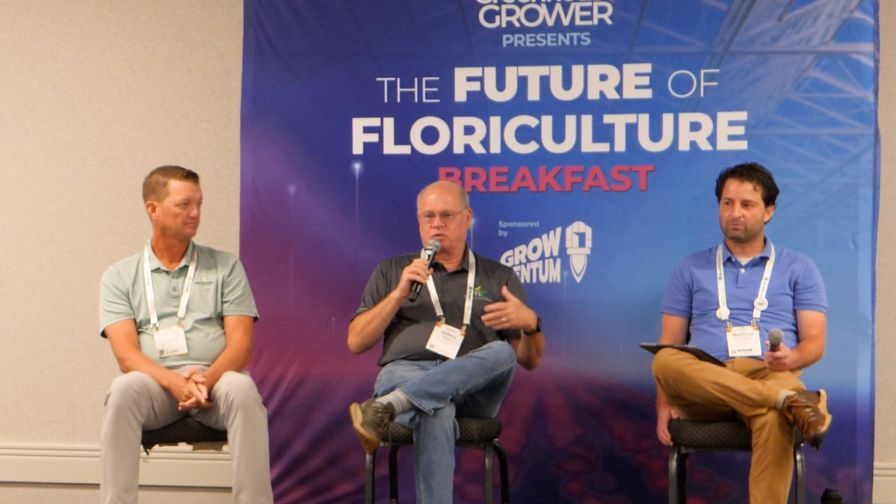
The Future of Floriculture Breakfast.
Greenhouse production decisions are often guided by experience and intuition. But as floriculture growers collect more operational data, they’re realizing that some of those long-held assumptions are proving ripe for reconsideration.
That was one of the key themes to emerge during Greenhouse Grower’s Future of Floriculture Breakfast at Cultivate’26, sponsored by Growmentum, where Editor Brian Sparks moderated a discussion with Michael Van Wingerden, COO of Metrolina Greenhouses; Jeff Neese, founder of Neese Horticulture Consultants (and formerly of Costa Farms); and Matt Foertmeyer, Head Grower at Foertmeyer & Sons Greenhouse. While the panel covered everything from AI to workforce development, the conversation repeatedly returned to one idea: Better data is helping greenhouse businesses make smarter production and operational decisions.
Using Data to Rethink Production
Van Wingerden shared an example that drove this point home, about a manager who questioned whether hanging baskets actually needed to hang. “We used to hang petunia baskets every week. Eleven days later we’d ship them, then rehang more, then ship them,” he says.
But after analyzing labor and production data, he says, his team found that crops spending fewer than 17 days in production weren’t generating enough value to justify the extra handling.
“By spacing them on the floor, we saved 30 hours,” he recalls. “You start analyzing how long a basket’s in the air versus growing it on the ground, and now — if you come to the last greenhouse we built, we don’t have a single basket we hang in the air anymore.”
The same mindset has led the company to rethink where crops are grown, how production areas are organized, and even whether greenhouse layouts should be based on crop type or production duration.
The Best Technology Investment May Be Your Workforce
The panelists also argued that the next wave of greenhouse technology isn’t simply about automating existing processes. As technology platforms become more connected, growers have an opportunity to rethink how work flows through the greenhouse. Just as important, they agreed, is assessing whether each new technology improves the employee experience.
Neese noted that every additional piece of equipment creates a culture shift. Without employee buy-in, he says, expensive automation risks becoming “a big dusty conveyor belt” instead of a productive asset. Foertmeyer adds that technology adoption succeeds when you have champions on your staff who are involved from the beginning, who understand and can communicate to their teams that it’s “for elevating you, not replacing you.”
The broader discussion also explored how growers can avoid costly implementation mistakes, apply AI in practical ways, strengthen water management strategies, and create workplaces that attract and retain the next generation of employees. You can watch the full Future of Floriculture Breakfast session to hear the panelists’ hard-won insights on these topics and more.
Subscribe to eNewsletter
