



Executive Perspective: Consolidation and the Shift to Biologicals Are Driving Ornamental Crop Protection
 September 3, 2026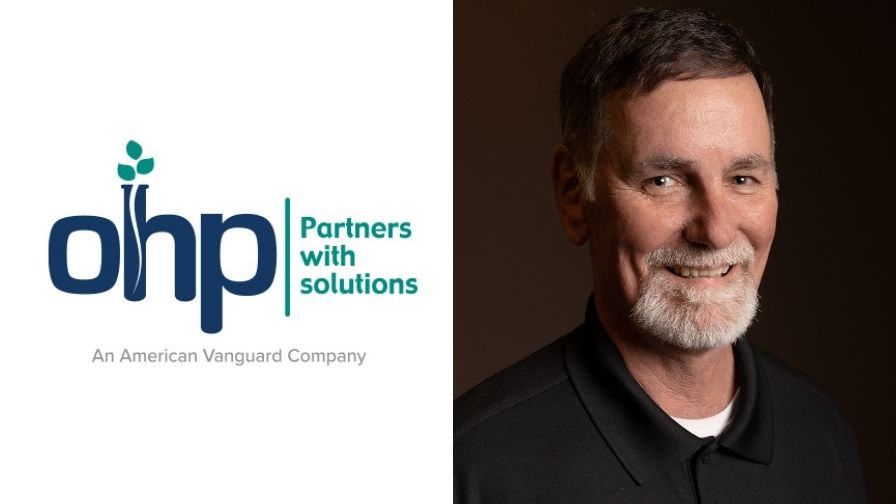
Frank Fornari of OHP. | OHP
For years, before the multinational crop protection companies turned their attention to the U.S. floriculture market, OHP was the big player in the market. However, times have changed. BASF, Syngenta, and Bayer (now Envu) increased their focus on the market. OHP was sold to AMVAC Chemical nearly 10 years ago, and the company is excited about what having additional resources means for additions to its product lineup in the coming years. We talked to Frank Fornari, OHP’s Director of Sales, for the details.
Greenhouse Grower (GG): How has 2026 been for the growers?
Frank Fornari (FF): From the feedback I’ve gotten from growers, there are some who have had spectacular years and some who are struggling. But I think, on average, it’s been a pretty good year once we got past that really cold start to the year that probably caused the most disruption and just delayed everything.
GG: Can you put a number on the growth when you say this has been a pretty good year?
FF: When we talk about the ornamental business that includes bedding plants, holiday crops, and shrubs and trees, it’s a pretty mature market, and the consumer base doesn’t change much. The best estimate I can give you is that the market grew 5% to 6% this year. And that’s in a year when we had a mid-year price increase, which is very rare but something that just about every supplier had to do due to the fuel situation. That changes the dynamics a little bit.
You also have an emerging controlled environment agriculture (CEA) market with strawberries, tomatoes, cucumbers, lettuce, and other edibles being grown in greenhouses. That’s by far the fastest-growing segment and one that’s growing double digits easily. But it’s also a much smaller segment.
So, we’re paying attention and committing resources to that fast-growing segment, but ornamentals remain our bread and butter.
GG: There has been a lot of consolidation in the crop protection space, and OHP has been part of that, having been purchased by AMVAC Chemical in 2017. Is that consolidation over?
FF: No, not at all. I’ve been in this business for roughly 40 years, and consolidation has always been part of the business. Consolidation is actually good for the market because it provides technology transfer. When one company acquires another company, they acquire the scientists, and they acquire the technology and merge that with their scientists and technologies, and that’s how so much of our innovation comes about.
In our case, we were acquired by American Vanguard after a long history as a private, standalone company. As part of AMGUARD, we have a lot more technical resources than OHP would ever have as a standalone company. We have our laboratories, we have product development, and a much better environment to innovate.
Building a product development pipeline takes awhile after an acquisition, but now we have a new burndown herbicide and a lot of other exciting products coming for this market.
As part of AMGUARD, we’re also better positioned to partner with basic crop protection producers around the world to develop new products, whether they’re biochemicals, biologicals, or traditional synthetic chemistry.
In fact, we have a goal for 50% of our portfolio to be biologicals within three years.
GG: Is that 50% of your sales volume or 50% of the products you offer?
FF: The initial goal is to have 50% of the product portfolio as non-traditional, non-synthetic products. We’re confident that once we have those products and we can offer the growers so many more options for IPM and rotational programs, the financial side of it will come.
When we look at the biologicals, we’ve already had heavy adoption in CEA and in cannabis, although that market has suffered greatly over the last few years. Adoption has been slower in the traditional ornamentals, but it’s coming quickly.
GG: What is standing in the way of ornamental growers adopting these biological products more quickly?
FF: The products just need an opportunity to prove themselves. Every market always has early adopters, but there’s usually a much larger number of growers who are more resistant to changing how they do things. The shift to biologicals is gaining momentum, but this change won’t happen overnight.
Plus, there are nuances to working with biological products. They’re living organisms, so there’s a learning curve. But in an environment like CEA where growers are very limited in terms of the products they can use, they’re much more open to new options.
It’s also worth noting that the biochemicals and biologicals work really well. In fact, integrating biological products into your program actually helps protect the really strong, really good synthetic chemistries from resistance issues.
GG: If you could give growers one piece of advice to have an even better 2027, what would you tell them?
FF: Look carefully at innovations that will improve efficiency. You can overspend on the technology really easily, but you’ve got to make sure you get the bang for your buck.

Executive Perspectives is an editorial series in which Greenhouse Grower visits with leaders from across the industry to learn the challenges they see facing growers from their respective part of the business and their recommendations to help growers succeed. This interview has been edited for style, length, and clarity.
Bob West is the Chief Content Officer at Meister Media Worldwide, the publisher of Greenhouse Grower. He can be reached at 440-602-9129 or [email protected].
Subscribe to eNewsletter