



Growing With Purpose at Grand Flower Growers
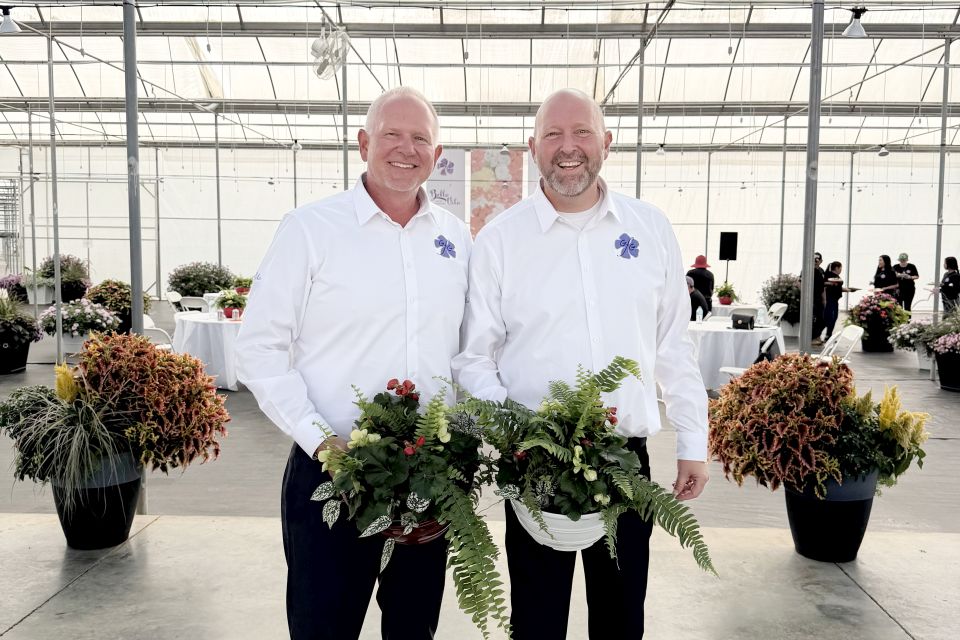
Todd Mossel (left), President and CEO, and John Mossel (right), Vice President of Grand Flower Growers, inside the company’s Cedartown, GA, production facility. | Sydney Sorrells / Grand Flower Growers
Less than a year ago, expanding into the Southeast was not part of the plan for Grand Flower Growers. Today, the Michigan-based operation is running a large-scale production facility in Cedartown, GA, extending its reach into Southern markets and reshaping how the company supports regional retail demand.
The Georgia expansion represents far more than added square footage. It reflects a carefully measured approach to growth shaped by retail partnerships, consumer expectations, and an internal commitment to building a company that lasts.
“We’re aggressively growing, but with purpose. Every decision we make is about sustainable growth that benefits our employees, The Home Depot, and ultimately the end consumer,” says John Mossel, Vice President of Grand Flower Growers.
Founded in 1999, the company is now entering its 27th year of business. What began as a focused vision shared by brothers Todd and John Mossel has evolved into a multi-facility operation serving markets across the Midwest and South, without losing sight of quality, culture, or consumer success.
From a Clear Vision to a Lasting Partnership
From the outset, Todd and John Mossel built the business around becoming a trusted partner to The Home Depot.
Early on, they identified an opportunity to bring the Proven Winners brand — then underrepresented in the channel — into Home Depot garden centers, establishing a foundation that continues to shape the company today.
Over the years, Grand Flower Growers has navigated major shifts in retail structure, moving from brokered sales to direct shipping, adapting from multi-source to single-source vendor models, and transitioning into pay-by-scan merchandising. Each shift required operational flexibility and a willingness to rethink how plants move from greenhouse to consumer.
“We’ve always believed that if we take care of The Home Depot and their customers, they will take care of us, and the rest will fall into place,” John Mossel says. “Our merchandising team has been paramount to our success!”
That approach continues to influence how the company operates today, particularly as it scales branded programs and expands its geographic footprint.
Bella VitaTM and the Case for Consumer Success
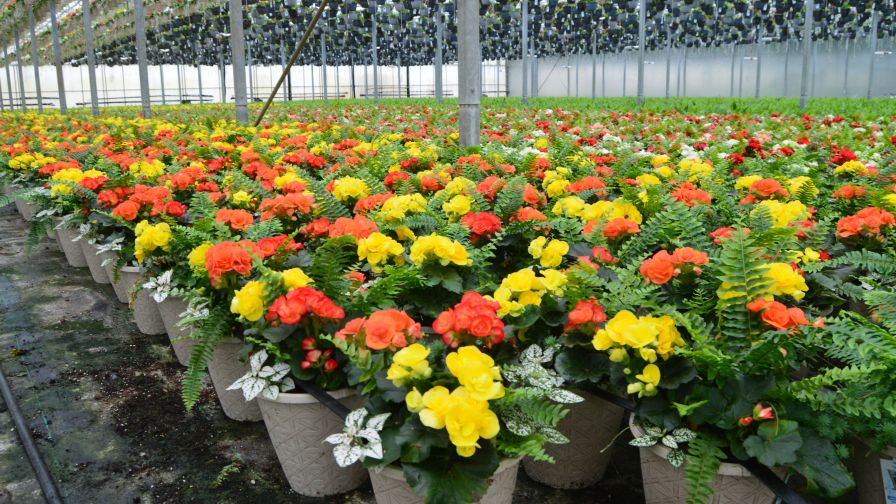
Finished container combinations in production at Grand Flower Growers’ Michigan facility. | Sydney Sorrells / Grand Flower Growers
That retailer- and consumer-focused mindset is most visible in Bella Vita, a branded container program developed around ease of success for the end customer. Designed initially to address a gap in reliable shade combinations, Bella Vita focused on begonia-based recipes that deliver season-long performance with minimal guesswork.
Rather than chasing trends from afar, the company relies heavily on feedback from its merchandising teams working daily in stores. That constant connection to the sales floor helps inform what the company grows and what it doesn’t.
“We get a lot of feedback from our merchandising staff, like what customers are asking for, what’s missing, and what’s trending right now,” John Mossel says.
Under the pay-by-scan model, consumer response directly shapes the crop mix.
“We can introduce something we think is great, but if the customer isn’t buying it, it’s not good for Home Depot, and it’s not good for us,” says Todd Mossel, President and CEO of Grand Flower Growers.
The origin of the Bella Vita name traces back to a single retail moment in Chicago, recalls Todd Mossel. While visiting one of the Home Depot stores, Grand Flower Growers supplies in early April, he overheard a shopper on the phone trying to describe a container: “The begonia with the fern in it.”
That moment clarified the need for a recognizable name and a brand consumers could ask for again.
“People weren’t asking for a ‘begonia with a fern,’ they were asking for ‘Bella Vita.’ That’s when we knew we needed to trademark the name,” he says.
Today, Bella Vita is a recognizable branded program at retail, known for combinations that thrive in shade while tolerating a wide range of conditions. The line has also expanded beyond spring, with strong performance for Easter and Christmas through holiday-focused colorways.
Bella Vita Beyond Spring
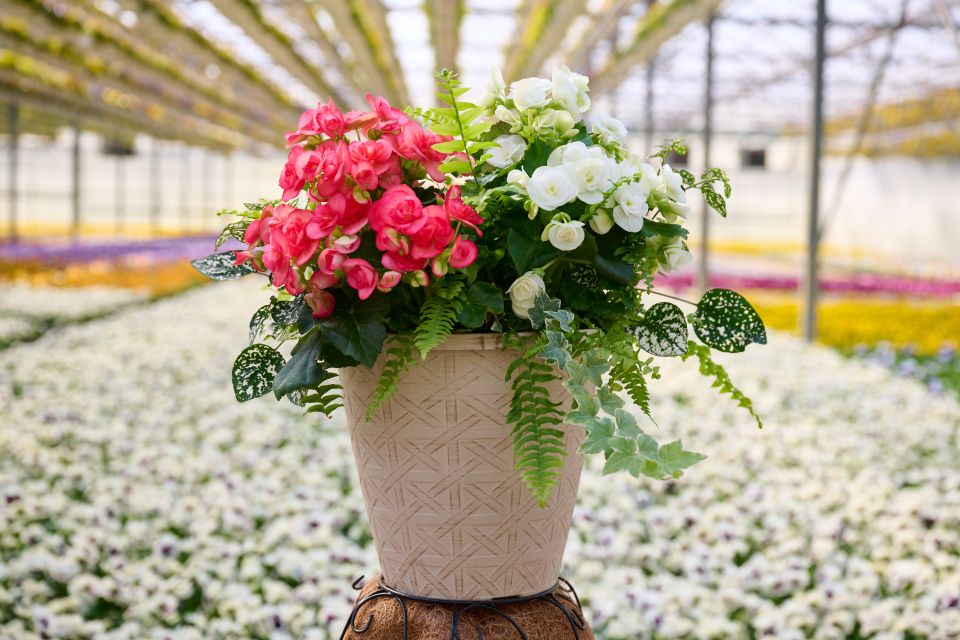
Bella Vita container combinations feature begonia-based designs paired with complementary foliage for reliable, season-long performance. | Sydney Sorrells / Grand Flower Growers
As sales of traditional holiday plants such as poinsettias and Easter lilies have softened in recent years, Grand Flower Growers began exploring how the Bella Vita concept could help reinvigorate holiday live goods.
“One thing we’ve seen with poinsettias for Christmas, and lilies for Easter is that consumers are looking for different and unique ways to decorate their homes, so we started supplying what we call a holiday Bella Vita,” says John Mossel.
The company’s begonia-and-fern combinations have performed especially well for both holidays, offering color and longevity that extends well past the point of purchase.
“It’s a plant that survives and looks great in a consumer’s house for many weeks, which is huge for holidays like Christmas and Easter,” he adds.
Rather than thinking strictly in terms of crops, Todd and John Mossel say the goal is to support seasonal decorating more broadly. Fall and holiday programs, they note, can feel restrictive, but consumers are looking for more color, more options, and more value from live goods.
While the team regularly visits industry trials and evaluates new colors and concepts, novelty alone isn’t enough.
Instead, the focus remains on combinations that can be grown efficiently, ship well, and deliver real performance in consumers’ homes.
“The most important thing is success for the consumer,” adds Todd Mossel.
Why Cedartown Made Sense
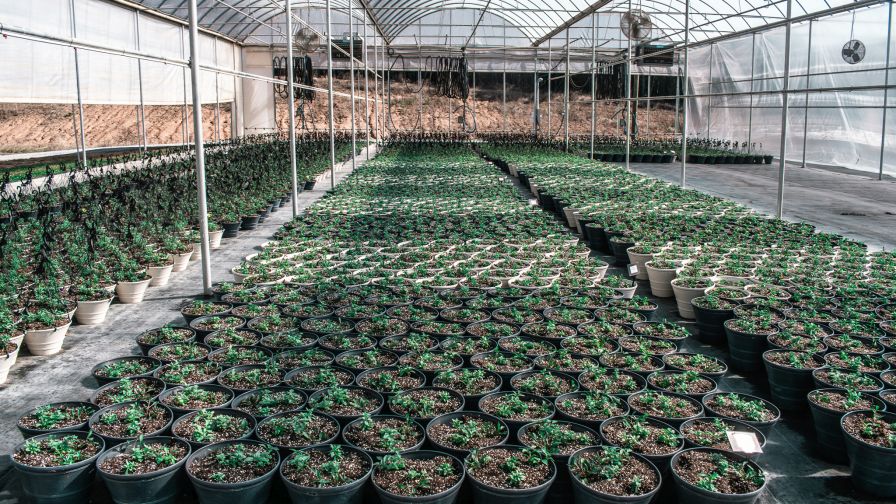
Grand Flower Growers’ newly opened Cedartown, GA, facility marks the company’s expansion into Southern production. | Sydney Sorrells / Grand Flower Growers
The Cedartown, GA, expansion was not part of a long-term site search. In fact, it wasn’t in the plan at all, until it was. The company had been shipping Bella Vita into the Chicago market for years, where the program consistently performed well. As interest grew beyond the Midwest, Dave Graham, Senior Live Goods Merchant for The Home Depot’s Northern Division, encouraged the company to think bigger about the program’s potential and take it to a national level.
That guidance helped set the stage for broader expansion. Grand Flower Growers began shipping Bella Vita into select Southern markets in 2024, initially as a small trial in Houston and the Dallas–Fort Worth area. In 2025, that expanded to roughly 160 stores across the Southern Division, all supplied from West Michigan.
As demand continued to build, The Home Depot encouraged the company to scale more aggressively.
“The Home Depot asked us to ramp up production on the Bella Vita program in a major way. They wanted us to go and go harder,” Todd Mossel explains.
Cedartown’s proximity to Atlanta and major distribution routes made it a natural logistical fit. The pace of execution was intense: the company took over the site in July, had plants on the ground by September, hosted a ribbon-cutting the week before shipping, and sent its first plants out just before Thanksgiving.
“The amount of stuff that had to happen in that amount of time was pretty astronomical,” Todd Mossel says.
Inside the Facilities
The company operates multiple facilities across two regions. In West Michigan, its primary Wayland site encompasses roughly 500,000 square feet, supported by the Martin facility at approximately 350,000 square feet and the smaller Gun Lake location at about 60,000 square feet. Additional outdoor production further expands capacity.
In Georgia, the Cedartown facility (referred to internally as Cedar Valley) includes approximately 850,000 square feet of greenhouse space and more than 1 million square feet of outdoor production area. While not fully utilized yet, the company expects to grow into the space over time.
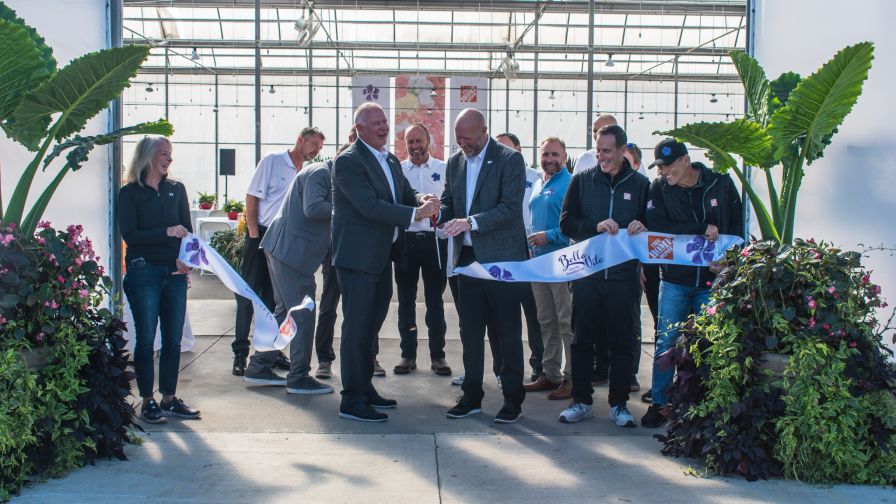
Grand Flower Growers marked the opening of its Cedartown, GA, facility with a ribbon cutting in November 2025. Front row, from left to right: Melissa Richards, MVP, Outdoor Gardens; Todd Mossel, President and CEO; John Mossel, Vice President; Dan Stupiello, DMM, Live Goods; and Dave Graham, Northern Division Senior Live Goods Merchant. | Sydney Sorrells / Grand Flower Growers
Beyond capacity, Cedar Valley offers a strategic production advantage, with warmer temperatures and stronger light levels allowing Grand Flower Growers to support Southern programs while also bringing certain crops into color earlier for Northern markets.
“It allows us to grow in two very different climates at the same time, and to ship Northern crops that are hard to finish early up here in Georgia. That changes what’s possible,” says John Mossel.
Premium Annuals, Seasonal Programs, and What Actually Sells
While premium annuals remain the company’s core focus, the crop mix has evolved significantly over time. Proven Winners remains central, but growth has increasingly come from crops selected for ease of success, including coleus, SunPatiens, and begonias.
“We focus on crops the consumer can be successful with, even with very little gardening experience,” says John Mossel.
Seasonal crops play a different role. While not the largest share of sales, vegetables and fall programs help retain employees and encourage repeat store visits. The company’s Burpee vegetable program has seen double-digit growth annually since launching three years ago.
“They keep our employees working and keep customers coming back,” Todd Mossel says.
A Legacy Built From Scratch
After nearly three decades in business, John and Todd Mossel are beginning to think differently about what long-term success really means. Not as a family business handed down through generations, but as a company built from scratch that now carries responsibility to its people, partners, and customers.
For the Mossels, growth has never been about chasing scale. Instead, decisions have been guided by helping customers succeed while building a stronger company for the people behind it. That mindset remains unchanged as the company continues to expand its footprint and refine its programs.
“We want to be known as a company that invests in its people, delivers exceptional products, and builds lasting partnerships,” John Mossel says.
“We never started this thinking about legacy,” Todd Mossel adds. “But now, 27 years later, we realize that’s what it’s becoming.”
Partners Behind the Growth
Grand Flower Growers credits strong relationships with The Home Depot merchant team for helping scale programs like Bella Vita. Todd and John Mossel point to long-standing support from Dave Graham (Northern Division Senior Live Goods Merchant), as well as collaboration with Jen McCormish (Senior Merchant, Southern live goods), Melissa Richards, Dan Stupiello, and Devin Infranca on the online side.
In 2021, the company also partnered with private investment firm Main Street Capital, which played a key role in supporting the Cedartown acquisition. The Mossels credit John Montgomery, Yair Colonel, and Ava Rodriguez for their guidance during the process.
Subscribe to eNewsletter